Economic crisis blamed for Global Fund cuts to AIDS, TB, malaria grants
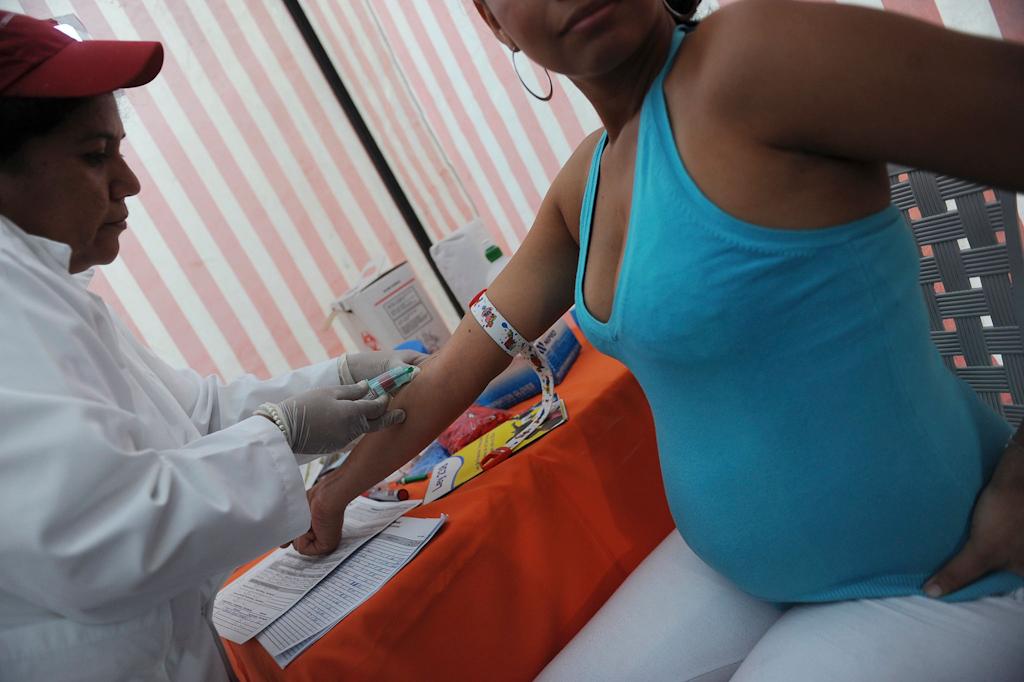
A pregnant woman takes a rapid HIV/AIDS medical test during a fair organized for the Xochiquetzal Foundation in Managua on November 23, 2011. Every six hours, a Nicaraguan contracted the virus of HIV / AIDS during the first six months of this year, and pregnant women are one of the most affected, organizations fighting the disease warned.
JOHANNESBURG, South Africa — The Global Fund to Fight AIDS, Tuberculosis and Malaria has announced cutbacks to grants because of a dramatic shortfall in funding, blamed largely on the economic crisis in Europe.
The Geneva-based Global Fund is the biggest contributor to the fight against AIDS, TB and malaria, and has saved millions of lives in poor countries over the past decade.
But the fund announced at a board meeting in Accra, Ghana this week that it is canceling its next round of fundraising and is changing its management. The Global Fund, which raises money from donors every three years, said it will make no new grants or funding until 2014.
In addition to gaps in funding attributed to the economic slowdown and financial chaos in Europe, corruption is also a factor, with some countries having frozen their contributions because of misuse of grants in at least four recipient nations.
The group Medecins Sans Frontieres (Doctors Without Borders) called the cancelation of grants "an unprecedented event which will have a direct impact on tens of thousands of people living with HIV.
According to MSF, more than 70 percent of antiretroviral drugs in the developing world are funded by the Global Fund. In Africa, the fund finances about 85 percent of TB programs.
"The impact of the cancelation halts progress in fighting the epidemic in countries facing the brunt of the epidemic," MSF said.
The group added: "The dramatic resource shortfall comes at a time when the latest HIV science shows that HIV treatment itself not only saves lives, but is also a critical form of preventing the spread of the virus, and governments are making overtures that there could be an end to the AIDS epidemic."
More from GlobalPost: AIDS-related deaths at lowest level since 2005
The UN's program on HIV and AIDS announced this week that AIDS-related deaths are down 21 percent from their peak in 2005. The number of new HIV infections is also down 21 percent from its peak in 1997.
In South Africa, Treatment Action Campaign (TAC), a leading activist group representing people living with HIV/AIDS and TB, said it may be forced to close at the end of January because of a delayed grant.
"Besides the fact that over 230 activist organizers will lose their income, the closure of TAC would be a setback for South African democracy," the group said.
Stephen Lewis, the former UN special envoy on AIDS in Africa, told Canadian newspaper The Globe and Mail that the funding cancelation will cost thousands of lives.
“It’s incredible that so many countries should default on their commitments at exactly the moment when we know what to do to defeat the pandemic,” he told The Globe and Mail. “I don’t know how the financial architects of this disaster sleep at night.”
More from GlobalPost: South Africa launches world's biggest anti-AIDS drive
The article you just read is free because dedicated readers and listeners like you chose to support our nonprofit newsroom. Our team works tirelessly to ensure you hear the latest in international, human-centered reporting every weekday. But our work would not be possible without you. We need your help.
Make a gift today to help us reach our $25,000 goal and keep The World going strong. Every gift will get us one step closer.