NASA’s Deep Impact probe spins out of control
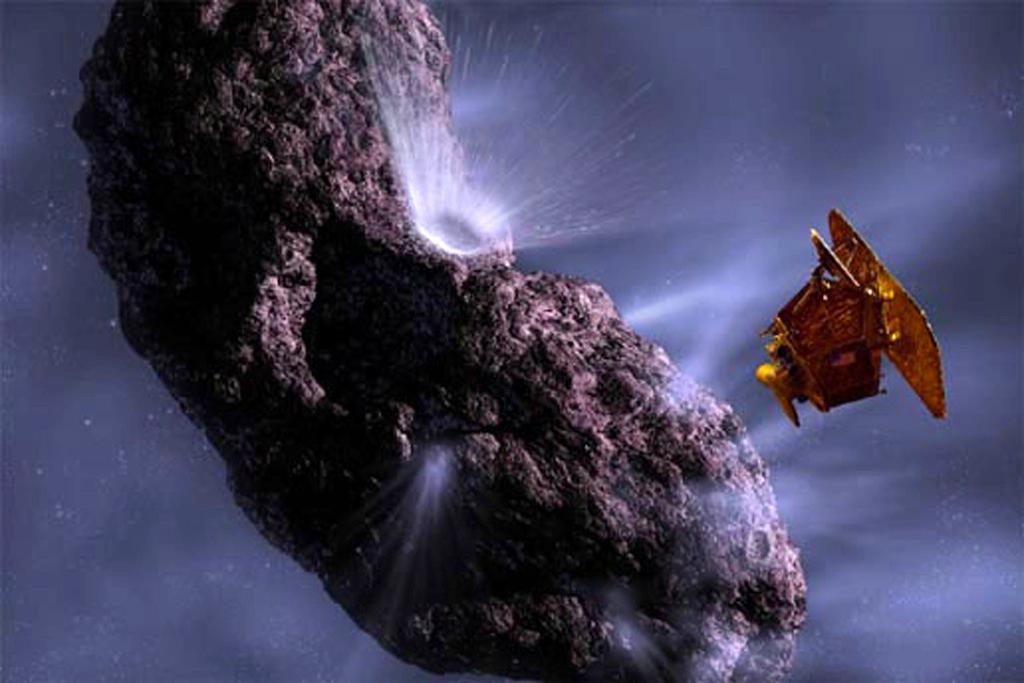
This artist’s impression shows the deep impact spacecraft as it fires an impactor into comet Temple 1.
The amount of floating space junk may have just increased.
NASA's Deep Impact probe, tasked with studying comets, has lost contact with Earth and could now be floating freely forever and ever.
Deep Impact was launched in 2005 to fire impactors into the comet Tempel 2 to study its icy composition.
The probe then flew by the comets Hartley 2 in 2010 and Garradd in 2012 to study and photograph them.
It also observed the comet ISON — declared the "comet of the century" — which, if it survives a trip it's about to take near the sun, will give us a great show in the night sky in November.
NASA lost contact with Deep Impact between Aug. 11 and 14, according to Nature News Blog.
"The last communication was on Aug. 8. After considerable effort, the team on Aug. 30 determined the cause of the problem," chief investigator Michael A'Hearn of the University of Maryland wrote in a mission update, according to Weather.com.
"The team is now trying to determine how best to try to recover communication."
A software glitch caused the probe to spin out of control, A'Hearn told Nature.
More from GlobalPost: NASA enlists ex-Air Force drones for tropical storm research