Fears stricken ship off New Zealand may break up (VIDEO)
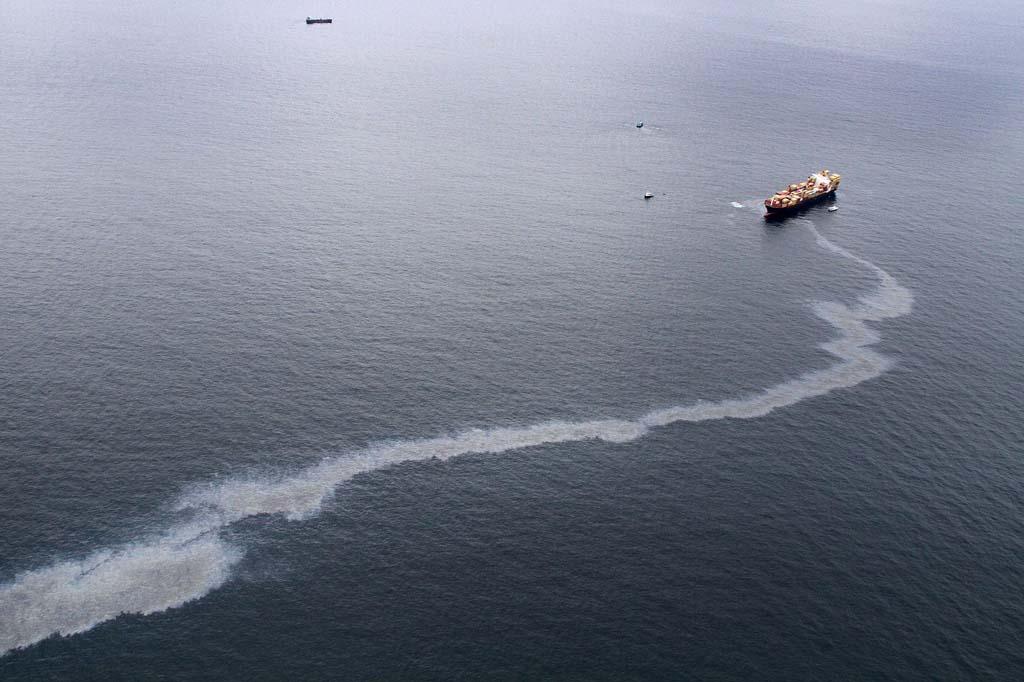
An oil slick is seen coming from the grounded vessel Rena, on October 9, 2011 in Tauranga, New Zealand.
Cracks are appearing in a container ship stuck on a reef off a New Zealand vacation spot, as weather forecasts worsen fears that the vessel may break up and spill more fuel and containers carrying toxic materials into the sea.
The Liberian container ship, the MV Rena, hit the Astrolabe Reef last Wednesday and has caused an oil slick stretching three miles.
In what is considered the country's worst environmental disaster in decades, as much as 350 tonnes of oil may have leaked from the 775 foot ship.
Thick slicks of oil have washed ashore on the beaches of New Zealand's north island, near the port city of Tauranga.
As many as 70 of the thousands of containers aboard the ship have fallen into the sea, stuff.co.nz reports, as heavy seas continue to hamper salvage efforts.
And the situation was going to get "significantly worse" in coming days, Environment Minister Nick Smith said, the BBC reports.
Weather conditions are expected to deteriorate over the next 24-48 hours, increasing fears the ship might break up, leaking all 1,700 tons of heavy fuel oil on board and shedding its cargo.
Meanwhile, the ship's captain, a 44-year old Philippine national, appeared in court on Wednesday, charged under the Maritime Transport Act along with the second officer, in charge of navigation.
The charge of operating a vessel "in a manner causing unnecessary danger or risk" reportedly carries a penalty of up to a year in jail or a fine up to $10,000.
Meanwhile, Maritime NZ confirmed there were cracks on both sides of the vessel, and salvagers said a rupture on the port side of the ship was getting worse.
With a storm on the way, Maritime New Zealand is working to contain the pollution and secure the hull of the ship. It said in a statement: "The top priority is to first remove the oil, then lighten the vessel by removing the containers, and finally, move the ship off the reef."
(GlobalPost reports: Oil from stricken ship reaches NZ beaches)
If the ship breaks up, the fuel aboard the vessel will be released into an area that is home to a variety of sea life, including whales, dolphins, seals and penguins.
The NewZealand.com news website said Maritime New Zealand has repeated warnings for residents to stay away from affected areas. "Please stay away from the water. Do not touch the oil or attempt to clean up the oil as it is toxic," the warnings say.
New Zealand's Prime Minister, John Key, said that New Zealand taxpayers may have to cover costs if the Rena's insurance was unable to fully cover the disaster, the Sydney Morning Herald reports.
The story you just read is accessible and free to all because thousands of listeners and readers contribute to our nonprofit newsroom. We go deep to bring you the human-centered international reporting that you know you can trust. To do this work and to do it well, we rely on the support of our listeners. If you appreciated our coverage this year, if there was a story that made you pause or a song that moved you, would you consider making a gift to sustain our work through 2024 and beyond?