New comet could shine brighter than the moon
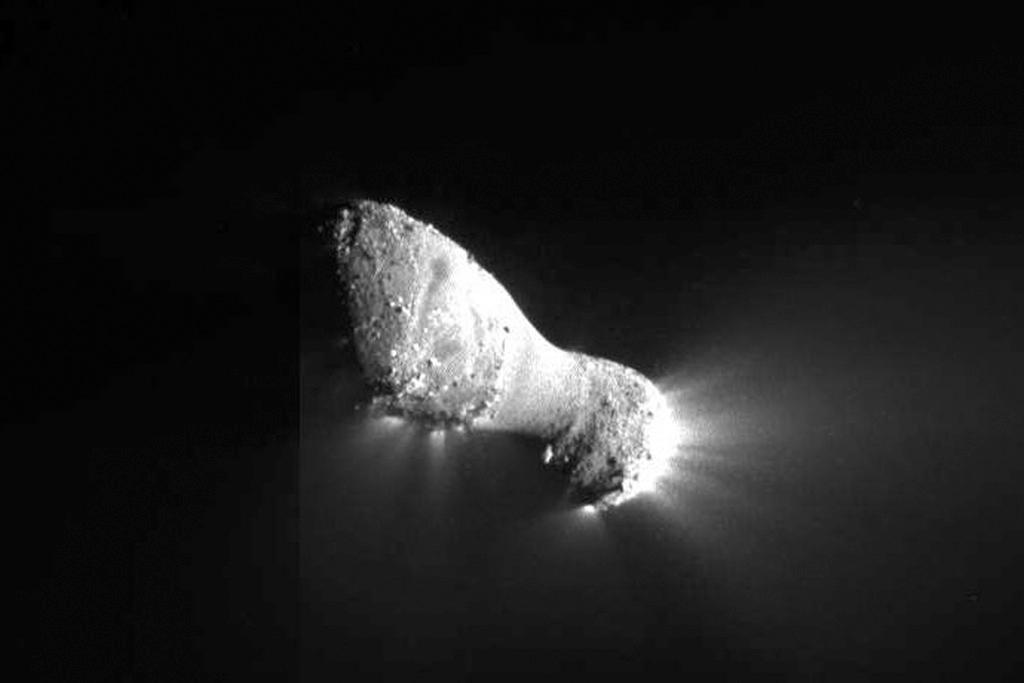
In this handout photo provided by NASA, Comet Hartley 2 is seen on Nov. 4, 2010. The picture was taken as a spacecraft flew by around 1:59 pm GMT, from a distance of about 700 kilometers (435 miles).
Amateur astronomers Vitali Nevski and Artyom Novichonok discovered a comet in September that Astronomy Now says "is predicted to blaze … brilliantly in the skies during late 2013."
The comet is called C/2012 S1, or ISON.
Astronomy Magazine also thinks there will be an impressive cosmic display when ISON passes us by. The magazine says it will probably "become the brightest comet anyone alive has ever seen."
ISON's perihelion passage – the moment the comet is closest to the sun – will occur when it's 2 million kilometers from the sun.
Astronomy Now gives an idea just how bright the show will be. The comet will reach a magnitude of about 16, which the website says is "far brighter than the full Moon."
The comet is currently about 625 million miles away from Earth. Seen here:

The comet will (depending on weather conditions) be visible during the night and will show a bright tail arching across the sky.
But the comet will be so bright that it will also be visable during the day.
Here's the comet's estimated trajectory, according to NASA:

Sky and Telescope says the comet's orbit bears a "striking similarity to that of the Great Comet of 1680, a dazzler with a very long tail so bright that that reportedly could be seen in daylight. Dynamicists are wondering whether that object and Comet ISON are fragments of the same parent body."
The article you just read is free because dedicated readers and listeners like you chose to support our nonprofit newsroom. Our team works tirelessly to ensure you hear the latest in international, human-centered reporting every weekday. But our work would not be possible without you. We need your help.
Make a gift today to help us reach our $25,000 goal and keep The World going strong. Every gift will get us one step closer.