Here’s what the world’s biggest election looks like
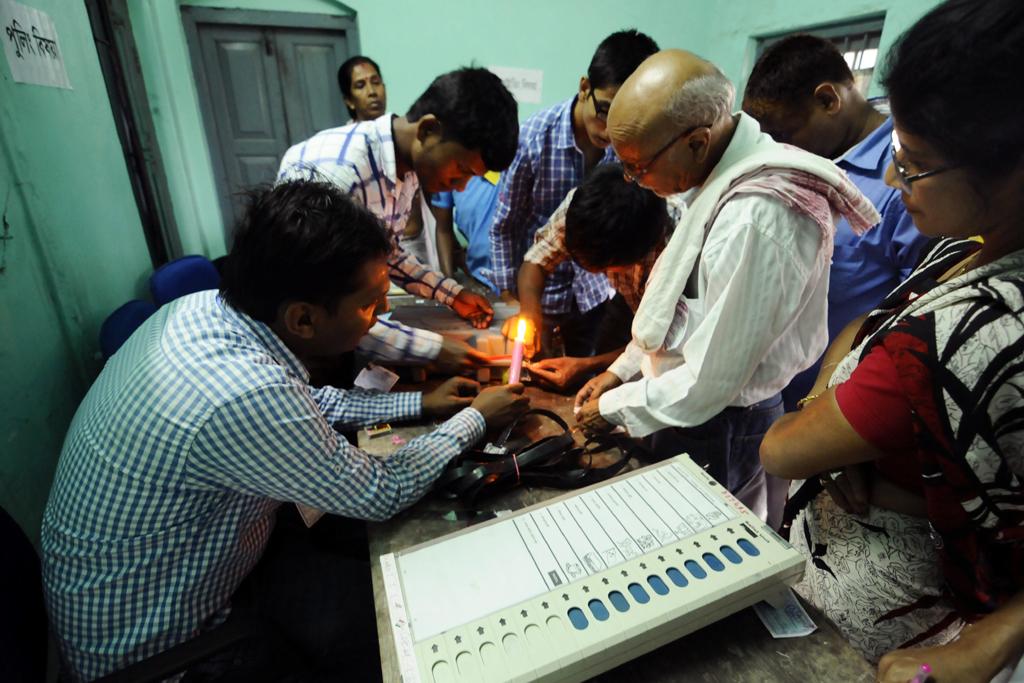
Indian polling officials seal an electronic voting machine at a polling booth in Tezpur after the end of voting in the first phase of national elections.
Millions of Indians cast their votes Monday in the first wave of a five-week election to determine who will rule the world's largest democracy.
Hindu nationalist opposition candidate Narendra Modi held a strong early lead in the race for prime minister.
More from GlobalPost: Hindu nationalism takes driver's seat in Indian election
And his Bharatiya Janata Party (BJP) is forecast to win the biggest chunk of the 543 parliamentary seats up for grabs, although they are expected to fall just short of a majority.
That will likely result in some form of coalition government, according to observers.
Elderly women in saris and young men in polo shirts and jeans lined up to vote in Dibrugarh, a river town in the state of Assam.
It was one of two states to vote on Monday.
Some 815 million Indians are registered for the election. Results from all 935,000 polling stations are expected on May 16.
More from GlobalPost: 8 reasons why India's elections really matter to the world
The story you just read is accessible and free to all because thousands of listeners and readers contribute to our nonprofit newsroom. We go deep to bring you the human-centered international reporting that you know you can trust. To do this work and to do it well, we rely on the support of our listeners. If you appreciated our coverage this year, if there was a story that made you pause or a song that moved you, would you consider making a gift to sustain our work through 2024 and beyond?