Leaders try to put a little heat in frigid US-Iranian relations
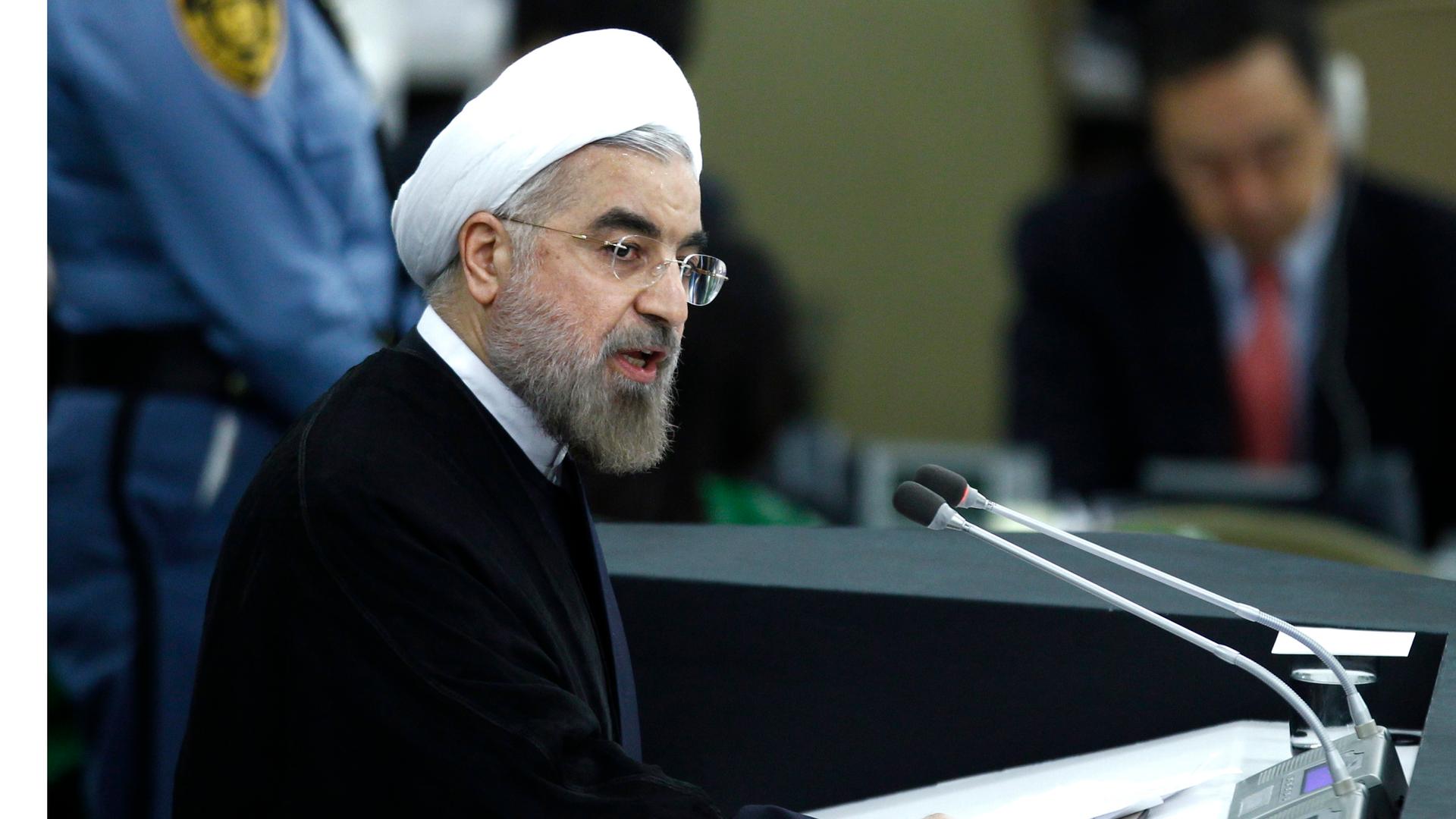
Iran’s President Hasan Rouhani addresses the 68th United Nations General Assembly at UN headquarters in New York, Sept. 24, 2013.
They're not quite meeting like long separated family members, but when US Secretary of State John Kerry meets Thursday with his Iranian counterpart, Javad Zarif, it will be the first time in six years that top leaders from the two countries get together.
The meeting comes on the heels of a change in stance and tone by Iranian President Hassan Rouhani, and an exchange of letter between Rouhani and President Barack Obama.
"It’s a very important moment," said Gary Sick, research scholar at Columbia University and principal White House aide for Iran during the Iranian hostage crisis.
The relationship since then, he says, “has been filled with disappointment.”
Rouhani has shown several signs he's willing to engage with the West.
“The shorter it is, the more beneficial it is to everyone. If it’s three months that would be Iran’s choice, if it’s six months that’s still good," he wrote. "It’s a question of months not years."
Combine this new sense of urgency with President Obama's speech at the UN General Assembly and, as Sick says, you have a moment that could be seized by both sides.