How ‘Zero Dark Thirty’ is Viewed in Pakistan
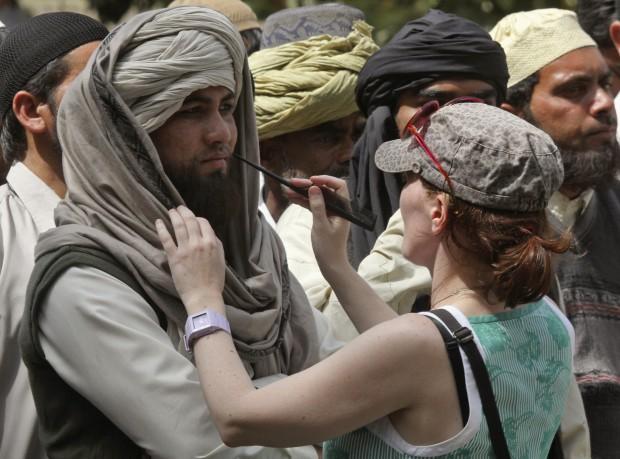
A crew member of Oscar-winning director Kathryn Bigelow’s team for the movie “Zero Dark Thirty” applies makeup on an actor during a shoot at the filming location in the northern Indian city of Chandigarh March 17, 2012. The film is based on the hunt for Osama bin Laden, the mastermind of the September 11, 2001 attacks on the United States who was killed by U.S. special forces in Pakistan in May 2011. REUTERS/Ajay Verma (INDIA – Tags: ENTERTAINMENT POLITICS SOCIETY) – RTR2ZHDT
We’re smack in the middle of Hollywood’s awards season. One of the most talked about films this year is “Zero Dark Thirty,” the gritty account of the hunt for Osama Bin Laden and the raid that killed him in Pakistan.
“Zero Dark Thirty” has been doing well at the US box offices since its release in December. But in Pakistan, where the film’s key action scenes are set, the film has been banned.
Still, that hasn’t stopped Pakistanis from watching the film on pirated DVD’s.
Freelance reporter Michelle Stockman, a self-professed film nut, said she was anxious to get her hands on a bootlegged copy from her local DVD store.
She said the movie had been seen largely by the more educated and English-speaking Pakistanis who were interested in how their country was portrayed around the world.
Stockman said criticism had been against director Kathryn Bigelow who seems to have gone through great lengths to make the film as accurate as possible.
But some of the top objections she said is the portrayal of Pakistanis as speaking Arabic. “Pakistanis speak Urdu or English, not Arabic.”
Stockman wasn’t sure if “Zero Dark Thirty” would ever hit the theaters in Pakistan anytime soon. Distributors have said they don’t want to risk the wrath of the military, intelligence services and terrorist groups over showing the Bigelow’s depiction of raid on Osama Bin Laden’s compound.