Public radio’s longest-running daily global news program.
©2026 The World from PRX
PRX is a 501(c)(3) organization recognized by the IRS: #263347402.
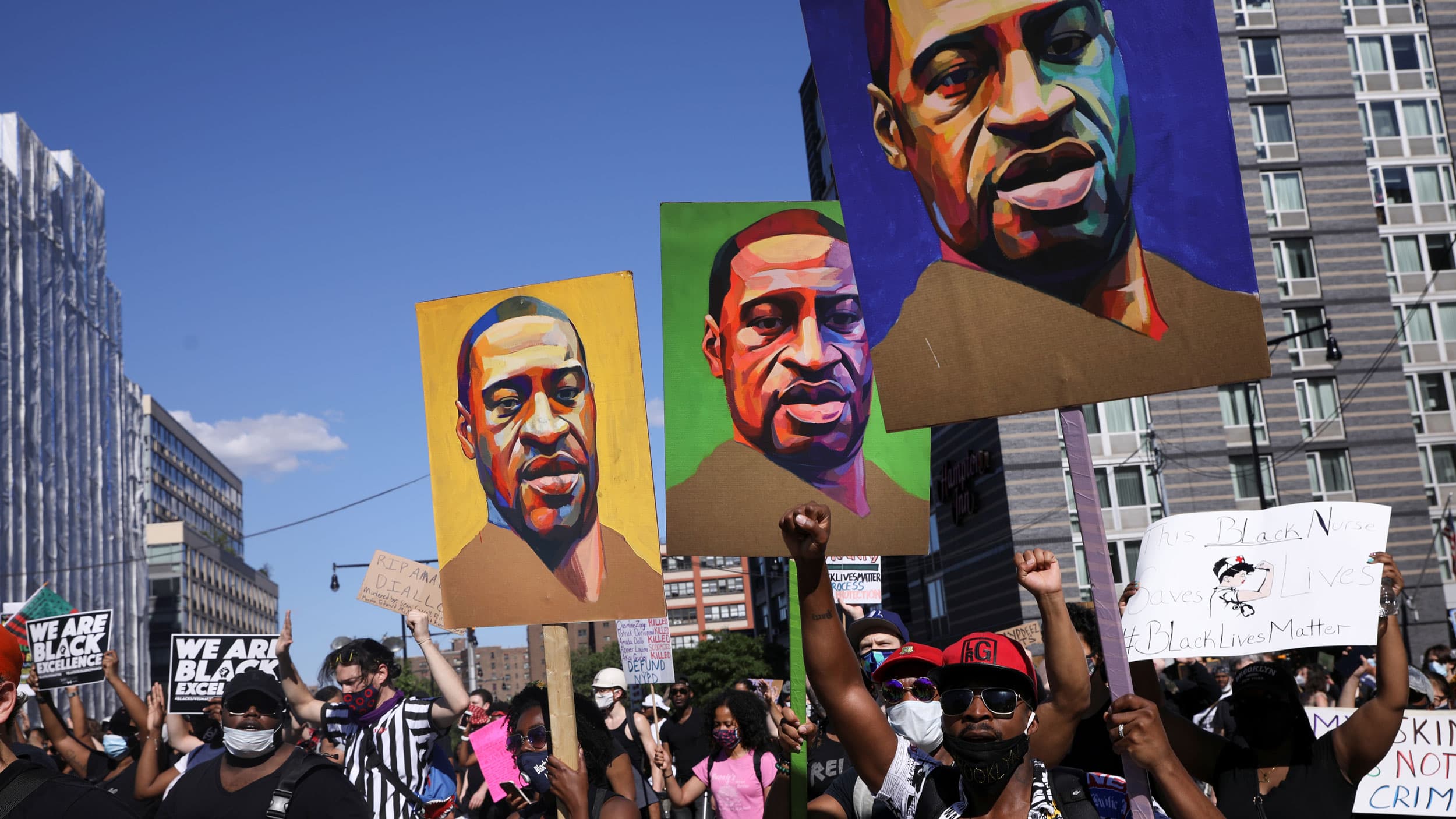
Calls for social justice and police reform have gained momentum as unrest continues around the world in the wake of the killing of George Floyd. These calls are intersecting with the coronavirus pandemic. As part of our regular series discussing the coronavirus crisis, The World’s Elana Gordon moderated a live conversation with David Harris, managing director of the Charles Hamilton Houston Institute for Race & Justice at Harvard Law School.
Demonstrators hold signs depicting George Floyd, who died in Minneapolis police custody, during a protest against police brutality and racial inequality as the outbreak of the coronavirus continues in Brooklyn, New York, June 13, 2020.
Calls for social justice and police reform have gained momentum as unrest continues in the wake of the killing of George Floyd, a black man whose death at the hands of a white officer has roused worldwide protests.
Floyd’s brother, Philonise Floyd, addressed the UN Human Rights Council in Geneva by video Wednesday, calling for an investigation into US police brutality and racial discrimination.
“The way you saw my brother tortured and murdered on camera is the way black people are treated by police in America,” Floyd told the council.
Related discussion: Stopping the spread of misinformation amid the coronavirus crisis
The calls for social justice and police reform are intersecting with the coronavirus crisis. Around the world, the pandemic is hitting minority communities harder than others. And recent incidents of racial discrimination around the US have shed light on the moral and economic costs of racism.
As part of our regular series discussing the coronavirus crisis, The World’s Elana Gordon moderated a live conversation with David Harris, managing director of the Charles Hamilton Houston Institute for Race & Justice at Harvard Law School. They discussed the drivers of current unrest — and steps to consider to create a more just society.
The conversation is presented jointly by The Forum at the Harvard T.H. Chan School of Public Health.
Reuters contributed reporting.

