Palestinian prisoners reject Gaza
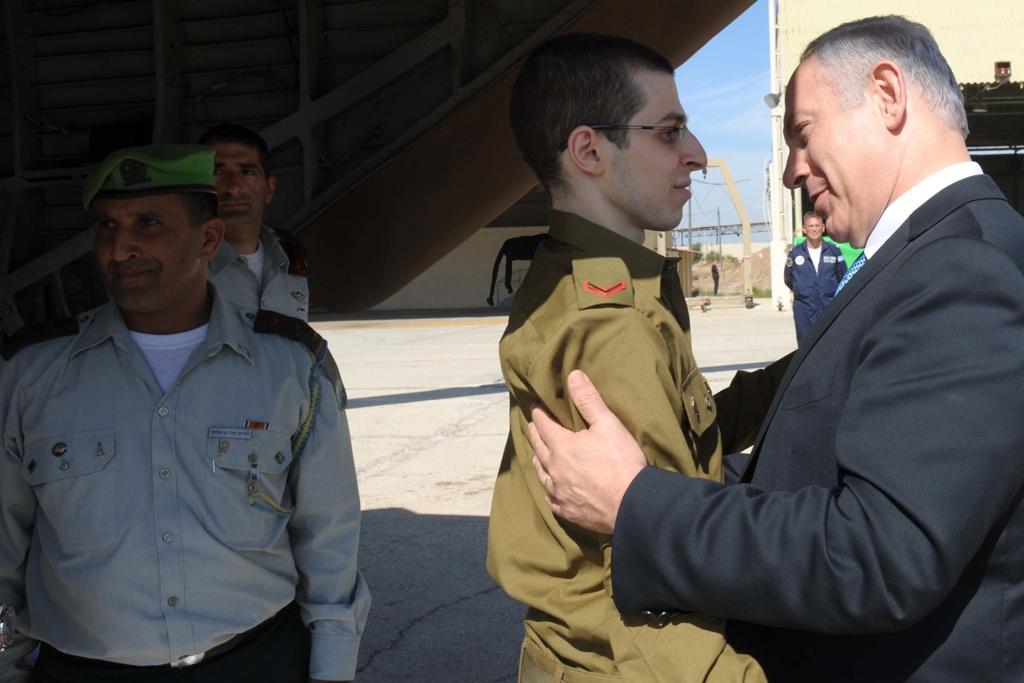
In this handout photo provided by the the Israeli Government Press Office, freed Israeli soldier Gilad Shalit is greeted by Israeli Prime Minister Benjamin Netanyahu at Tel Nof Airbase on Oct. 18, 2011 in central Israel.
TEL AVIV — The remarkably smooth exchange of prisoners that resulted in the homecoming of Israeli Staff Sargent Gilad Shalit, who was swapped for 1,027 Palestinian prisoners, of whom 477 were released today, hit an unexpected snag at about 10:30 a.m., four hours into the undertaking.
What happened? Amina Muna and Wafa al-Bass refused to go back to Gaza. Both women, notorious accessories to acts of terror, decided to turn their backs on the very same Hamas authorities that had arranged for their liberation and were awaiting to greet them as heroes.
Instead, Muna and al-Bass requested exile in Egypt.
Israel: Israeli soldier Gilad Shalit is traded for more than 1,000 Palestinian prisoners
Amina Muna, a journalist by profession, is known as the “internet assassin.” In January 2001, then 24 years-old, she pretended to be an American tourist called Sally and lured a lovesick Israeli high school student, Ofir Rahum, 16, whom she had met in an internet forum, to what he thought was a romantic encounter in Jerusalem.
From there Muna drove him to a remote area in the environs of Ramallah, where she was from and where Fatah-associated friends of hers shot him at close range and killed him. She has repeatedly expressed her pride at the success of the operation.
It turns out that in prison, the entirely secular and comely Muna was detested by fellow prisoners, who accuse her of “cruelty.” She was granted exile in Egypt.
In 2005, al-Bass received a special pass for medical treatment at an Israeli hospital. She used the opportunity to try to bring a suicide belt from Gaza through the Erez border crossing and when caught, tried to blow herself up in front of the customs officers. Egypt denied her passage, which is what briefly held up the intricate exchange operation.
Upon arrival in Gaza she articulated her hope that Palestinians will “take another Shalit every year” until all the remaining Palestinians prisoners in Israeli jails are freed.
We want to hear your feedback so we can keep improving our website, theworld.org. Please fill out this quick survey and let us know your thoughts (your answers will be anonymous). Thanks for your time!