Indonesia may segregate terrorist convicts in prison
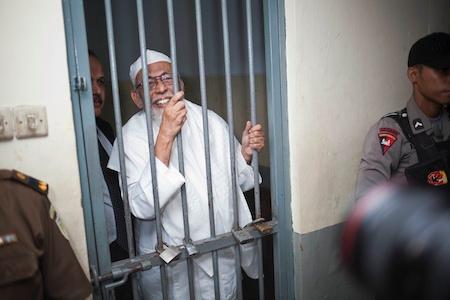
Muslim cleric Abu Bakar Bashir stands behind bars before his hearing verdict at the South Jakarta District Court on June 16, 2011 in Jakarta, Indonesia. Bashir was found guilty and sentenced to 15 years in prison on terrorism charges. He is the co-founder of Jeemah Islamiah, the organisation behind the 2002 Bali bombings that killed 202 people.
Fears that prisons are ripe breeding grounds for Islamic extremism have pushed Indonesia to consider special segregated prisons for inmates convicted on terror charges, according to the Jakarta Globe.
Three prisons already keep separate wards for terrorist inmates, according to the Jakarta Globe, but prison officials are considering more.
The segregated cell block concept treats radicalism like tuberculosis of HIV, a deadly disease that spreads easily among men jailed in close quarters.
Shoddy supervision of terrorist inmates has helped them screen jihadi videos inside prisons and even deliver sermons via cell phone, according to the Straits Times.
Segregated prisons aren't new in Indonesia. Last year, the government opened a special prison for inmates convicted for corruption, a reaction to countless scandals in which wealthy convicts set up luxurious cells with TVs and air conditioning. More recently, a wealthy former tax official was caught traveling to Bali during a long prison sentence.
Such corruption helps terror thrive in jail, according to a Sydney Morning Herald report, which asserts that a terrorist convicted for the 2002 Bali planned further bombings with a laptop while on death row.
The story you just read is accessible and free to all because thousands of listeners and readers contribute to our nonprofit newsroom. We go deep to bring you the human-centered international reporting that you know you can trust. To do this work and to do it well, we rely on the support of our listeners. If you appreciated our coverage this year, if there was a story that made you pause or a song that moved you, would you consider making a gift to sustain our work through 2024 and beyond?