The UN climate talks grapple with rich-poor divide
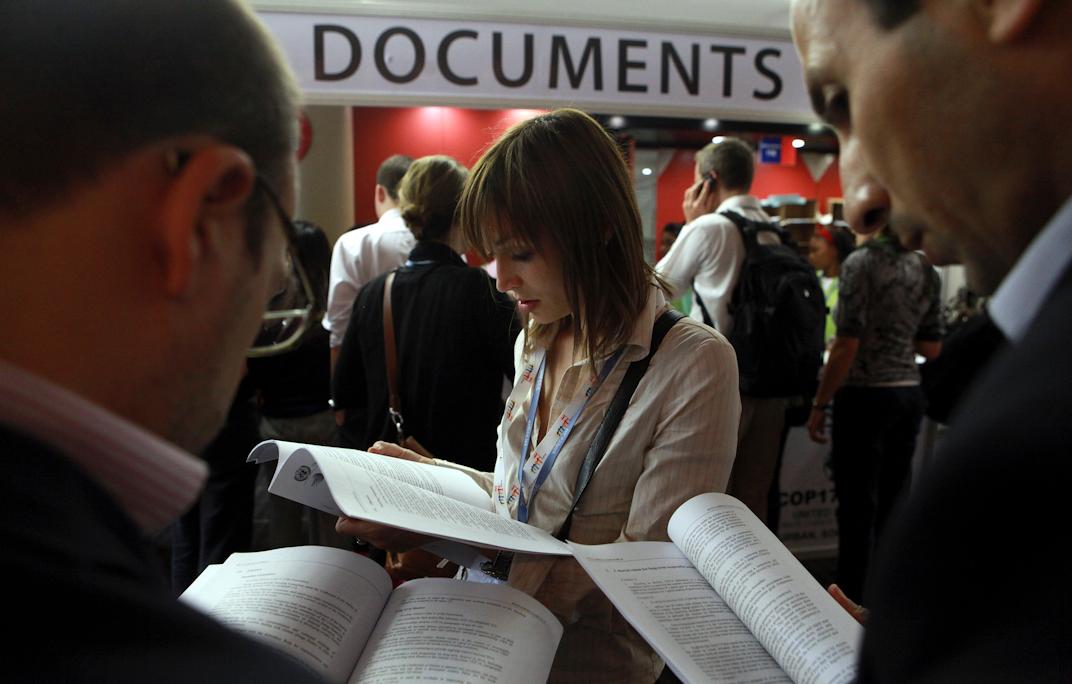
Delegates and negotiators discuss the latest draft report on Dec. 10, 2011 on the final day of negotiations of the UN Framework Convention on Climate Change at the International Convention Center in Durban. Deep into an unscheduled 13th day, UN climate talks on December 10 struggled to agree on a proposed pact to roll back carbon emissions in a key decade for fighting global warming.
There is a growing gap between rich and poor countries at the UN climate talks which risks undermining the global effort to control harmful carbon emissions, the Associated Press.
Negotiations at the Bonn, Germany talks have been plagued by technical disputes but the core of the problem is the divide between developed and developing nations.
"There is a total stalemate," Artur Runge-Metzger, the chief negotiator for the European Union told the AP.
Historically, developing nations have argued industrialized Western countries should be take the lead in emissions. But now Western nations say economic powerhouses like China, the world's top polluter, and India need to curb their burden on the environment at a greater level.
More from GlobalPost: COP 17: Deal reached at UN climate talks in Durban
"There is distrust and there is frustration" Seyni Nafo, spokesman for a group of African countries, told the AP.
The European Union claims China and other developing countries are backsliding on commitments they made last December in Durban, South Africa. The Bonn talks were meant to to create a new global climate pact by 2015.
United Nations climate talks in South Africa agreed to measures that would extend the 1997 Kyoto Protocol, enforcing carbon cuts, and decide a new, legally binding accord by 2015, to be enforced by 2020, Reuters wrote.
Meanwhile, Agence France Presse reported China pushed back on Thursday saying the United States and Europe were to blame for the stalled talks.
Chinese chief negotiator Su Wei told AFP "they try to evade the legally binding commitments," referring to legal targets set to curb global warming.
On Wednesday, the European Union warned the 2015 pact was in danger of falling apart.
Our coverage reaches millions each week, but only a small fraction of listeners contribute to sustain our program. We still need 224 more people to donate $100 or $10/monthly to unlock our $67,000 match. Will you help us get there today?