Syria: Ex-official tells the BBC that Assad using chemical warfare a possibility
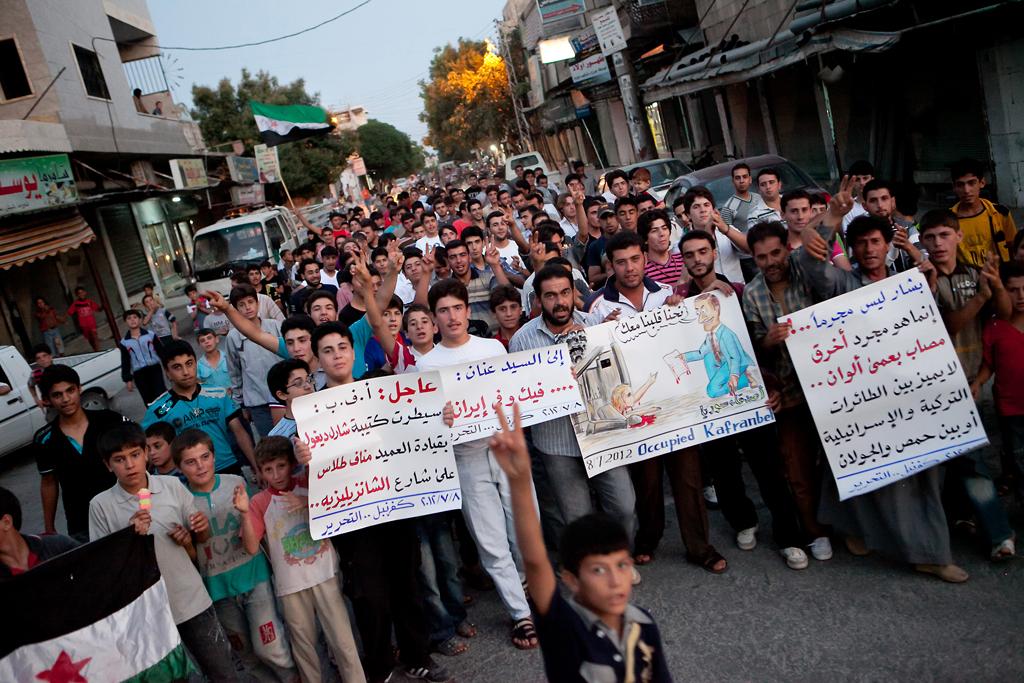
Syrian protesters march during an anti-regime demonstration in Kfar Nubul in the northwestern province of Idlib on July 8, 2012. Reports on July 11, 2012, suggest that the Syrian ambassador to Iraq has defected to Turkey. If confirmed, this would be the second prominent defection within a week from President Bashar al-Assad’s government.
Several days after Syria made headlines for moving its stockpile of chemical weapons, a senior Syrian politician that has defected to the opposition is now further stoking public fears about biological warfare. In an interview with BBC News, Nawaf Fares, Syria's former ambassador to Iraq, said that President Bashar al-Assad will not hesitate to use chemical weapons if he feels doing so is necessary: "I am convinced that if Bashar al-Assad's regime is further cornered by the people… he would use such weapons," Fares told the BBC.
More from GlobalPost: Inside Syria
The interview comes three days after Syria began moving its collection of chemical weapons out of storage facilities. The move, reported by the Wall Street Journal, sent alarm through Washington. While American officials still can't agree what the move means, some officials fear that al-Assad will use the weapons against the rebels fighting his regime, or even against civilians, according to the WSJ. Damascus has one of the largest stockpiles of chemical and biological weapons in the Middle East, and Syria never signed the 1992 Chemical Weapons Convention, which outlaws production of such weapons.
Fares, the ex-ambassador, is the highest profile diplomat so far to leave al-Assad's regime and join the uprising, the Associated Press reported.
In his interview with the BBC, Fares described al-Assad as "a fully-fledged criminal like a wounded wolf." Fares also accused al-Assad of orchestrating major bombings across Syria, and claimed that unconfirmed reports show that Syria's chemical weapons may have already been used.
The story you just read is accessible and free to all because thousands of listeners and readers contribute to our nonprofit newsroom. We go deep to bring you the human-centered international reporting that you know you can trust. To do this work and to do it well, we rely on the support of our listeners. If you appreciated our coverage this year, if there was a story that made you pause or a song that moved you, would you consider making a gift to sustain our work through 2024 and beyond?