Europe space agency to explore Jupiter’s icy moons
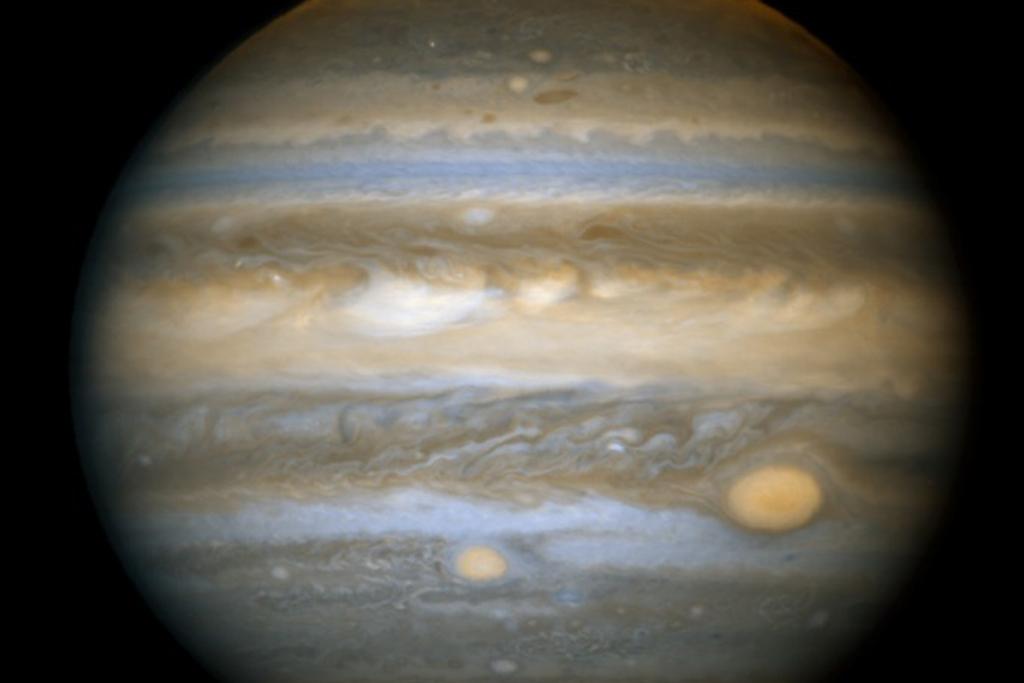
The Jupiter Icy Moons Explorer (JUICE) is scheduled to launch in 2022 and arrive at the distant planet eight years later
Jupiter and its icy moons will be the destination of a new space probe mission by the European Space Agency.
The European Space Agency's Jupiter Icy Moons Explorer, or JUICE, was given the go-ahead Wednesday to launch in 2022, arriving at the distant planet eight years later.
The investigation will take the space probe to the largest planet's Galilean moons Europa, Ganymede, and Callisto.
The $1.3 billion mission was favored over two other bids: the space-based New Gravitational-wave Observatory and an X-ray telescope called ATHENA, reported Nature.
According to BBC, the space probe would use the gravity of Jupiter to fly into the orbit of the moon called Ganymede, which is thought to be the largest moon in the solar system.
It is believed that Jupiter's moons have oceans below their icy top layers.
The mission is aimed at learning whether the icy moons could harbor primitive life.
"Jupiter is the archetype for the giant planets of the solar system and for many giant planets being found around other stars," said Alvaro Giménez Cañete, ESA's director of science and robotic exploration, reported Science.
"JUICE will give us better insight into how gas giants and their orbiting worlds form, and their potential for hosting life."
According to CNET, the probe will weigh five metric tons, making it one of the largest ever launched.
Every day, reporters and producers at The World are hard at work bringing you human-centered news from across the globe. But we can’t do it without you. We need your support to ensure we can continue this work for another year.
Make a gift today, and you’ll help us unlock a matching gift of $67,000!