Syrian civil war enters third year of conflict (PHOTOS)
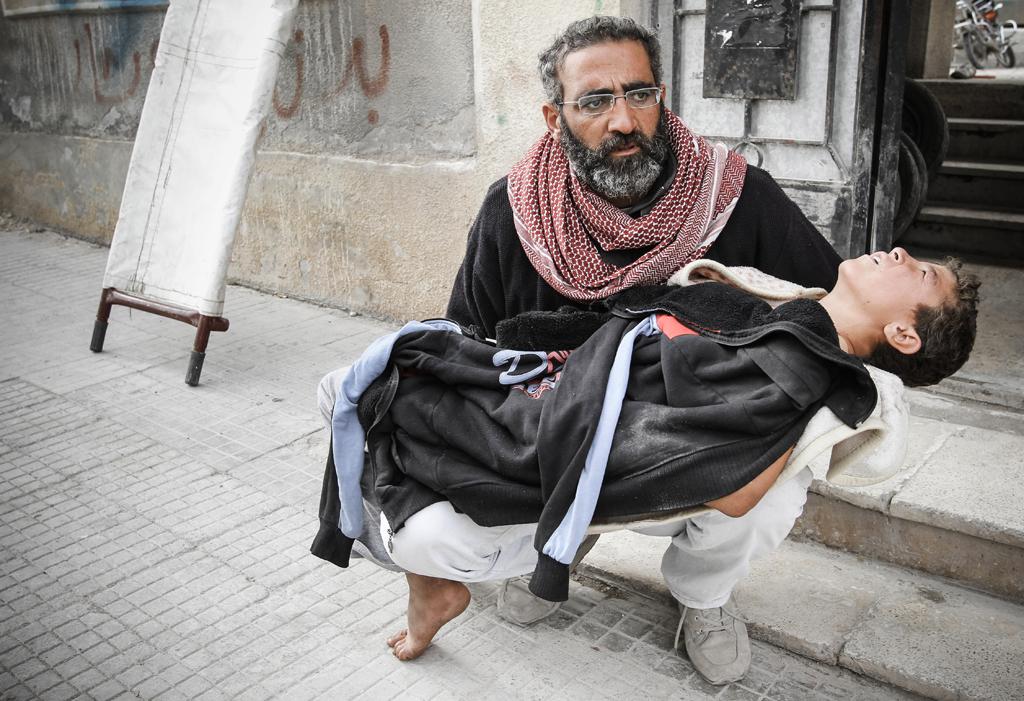
A father holds his nine year-old son, wounded by shrapnel, outside the field hospitalon November 19, 2012, in the town of Maaret Al-Numan in southern Idlib province.
On March 15, it will have been exactly two years since a string of protests galvanized by the Arab Spring hit Syria.
Since then, the Syrian civil war has claimed nearly 70,000 lives as rebels try to dislodge Syrian President Bashar al-Assad’s regime.
What started as peaceful protests for democratic reform and legal transparency quickly escalated as government forces cracked down on protesters with brutal force, intensifying opposition as reports of tortured and killed civilians spread throughout the country.
As Assad’s army engages in bombing and artillery strikes that directly target civilian zones, governments around the world have wrestled with different plans for supporting Syria’s insurgents.
Though major powers like the United States and Saudi Arabia have provided financial and humanitarian aid since the conflict began, nations like France and Britain have been pushing for directly supporting the insurgency’s military operations through weapons shipments and training.
However, while foreign powers debate how to support the Syrian rebels, the fighting continues to intensify.
More from GlobalPost: As Syria's civil war enters 3rd year, European Union arms embargo still stands
Every day, reporters and producers at The World are hard at work bringing you human-centered news from across the globe. But we can’t do it without you. We need your support to ensure we can continue this work for another year.
Make a gift today, and you’ll help us unlock a matching gift of $67,000!