Dinosaur embryos found in China reveal how dinos grew
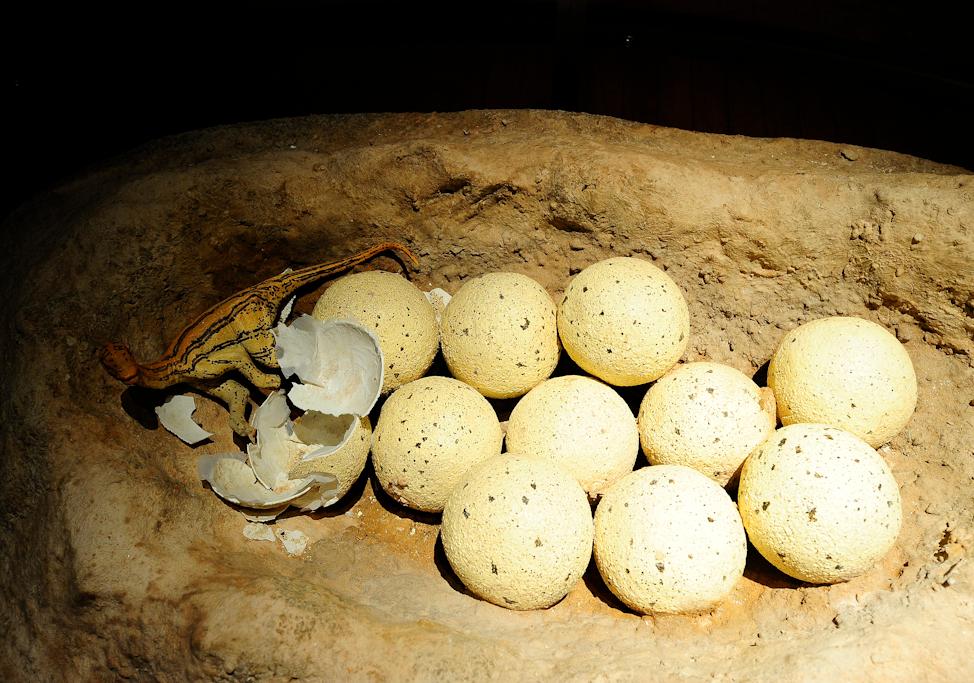
A mock sauropod’s nest is on display at ‘The World’s Largest Dinosaurs’ exhibition, an exhibition exploring the biology of sauropods, a group of the largest dinosaurs that ever walked the Earth, during a media preview at the American Museum of Natural History in New York, April 13, 2011.
Scientists studying the oldest remains of dinosaur embryos ever found have uncovered new clues about how dinosaurs grew.
Robert Reisz, a paleontologist at the University of Toronto-Mississauga in Canada, and his team examined recently discovered fossilized dinosaur embryo bones found near the city of Lufeng in Yunnan, China. The bones date to the lower Jurassic period and are estimated to be between 190 and 197 million years old.
As described in a study published today in the journal Nature, the bones come from the long-necked, 30-foot long Lufengosaurus dinosaur.
The bones show that the dinosaurs grew rapidly and that they moved around while in their eggs, the scientists said.
"Lots of animals, such as birds and mammals, move inside the egg [or womb]. And of course, our babies move like crazy," Reisz told National Geographic.
Movement develops bones, he explained. “By comparison with living things, we can argue that [bone development in Lufengosaurus embryos] was also mediated by muscle contraction,” he told National Geographic.
“Our hope is that we may be able to recover collagen from these tissues in the future and do additional analyses,” Reisz told Discovery News. “This would take the study of early dinosaurs to another level.”
“The study by Reisz and colleagues is certainly the most detailed analysis of embryonic histology and development in an early dinosaur, and it will serve as a baseline for future comparisons with other species, which will deepen our understanding of dinosaur growth and evolution,” David Evans, curator of vertebrate paleontology at the Royal Ontario Museum’s Department of Natural History, told Discovery News.
More from GlobalPost: The mystery behind long-necked dinosaurs
Every day, reporters and producers at The World are hard at work bringing you human-centered news from across the globe. But we can’t do it without you. We need your support to ensure we can continue this work for another year.
Make a gift today, and you’ll help us unlock a matching gift of $67,000!