Climate change and third-world economies
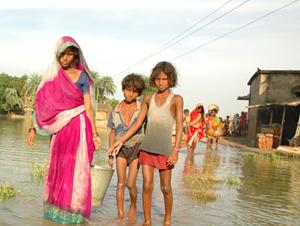
(Image: World Vision, worldvision.org)
This year alone, deadly food riots have plagued many countries, coupled with droughts, earthquakes, heat waves and cyclones; have all triggered big questions about global warming. A new study that looks at global warming and economics concludes that natural catastrophes will not be shared equally — the authors argue that there is essentially a domino-affect.
Stephen Dubner, "Freakonomics" author, says global warming will affect world economies differently; but the bottom line is that poor countries will suffer far more than other countries.
Dubner says the authors of the study looked at temperature and precipitation data for every country in the world for the last 50 years, and then compared it to economic growth in those countries. They found that for poor countries, a rise in temperature of one degree Celsius, results in a negative growth shock of about one percent to the economy.
"The Takeaway" is PRI’s new national morning news program, delivering the news and analysis you need to catch up, start your day, and prepare for what’s ahead. The show is a co-production of WNYC and PRI, in editorial collaboration with the BBC, The New York Times Radio, and WGBH.
More at thetakeaway.org