Public radio’s longest-running daily global news program.
©2026 The World from PRX
PRX is a 501(c)(3) organization recognized by the IRS: #263347402.

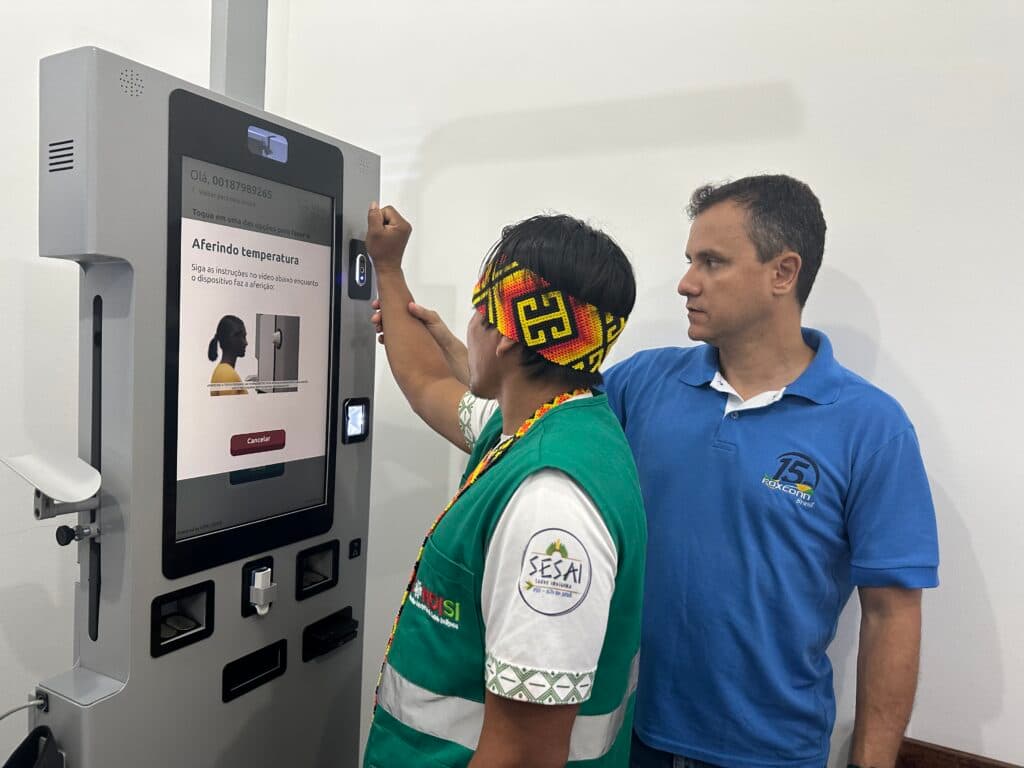
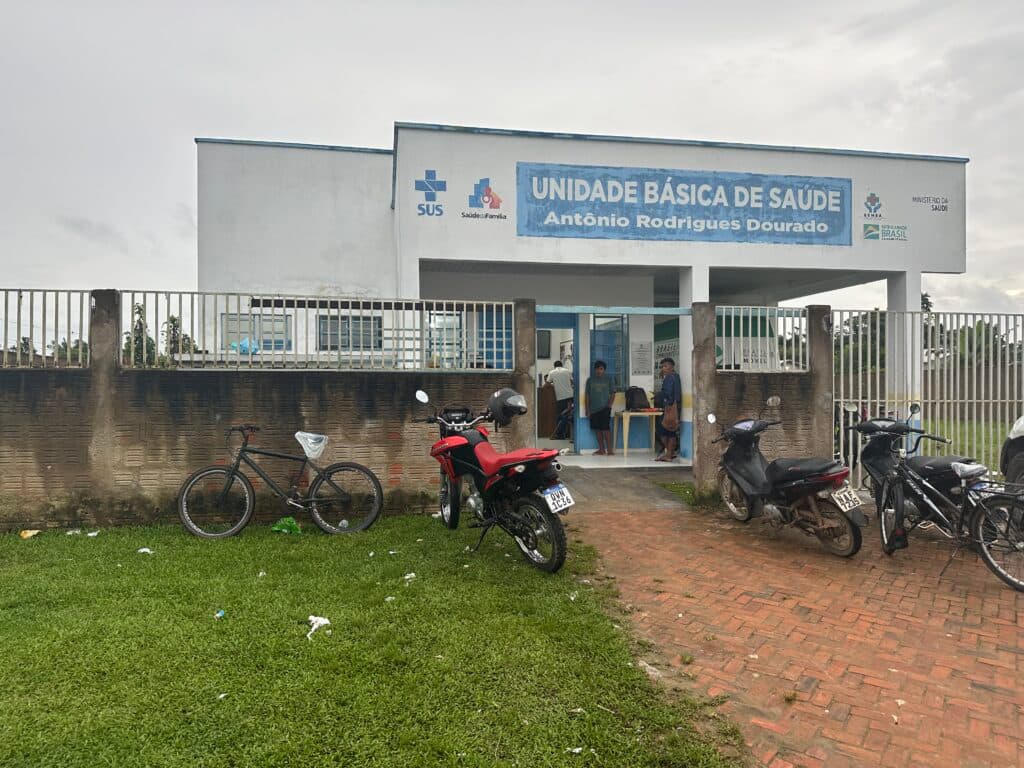
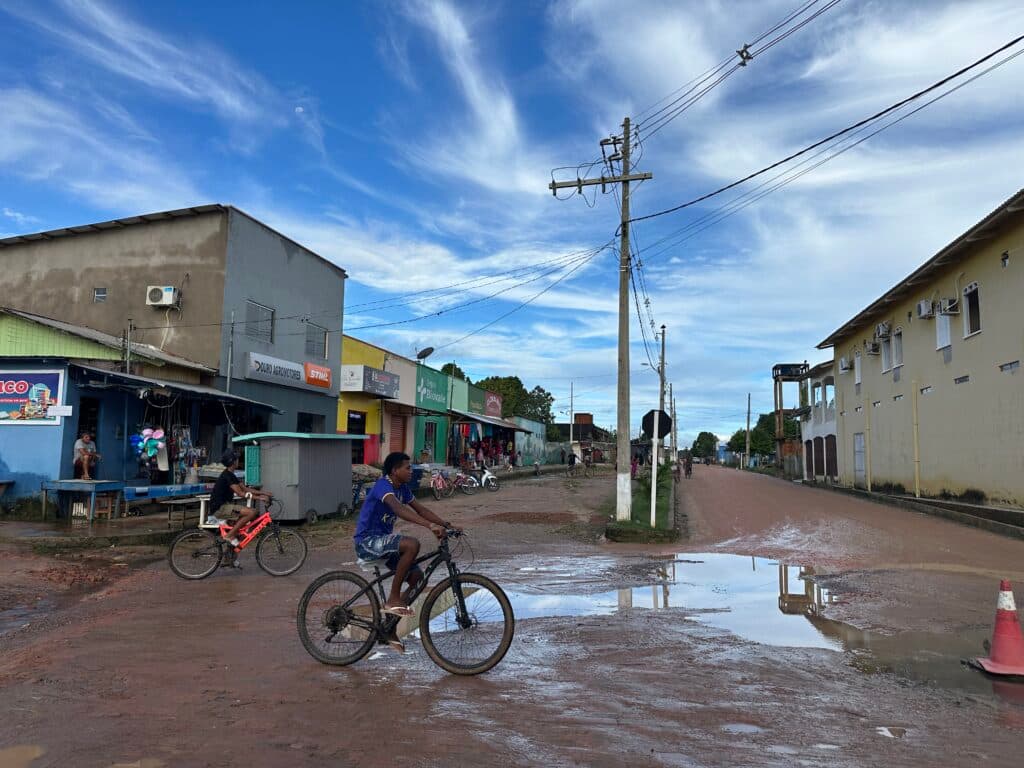
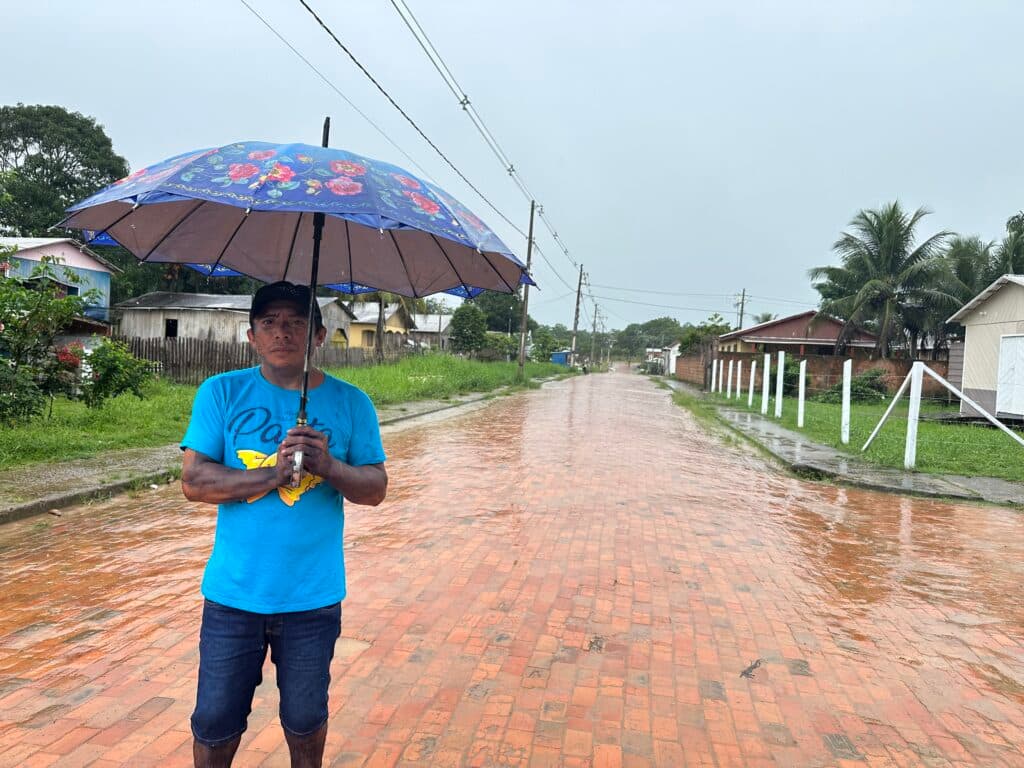
Seven “medical totems” have been brought to the remote town of Jordão, Acre, in the Brazilian Amazon. They can be translated into the local Indigenous language, enabling virtual appointments in a state with the country’s lowest doctor-patient ratio.
Jordão is a remote town in Acre, a state with the lowest doctor-patient ratio in Brazil.
Dr. Eduardo Bulisani had just landed in Jordão, in the Brazilian state of Acre, and a couple of hours later, he was already training dozens of workers at the local public health clinic. He showed them how to use medical machines that he helped develop.
Three of the devices, which look like a cross between a scale and a thin ATM machine, were installed there and will be used to measure nine vital signs, including blood pressure, heart performance, oxygen levels, temperature, height and weight. And in a couple of months, they will also allow for something previously unavailable — virtual appointments.
“It’s intuitive, it’s easy,” Bulisani said. “In two minutes, the data is available for the patient. AI compiles the results, and it goes to the cloud for doctors to see them,” he added, referring to the servers accessed over the internet.
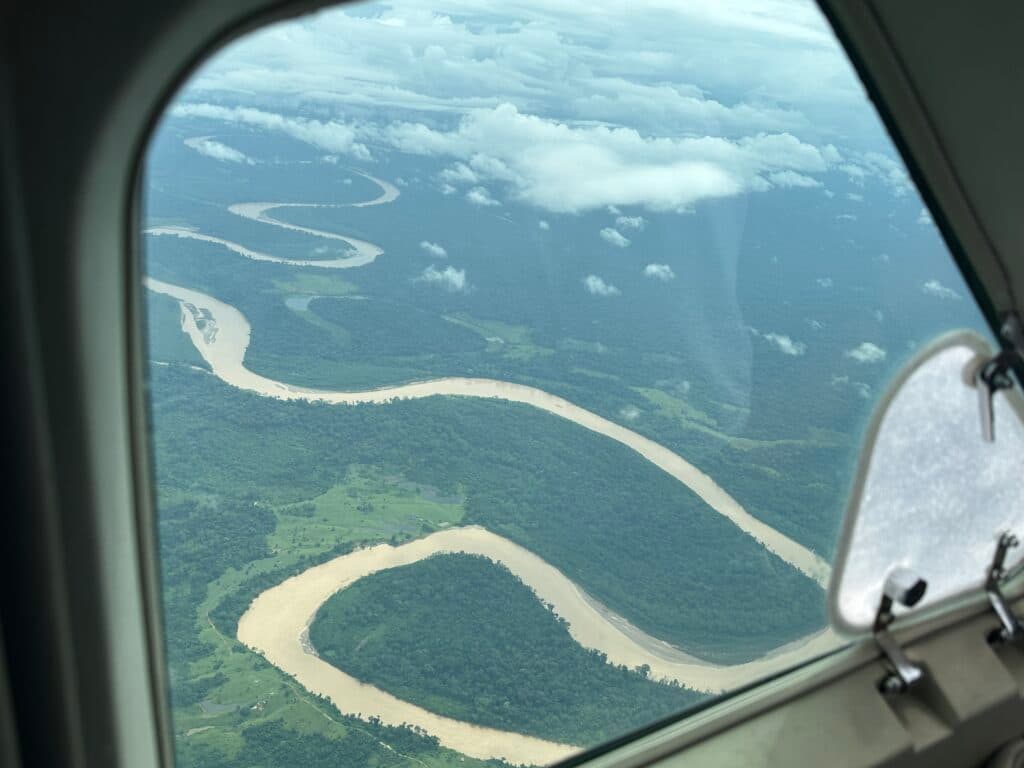
It was Bulisani’s first time in Acre, a state with the lowest doctor-patient ratio in Brazil. He traveled almost 2,000 miles to reach Jordão, a remote town accessible only by boat or small plane.
Bulisani is an orthopedist at the electronics manufacturer Foxconn in Jundiaí, in São Paulo state. The “medical totems,” as he calls them, cost around $18,000 each. They were developed by Foxconn and funded by government subsidies.
Foxconn employees already use the technology, and according to Bulisani, it has caught serious health issues that people were not aware of. “They can reduce complications, hospitalizations and also the cost of the public health system,” he explained.
Telemedicine grew during the COVID-19 pandemic and is expanding worldwide. The state government in Acre has also invested in telemedicine over the past few years, offering remote lung, heart and eye exams.
Many believe telemedicine can help save lives and bridge the health gap. But studies show there are many challenges in rural areas, like poor infrastructure, illiteracy and inexperience with technology.
Cesar Carvalho, one of three doctors who work in Jordão, said they serve around 11,000 people.
“For an area with a very vulnerable population like this one, the ideal ratio would be 2,500 patients per doctor at the most,” he said.
Carvalho grew up in Franca, in the countryside of São Paulo state, and he’s been in Jordão for seven years. He works at the local public health clinic and also runs the nonprofit Instituto Flor da Floresta, which supports Indigenous medicine and nutrition.
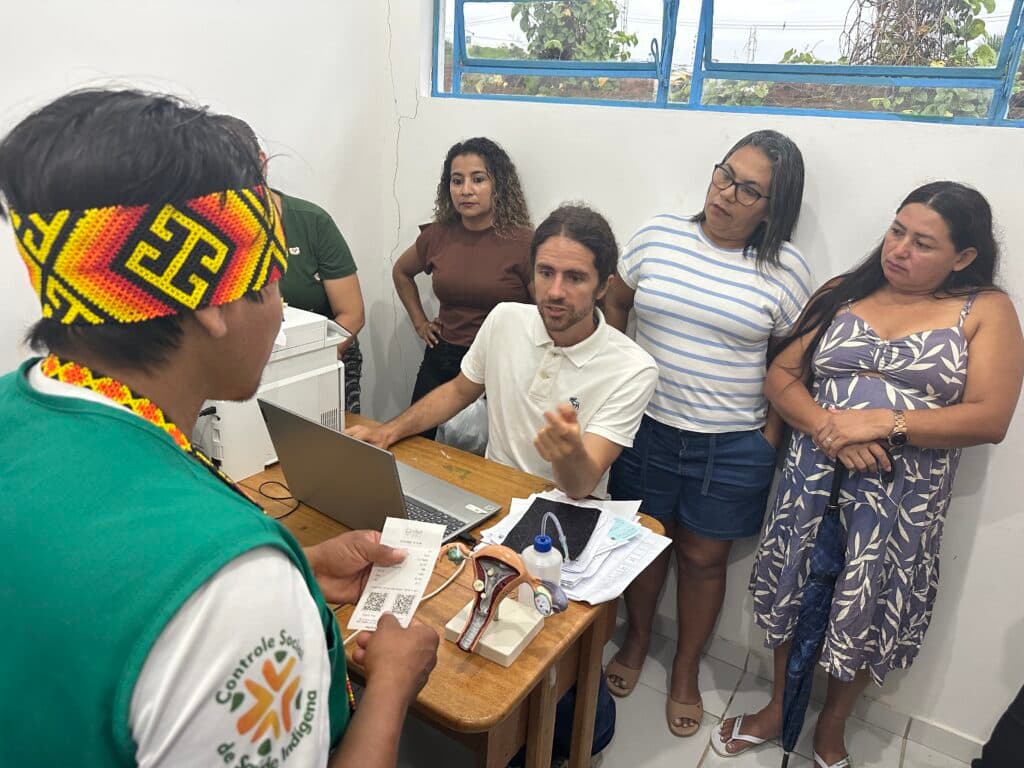
Bulisani, who is Carvalho’s cousin, learned about his nonprofit work and contacted him about the totems. Carvalho said he’s excited about the technology because he often struggles to reach patients in Jordão, which is spread out over an area almost twice the size of Rhode Island.
“When we go to remote areas, sometimes we have to drag the boat, or we can’t get to where patients are, or we have to walk across the river,” he said, referring to the dry season when the water level is low and boats get stuck.
Getting the medical totems where they need to go has been a challenge in itself.
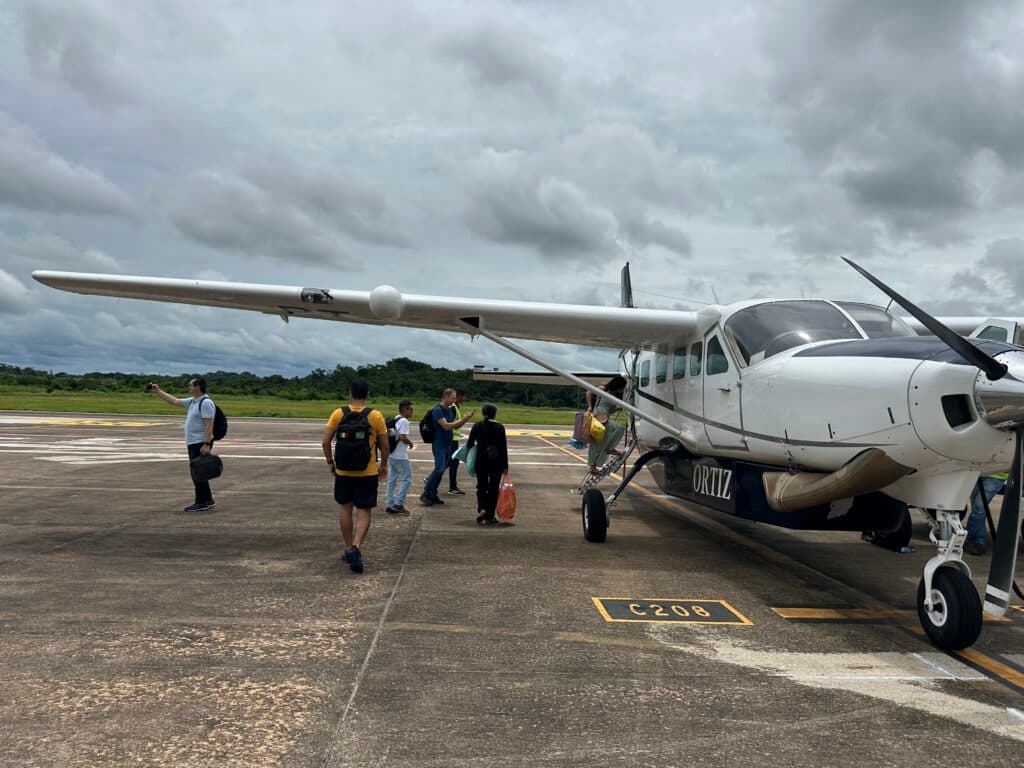
“The airplane chairs had to be removed to fit the totems and it took two trips to bring them,” said Ricardo Moura, a project manager for FPFTech, a nonprofit organization specialized in automation that is coordinating the process.
There are three medical totems at health facilities in Jordão. Two of them went to the Federal University of Acre, so researchers can keep tabs on the incoming data. And another four will be placed inside special cabins in Indigenous villages in the area.
Moura explained that the cabins will allow for patient privacy and protect the totems from damage. The machines will be powered by solar panels, will have internet and also include translations to the local Indigenous language.
“We are starting this technology in the toughest situation possible,” Moura said, referring to the remote areas that are difficult to access where some of the totems are being installed. “Later, we will define other possible scenarios for service.”
These medical totems are the first of about 250 being installed across Brazil and Paraguay. They will serve other social projects, which also benefit from tax subsidies, and also private clients.
Some local residents who attended Bulisani’s training had a lot of questions.
Edson da Rocha, who owns a farm close to Jordão, said he’s worried about the limited energy supply in his area and the maintenance of the totems.
“It happens a lot in these projects that things break, and it stays idle,” he said.
Maintenance will be the responsibility of the municipal government.
Francisco Txaná Ixã, a health care worker from an Indigenous village, found operating the totem to be a bit challenging.
“It’s not very easy, but each time that the person uses it, it gets easier,” he said.
If a patient needs to see a specialist, the totems will also host virtual appointments starting in April. Fabiana de Sá, the director of the public health clinic in Jordão, said their patients often have to take a two-hour flight to see a specialist.
“If the totems allow appointments with certain specialists, we won’t need to transfer them, they will be treated here,” she said.
Carvalho and other local doctors are currently contacting specialists who might be willing to work on tele-appointments.
Carvalho said it’s worth the effort because telemedicine is also good for the environment.
The government of Acre estimates that each virtual medical appointment avoids the emission of around 12 pounds of carbon monoxide.
“It means fewer boats traveling, less gas burning, fewer people moving around,” he said, “which will make the economy stronger, as well.”
Support for this project was provided by a PSC-CUNY Award, jointly funded by The Professional Staff Congress and The City University of New York.