Public radio’s longest-running daily global news program.
©2026 The World from PRX
PRX is a 501(c)(3) organization recognized by the IRS: #263347402.
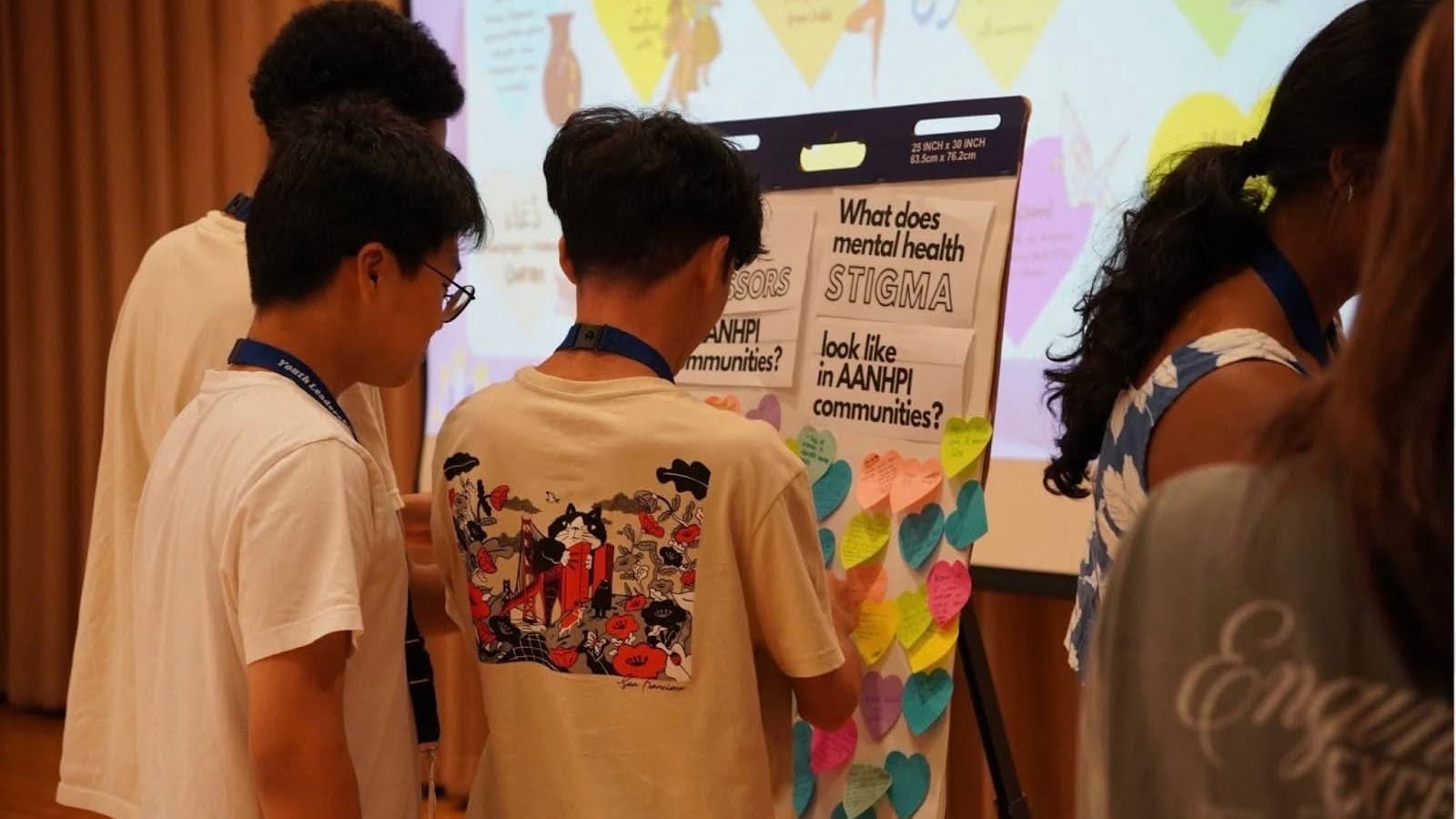
Teresa Hsu and Michelle Garcia noticed teens and young adults in their Asian American community struggling with anxiety, particularly around school-related pressure. So the two have started a program to train Asian American high school students to help one another manage their mental health and understand the role history has played in shaping the pressures they currently feel.
Youth leaders learn about mental health stigmas in the Asian American community – a first step to improving health.
Teresa Hsu had a sister who was suicidal in high school.
“My teen sister had turned to me and said she wanted to kill herself,” she recalled. “Basically, I can’t do this anymore. I don’t want to be here.”
Hsu is now a psychologist in New York and the founder of the nonprofit SPEAK, and she knows the statistics: 3 in 10 Asian American youth have planned or attempted suicide. Many have anxiety, and as a cultural group, they tend to delay seeking help until symptoms become a crisis.
“ There’s a desire not to burden others,” added Michelle Garcia, Filipina American and the founder of the nonprofit Thriving Asians, which she says is felt even in second and third-generation youth.
Garcia said most teens aren’t likely to seek help from a clinician for their anxiety or depression, but there’s a good chance they will turn to their peers, family or a spiritual leader. That’s why she and Hsu developed the Young Visionaries program, a leadership program to help Asian American high school students to become watch guards for mental health needs in their communities.
It starts with a series of training — similar to an Immigrant Family Psychology 101 — which explains concepts like acculturation stress and generational trauma. They talk about conflicting values at home and at school: the expectation to show humility and respect in one setting, and to be outspoken and show leadership in the other.
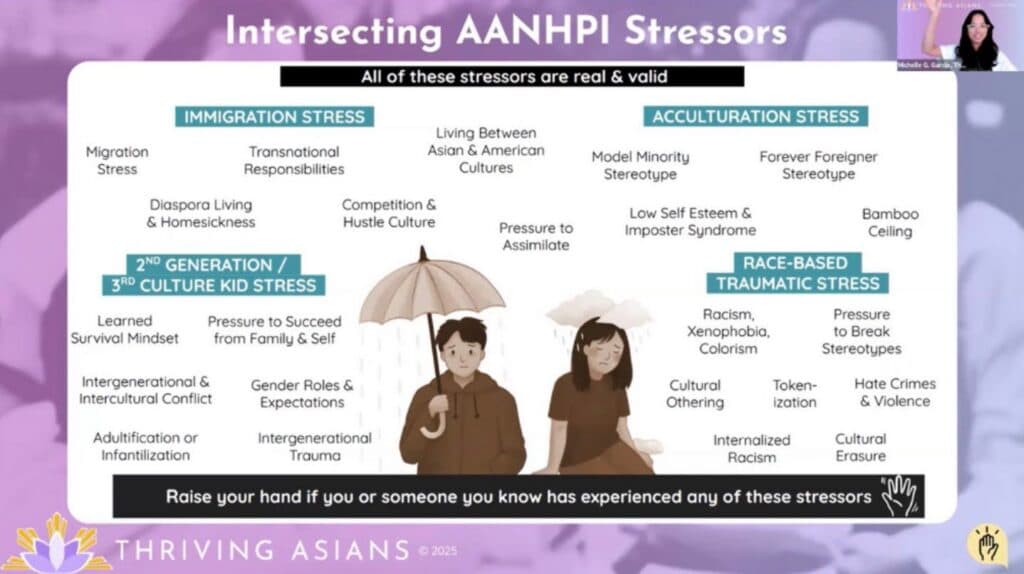
The program also explains why Asian immigrant parents value education so much. In the 20th century, immigrating to the US was a means of escaping war and poverty, but due to highly restrictive immigration policies, you often needed an elite education to be granted a visa to the US.
“In Asia, every single point matters,” Hsu said. “Every student is ranked, and that ranking contributes to where you end up going to college,” which in turn determines whether you can leave behind political turmoil or economic hardship.
Garcia noted how this scarcity mentality can persist even after immigrating: “This fear that If I don’t take these opportunities, I’m disappointing my elders, I’m missing out on something. I’m perceived as a failure.”
As a result, some immigrant families — even in the US — continue to see an elite education as a safety net, in the way their parents and grandparents did in their home countries.
In contrast, Hsu and Garcia try to help young people be more flexible in their thinking, recognizing that there isn’t a single path to financial security or happiness. Missteps are okay, and life, in general, isn’t linear.
Hsu asks youth: “ If you don’t get into Harvard, does that actually mean you’re not going to be successful? You and I know the answer is no.”
She helps teens ruminate less and encourages them to look beyond the college admissions process in determining self-worth. They learn strategies to manage their stress and about their own limitations as peers: when and how to offer friends advice and when to steer them toward professional help.
After the training, the teen ambassadors launch their own ideas to improve teen mental health in their neighborhoods and schools. One youth leader led parenting workshops in New York, and another is advocating for mental health policy change in DC.
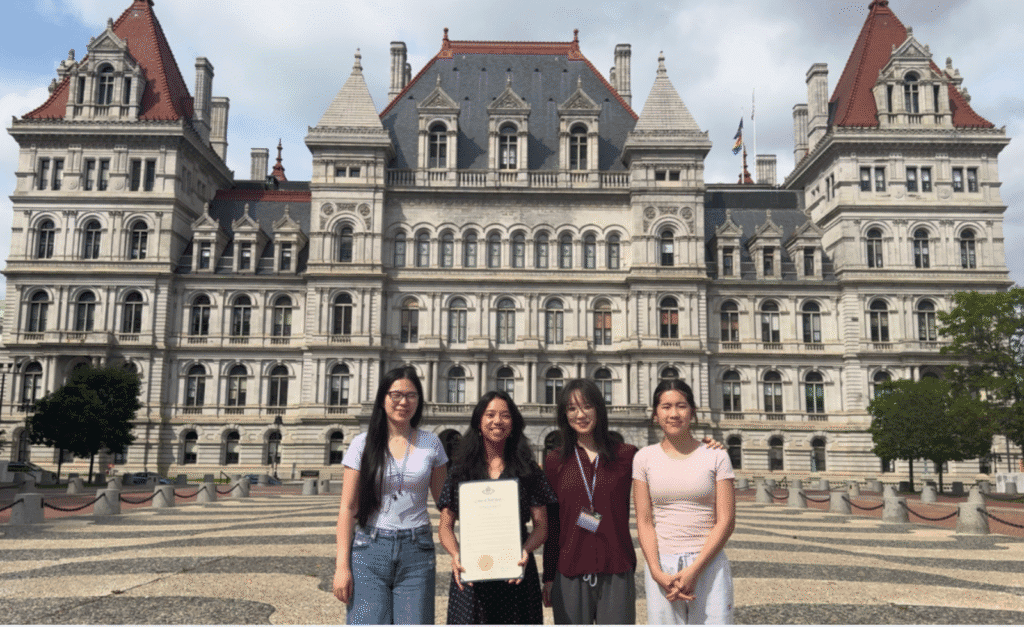
Ryan Li hosts a teen mental health podcast with his friend, Max Wang, where they discuss topics like peer pressure and assumptions.
“ They assume that their friends are getting hundreds on their math exams, and they have that pressure to perform as well as they imagine their peers to be performing,” Li shared.
When in fact, not all Asian Americans fit the model minority myth.
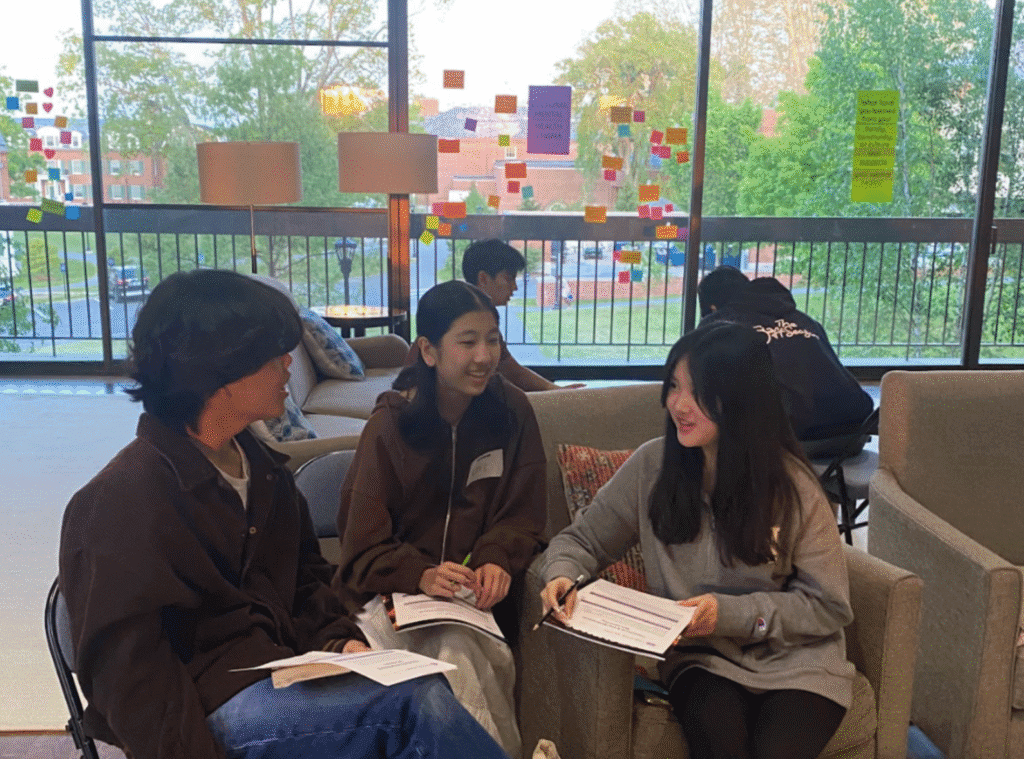
In Philadelphia, youth leader Caleb Chung is building a physical wellness space in Chinatown.
“The idea is also to not only provide an educational space, but also provide a space of relief, where people can come and share,” Chung said. Meeting in person helps counter negative self-talk, rumination and comparisons made on social media, he said, and, as for pressure from parents, it’s not necessarily all negative; it can serve as motivation.
But he added, “What they get wrong is the amount of pressure and the support that’s needed.”
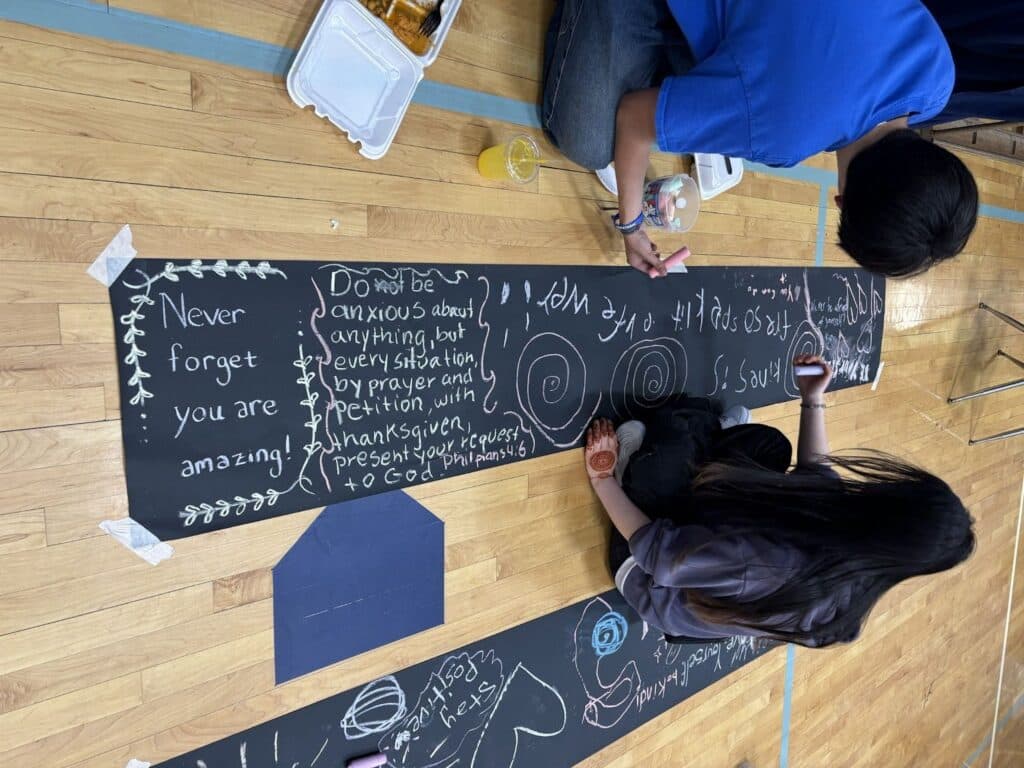
In some ways, the Young Visionaries program does just this: It provides both motivation and support. High-performing college-bound Asian Americans who sign up to help others are often at risk for anxiety, too — but a leadership program may be more within reach for them than therapy. So, it can be a stealth mental health program for the young leaders themselves.
Garcia said that with each of their training sessions, they “always start off with some kind of wellness practice that they can teach to their peers and their community members. So, they’re all building skills in self-compassion, self-advocacy, self-care.”
In other words, while they’re learning strategies to support their friends, something else is happening, too — the young leaders are learning to take better care of themselves.
If you are having thoughts of suicide, call or text 988 to reach the 988 Suicide and Crisis Lifeline. Or connect to the National Suicide Prevention Lifeline at 1-800-273-8255. Go to SpeakingOfSuicide.com/resource.DC for a list of additional resources.
The Solutions Journalism Network HEAL fellowship supported this story.