Public radio’s longest-running daily global news program.
©2026 The World from PRX
PRX is a 501(c)(3) organization recognized by the IRS: #263347402.

New tariffs introduced by the Trump administration are significantly impacting cross-border manufacturing operations in US and Mexican states along their shared border. Businesses historically dependent on frictionless trade are now pausing investments due to the shifting policies.
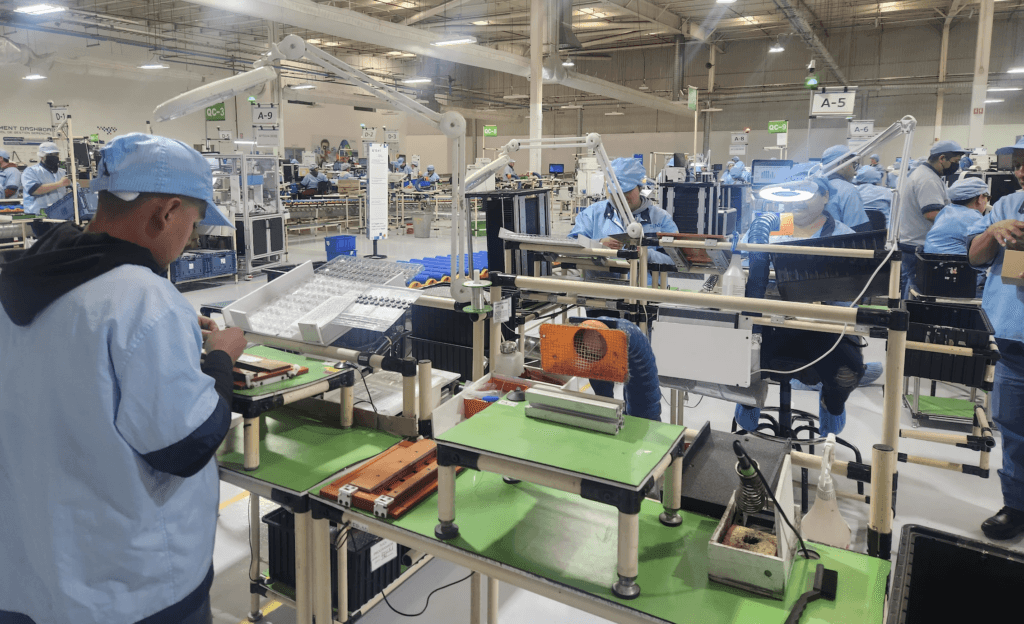
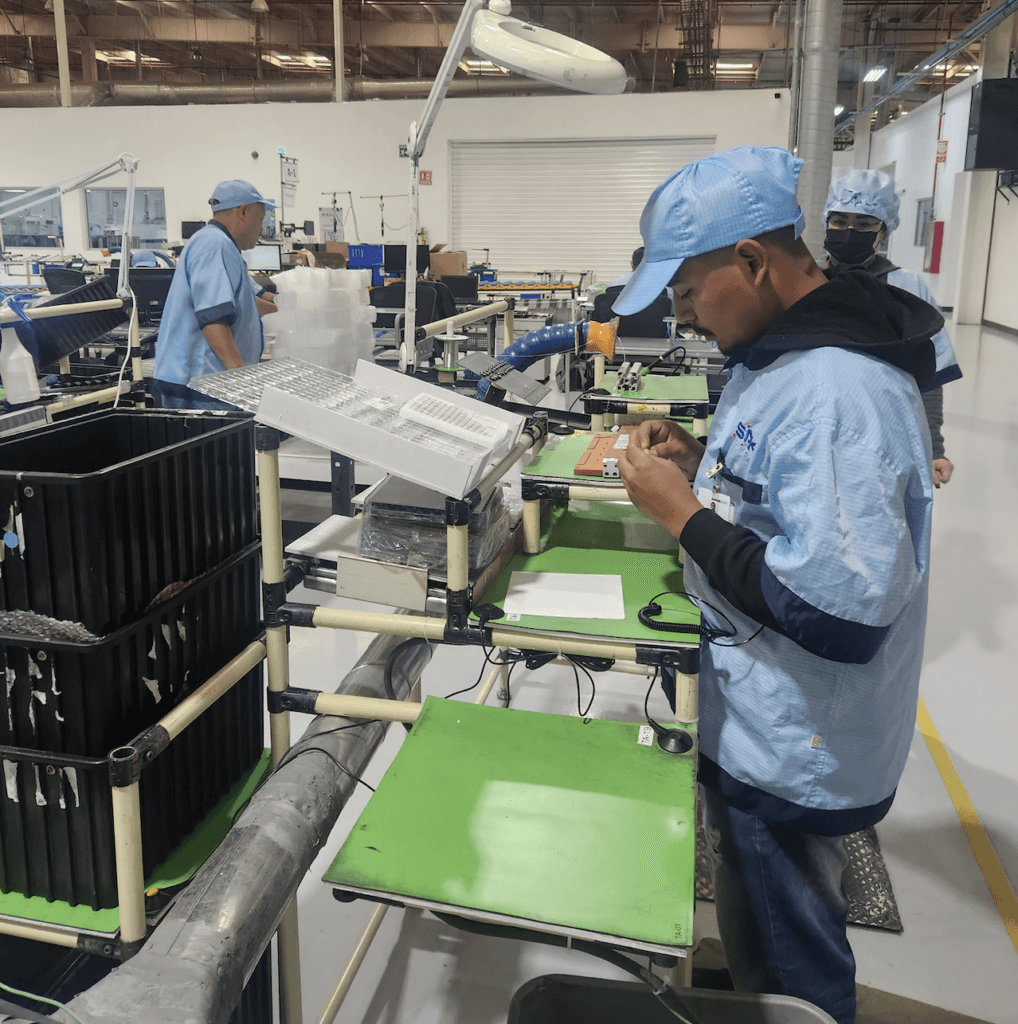
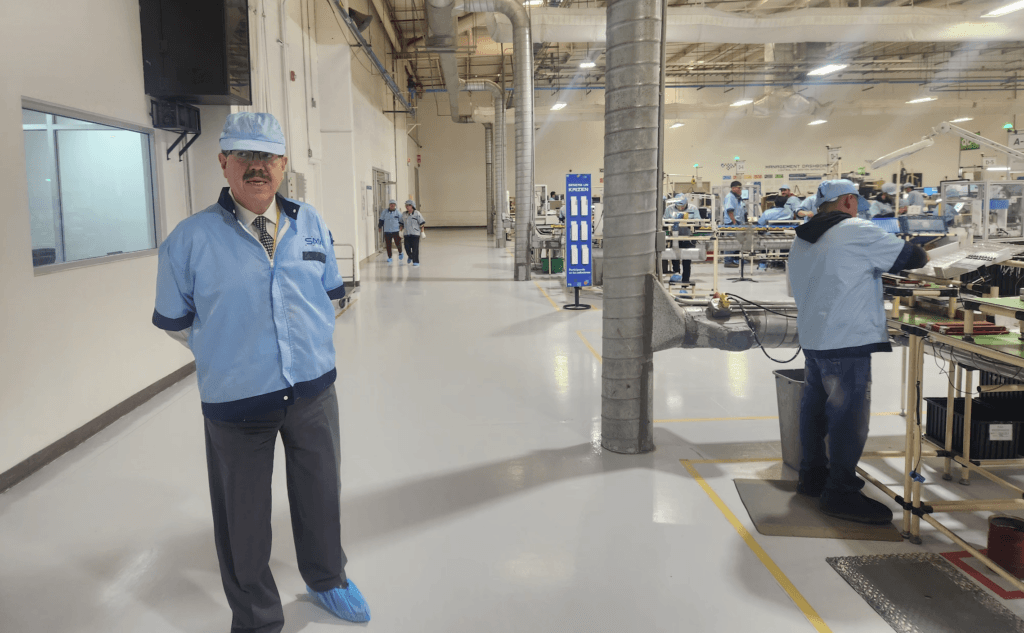
The SMK Electrónica manufacturing plant in Tijuana, Mexico.
The cities of Tijuana in Mexico and San Diego in the US make up a tightly knit metropolitan area spanning two countries. Manufacturing has long been a lifeline for industries on both sides, with products traveling across the border many times as they’re being assembled. But recently, that smooth back-and-forth has hit some bumps as new tariffs begin to disrupt the flow of goods.
The Trump administration recently imposed a 25% levy on imported vehicles and automotive components, as well as a similar tariff on imports containing aluminum and steel, which is significantly impacting cross-border manufacturing operations in Baja California. Due to shifting policies, businesses in Tijuana, historically dependent on frictionless trade with the US, are now pausing investments due to the shifting policies.
Tijuana has been a powerhouse for the automobile, electronics and aerospace industries. And in recent years, it has also emerged as a leading center for medical device production, hosting more than 40 plants and employing nearly 42,000 workers in the sector. For decades, hundreds of companies in this region have been able to send goods into the US without being taxed — thanks to the North American Free Trade Agreement (NAFTA) dating back to 1994.
The region’s GDP, which combines Southern California and the Mexican state of Baja California — nicknamed CaliBaja — has grown to $250 billion. Mexico has been the No. 1 US trade partner for the past two years — thanks, in part, to flourishing border regions like this one.
But President Donald Trump is disrupting a way of life, according to Kenia Zamarripa, Vice President of San Diego’s Chamber of Commerce.
“More than integrated, we say that we’re producing together, and the uncertainty of tariffs is costing us that power of attracting indirect investment or even allowing our small businesses or large employees to expand their investment here,” Zamarripa said.
Trump signed executive orders on Feb. 1 imposing 25% tariffs on all imports from Mexico and Canada, citing concerns over illegal immigration and fentanyl trafficking.
Following discussions with Mexican President Claudia Sheinbaum and then-Canadian Prime Minister Justin Trudeau, Trump agreed to a one-month delay in implementing the tariffs, contingent upon both countries enhancing border security measures.
Then on March 4, the delayed tariffs took effect. But just three days later, they were also put on pause.
Finally, on April 4, Trump declared a 10% universal tariff on all imports, with higher rates for countries with significant trade deficits with the US, including Mexico. All goods that are 100% Mexican and fall under the US-Mexico-Canada Agreement (USMCA) — which replaced NAFTA on July 1, 2020 — are not subject to the new tariffs, unless they contain aluminum or steel.
Eduardo Acosta, a customs broker in San Diego who helps businesses move goods across the border, said that Trump’s inconsistency over the tariffs is creating chaos in the region.
“People were crossing everything they could out of Mexico into the US, putting a big strain on US warehousing on the US side of the border,” Acosta said, “because of course everybody wanted to get everything across, put it in a warehouse and just have it here.”
He says there’s more clarity now about what Trump wants: “It’s a trade war against China, not Mexico.” But a large percentage of the raw materials, and components used in factories in Tijuana come from China.
He mentioned headphones as one example of products exported to the United States.
“A lot of them are made in Tijuana, but many of the smaller pieces, and the more high-tech parts are being made in China,” he explained. “And because the transformation in Mexico is not substantial [enough] to make it a ‘Made in Mexico’ product, it’s still a Chinese product, so the duties that are having to be paid are unimaginable.”
Arturo Pérez Beher, another customs broker in the area, has been busy helping clients classify all these parts to find out which ones contain aluminum and steel, and which ones come from China and other places.
“For us, it has been one of the most hectic times, with a lot of clients requesting to evaluate if they qualify for any tariff exemption,” Pérez Beher said.
But many Mexican officials and business people say this situation has created a new window of opportunity for Mexico. Unlike countries like Germany, South Korea and Japan, Mexico has been exempt from several of Trump’s most stringent tariffs due to its unique position under the USMCA trade agreement.
Federico Serrano, general manager of SMK Electronica, a factory in Tijuana that assembles components and panels used in computers, smartphones and electric cars, said his company is absorbing most of the new tariffs, for now.
But he feels cautiously optimistic about the future, as the free trade exemption places Mexico at a comparative advantage, attracting businesses seeking alternatives to other higher-tariff markets.
Serrano said that Mexico could start producing many of the products currently made in China and elsewhere — boosting its economy even more.
Kenia Zamarripa from the San Diego Chamber of Commerce agrees: “At some point, the region will have to look into manufacturing batteries for vehicles. And I think that is something that everyone on both sides of the border are looking to find.”
Currently, about 80% of Mexican exports go to the United States.
Serrano said this should be a lesson for Mexico to avoid relying so much on the US — and find other markets instead.
Ernesto Eslava contributed to this report from Tijuana.
