Business, war and Gaddafi, Inc.
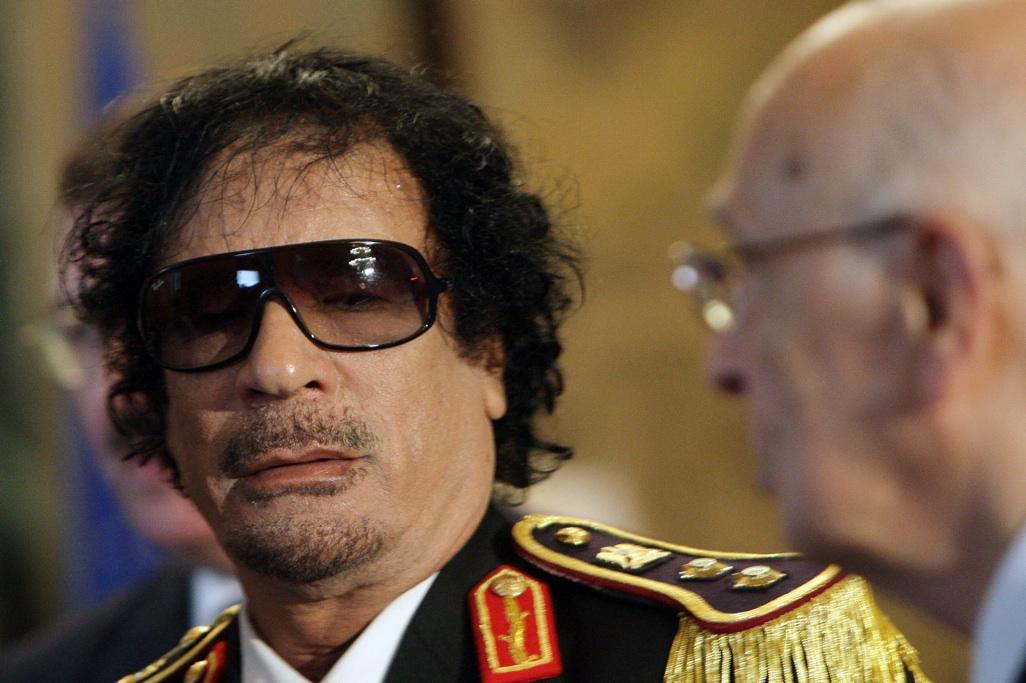
Libya’s leader Muammar Gaddafi attends a meeting with Italian President Giorgio Napolitano at the Quirinale Palace on June 10, 2009 in Rome, Italy.
Today's must-read Libya story (aside from the latest news from James Foley in Benghazi) is this gripping New York Times piece on the business dealings of Gaddafi and his family.
Here's the money quote from the piece:
“Libya is a kleptocracy in which the regime — either the al-Qadhafi family itself or its close political allies — has a direct stake in anything worth buying, selling or owning,” a classified State Department cable said in 2009."
According to the New York Times, in that same year Gaddafi's top aids made a shocking demand to 15 global energy companies: help the regime pay for the $1.5 billion Libya owed for its role in the 1988 downing of Pan Am flight 103 and other terrorist attacks, or there would be "serious consequences" for their oil leases in the country.
"Many of those businesses balked, saying that covering Libya’s legal settlement with victims’ families for acts of terrorism was unthinkable," the New York Times story states. "But some companies, including several based in the United States, appeared willing to give in to Libya’s coercion and make what amounted to payoffs to keep doing business, according to industry executives, American officials and State Department documents."
Of course, the level of corruption in Libya is no surprise.
You know things are bad when Bernie Madoff approaches you to run your $70 billion sovereign wealth fund. Libyan officials "did not accept" the offer, the New York Times reports.
And in its latest Corruption Perceptions Index, Transparency International gives Libya a ranking of 2.2 out of 10 (with 10 being "very clean," and zero representing "highly corrupt").
That high level of corruption is relevant to the ongoing conflict in Libya.
According to State Department documents, Libya's leader has been personally involved in many deals.
As a result, Gaddafi is estimated to have amassed "tens of billions of dollars" in cash over the years, which he can now use to maintain his grip on power — even as the U.S. and its allies intensify attacks on forces loyal to the regime.
Whoever said business news was dull?
Every day, reporters and producers at The World are hard at work bringing you human-centered news from across the globe. But we can’t do it without you. We need your support to ensure we can continue this work for another year.
Make a gift today, and you’ll help us unlock a matching gift of $67,000!