Sally Ride, first American woman in space, dies from cancer aged 61
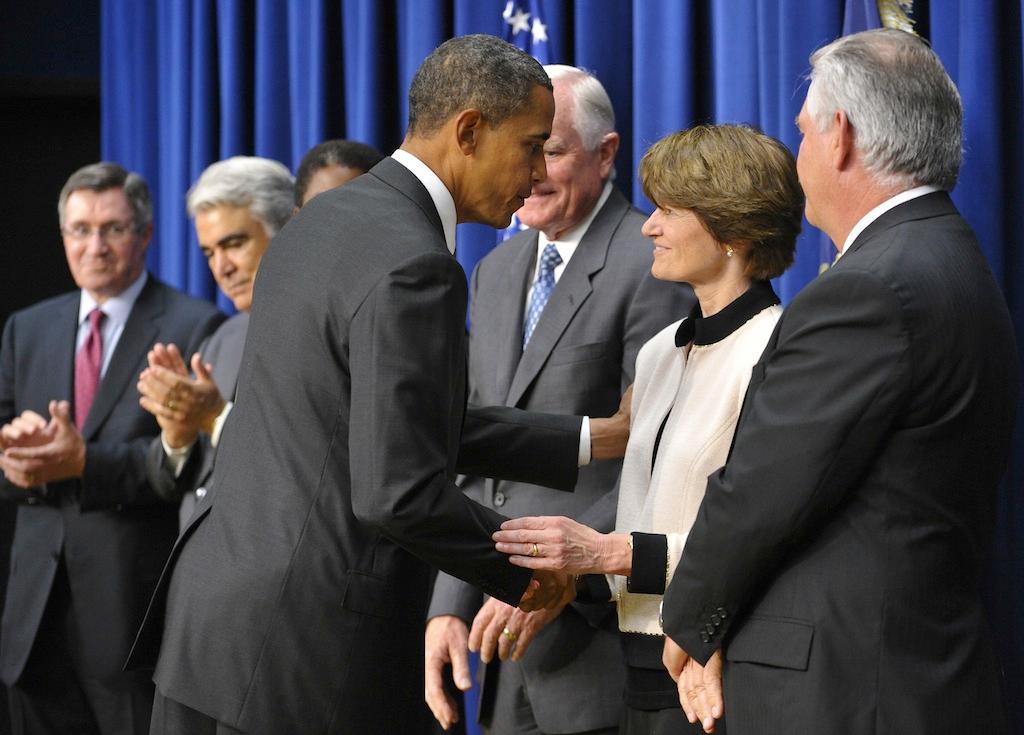
President Barack Obama greets former astronaut Sally Ride after speaking on the expansion of his ‘Educate to Innovate’ initiative on September 16, 2010 in Washington, DC.
Sally Ride, the first American woman in space, died today after a 17-month battle with pancreatic cancer. She was 61.
In 1983 Ride blasted into space – and the history books – aboard the Challenger.
According to a statement issued by Sally Ride Science, the company Ride started to provide school programs, classroom materials and training to science teachers, the physicist died peacefully in La Jolla, California, earlier today.
Ride is survived by her partner of 27 years, Tam OShaughnessy, her mother, sister and other family.
“Sally lived her life to the fullest, with boundless energy, curiosity, intelligence, passion, joy, and love. Her integrity was absolute; her spirit was immeasurable; her approach to life was fearless,” the statement said.
“She had the rare ability to understand the essence of things and to inspire those around her to join her pursuits.”
Ride, who had a Ph.D in physics and a degree in English, returned to space in 1984 and was supposed to join another mission but it was canceled after the Challenger disaster in 1986, NPR reported.
"Sally Ride broke barriers with grace and professionalism — and literally changed the face of America's space program,” NASA Administrator Charles Bolden was quoted by CNN as saying.
"The nation has lost one of its finest leaders, teachers and explorers.”
More from GlobalPost: Space smells like seared steak, raspberries, rum
The article you just read is free because dedicated readers and listeners like you chose to support our nonprofit newsroom. Our team works tirelessly to ensure you hear the latest in international, human-centered reporting every weekday. But our work would not be possible without you. We need your help.
Make a gift today to help us reach our $25,000 goal and keep The World going strong. Every gift will get us one step closer.