Indian government presents anti-corruption bill
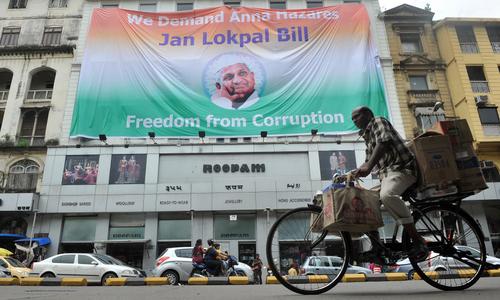
An Indian deliveryman ride past a huge banner supporting social activist Anna Hazare’s crusade for the the new anti-corruption law, called the “Lokpal” bill in Mumbai on August 15, 2011. The government presented its own version of the bill in parliament Thursday.
India's parliament was forced to adjourn twice due to what might be called raucous discussion, but eventually the government succeeded in introducing the much awaited and debated Lokpal bill — designed to eliminate corruption through the creation of a powerful ombudsman's office.
According to the Hindustan Times, the house was forced to adjourn due to opposition to the government's initial decision to omit a quota for religious minorities from the laundry list of groups for whom half of the positions with the new watchdog will be reserved. The bill was eventually tabled after the government cleared a proposal to include minorities (read: Muslims) in the quota list.
No doubt there will still be questions and arguments about the other salient features of the bill, such as the decision not to grant the Lokpal unlimited authority over the Central Bureau of Investigation.
Already, anti-corruption Anna Hazare has vowed to resume his hunger strike in protest.
We want to hear your feedback so we can keep improving our website, theworld.org. Please fill out this quick survey and let us know your thoughts (your answers will be anonymous). Thanks for your time!