India woos foreign money as rupee drifts downward
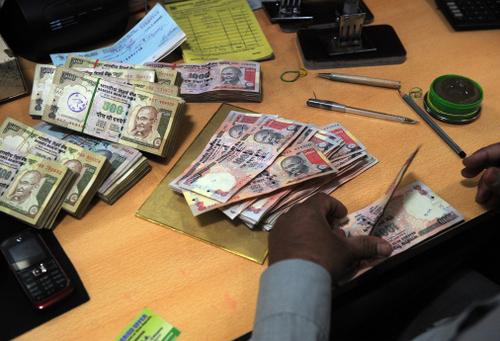
An employee counts Indian rupee notes at a bank in Mumbai on May 16, 2012.
Maybe the Indian government is really listening.
As economists call for more moves to woo foreign investment — including the elimination of bureaucratic bottlenecks — India announced a couple measures to show that they're trying.
Of course, the rupee also continued to drift downward, bumping along near record lows despite the prime minister's move to hike petrol prices last week.
The government said it has cleared 25 foreign direct investment (FDI) proposals, including that of AIF III of Mauritius and Mumbai based Microqual Techno, worth about $540 million, according to the Economic Times. However, it rejected eight proposals and deferred 13, suggesting that red tapism (like your prototypical Bollywood villain) isn't really dead.
The policy paralysis that Singh has been so keen to deny, for instance, as well as difficulties acquiring land for industrial projects, have resulted in more than 500 projects, mostly power and steel, being shelved or put on hold during 2011-12, the Indian Express reported.
The delays and cancellations cost India a total investment of more than $90 billion.
Meanwhile, according to Moneycontrol.com, the finance ministry moved to allow foreign retail investors to invest in an additional $1 billion in Indian corporate bonds and debt schemes, over and above the existing $20 billion limit
The ministry expects it to take six to 18 months for the new measures to attract investors.
The story you just read is available for free because thousands of listeners and readers like you generously support our nonprofit newsroom. Every day, reporters and producers at The World are hard at work bringing you human-centered news from across the globe. But we can’t do it without you: We need your support to ensure we can continue this work for another year.
Make a gift today, and you’ll get us one step closer to our goal of raising $25,000 by June 14. We need your help now more than ever!