Depressed moms more likely to wake sleeping babies, study says
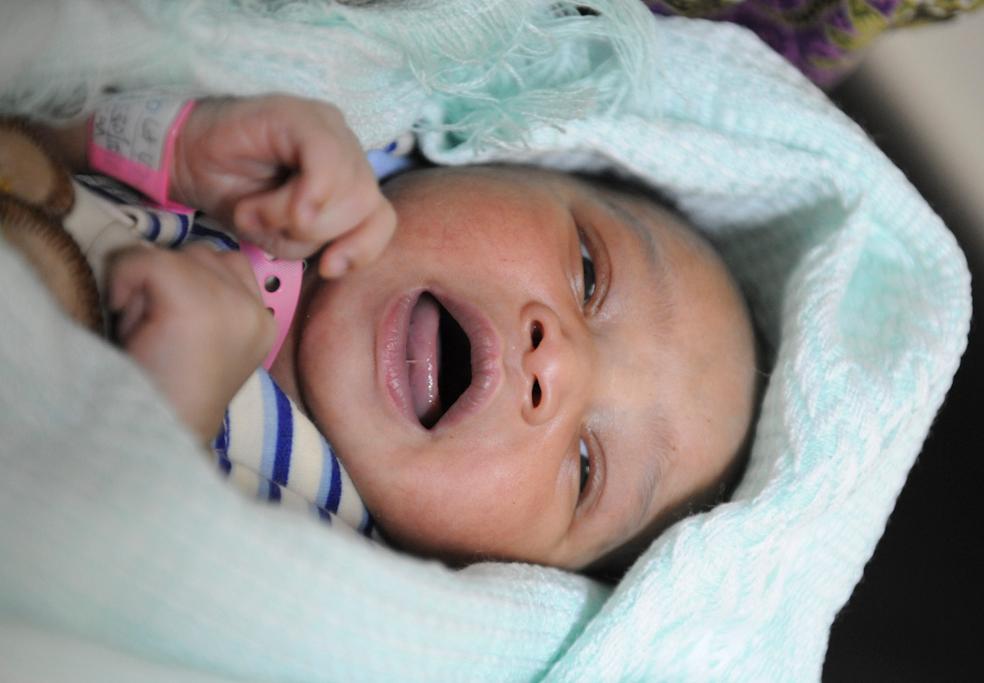
Sixteen-year-old mother and student in a secondary school Onyinyechi Okeowo holds her new born baby at Gbagada General Hospital in Lagos on October 31, 2011. The new baby weighed 2.9, was delivered at 11.45pm on October 30. The United Nations says the world population will hit seven billion near the end of October. The world welcomed its symbolic seven billionth baby today amid a stark warning from UN chief Ban Ki-moon of the need to tackle inequality on a planet where almost a billion people go hungry.
A new study concludes depressed mothers are more likely to wake up their sleeping infants than happy moms.
The research from Penn State shows that depressed mothers were more likely to interfere with their children's sleep, even though the infants didn't need it, CBS News reported.
Babies who woke up more at night were more likely to have depressed mothers, but the link was not as strong as the depressed moms who woke their children up.
"Especially interesting about this was that when depressed mothers sought out their infants at night, their infants did not appear to be in need of parental help. They were either sound asleep or perhaps awake, but not distressed” said Douglas Teti, associate director of the Social Science Research Institute at Penn State.
Teti's said unhappy moms go to their babies for their own emotional security or “contact comfort,” The Globe and Mail reported.
The study also cited preliminary data showing that moms with postpartum marital troubles are more likely to share a bed with their babies.
More from GlobalPost: Walking may treat depression, research says
Every day, reporters and producers at The World are hard at work bringing you human-centered news from across the globe. But we can’t do it without you. We need your support to ensure we can continue this work for another year.
Make a gift today, and you’ll help us unlock a matching gift of $67,000!