Anders Borg says Greece could exit Eurozone in next 6 months
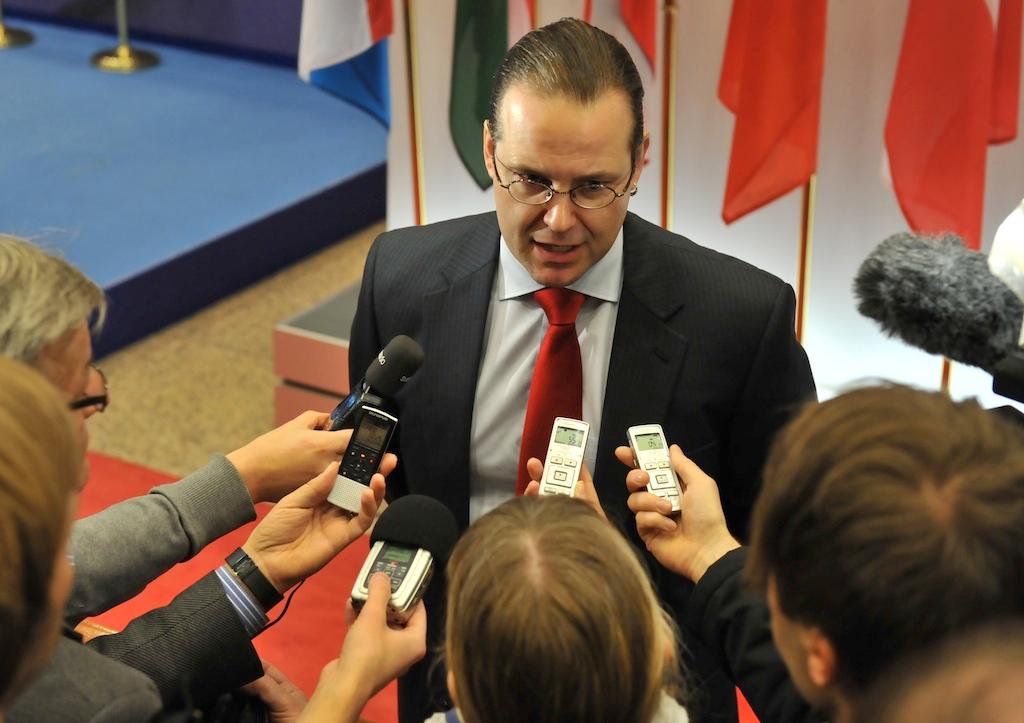
Swedish Finance Minister Anders Borg talks to the press on January 24, 2012 before an EU Economy and Finance Council meeting at EU headquarters in Brussels.
Anders Borg, Sweden's finance minister, has warned that Greece could leave the Eurozone in six months or less.
“It’s most probable that they will leave,” Borg said during a speech at the International Monetary Fund's annual meetings in Tokyo, the Telegraph reported. “We shouldn’t rule out this happening in the next half-year.”
Borg has been consistently harsh when speaking of Greece's future in the Eurozone: In July, he predicted “some sort of default” from the Greeks, and said last month that European banks were prepared for the struggling country's exit, Bloomberg Businessweek reported.
"If it had to leave the Eurozone, it would probably find its competitiveness once again, and then Greece could get itself back on its feet afterwards," Borg said. "It is a difficult and complicated path, but it is difficult to see another that could work."
More from GlobalPost: IMF warns of possible global recession and risky economic domino effect
Last month, Greek Prime Minister Antonio Samaras said that ducking out of the common currency was impossible for his country, which is in its fifth year of recession.
“An exit from the Eurozone is not a choice for Greece, it's a nightmare. For us it's not an option, it's a total disaster," he said, according to Press TV.
One in five Greeks are currently unemployed, and citizen's pensions and salaries have been slashed by up to 40 percent, Press TV reported.
Borg's comments come as the European Union was awarded the Nobel Peace Prize, a controversial award given the ongoing financial crisis in the region.
Investors “are betting that we won’t have the political strength” to defend the euro, Merkel said in a speech Saturday, according to Bloomberg. “I am determined to make the effort, even if it’s hard."
More from GlobalPost: EU wins Nobel Peace Prize for 'advancing peace in Europe'
Our coverage reaches millions each week, but only a small fraction of listeners contribute to sustain our program. We still need 224 more people to donate $100 or $10/monthly to unlock our $67,000 match. Will you help us get there today?