Rare whale skeleton discovered on Antarctica ocean floor
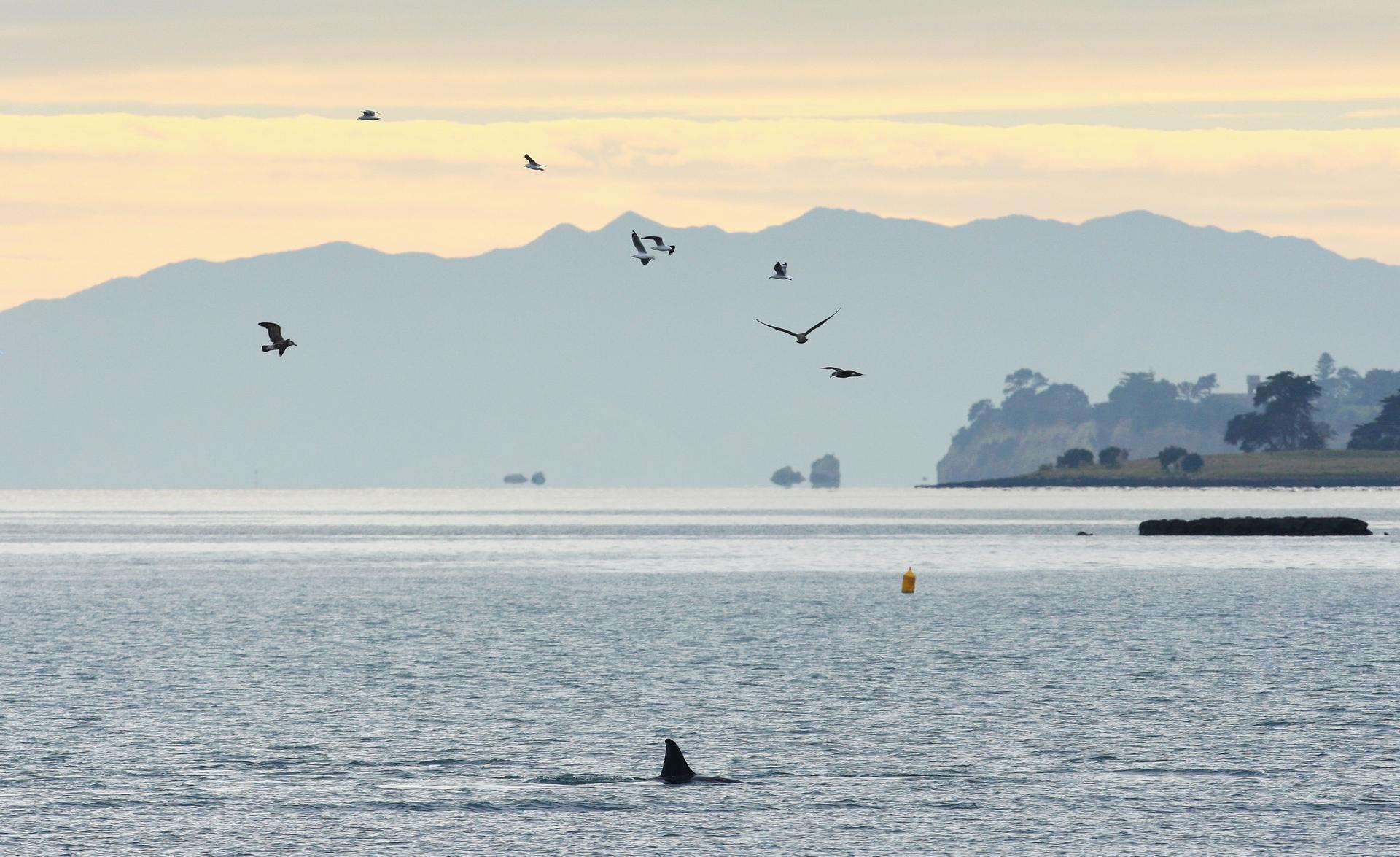
A pod of whales are seen off St Heliers Bay near Auckland, on New Zealand’s north island.
Scientists have located a rare Minke whale skeleton on the floor of the ocean in Antarctica, not far from the South Sandwich Islands.
Whale skeletons are a valued scientific find as they are rare and exceedingly difficult to pinpoint on the chilly ocean floor, and usually are only found when underwater explorers manage to navigate right over one with a submersible vehicle.
Read more from GlobalPost: Rare melon-headed whale dies on Trinidad beach
The newly-discovered Minke whale skeleton has proved host to numerous species of scavengers feasting on the bones and body, including zombie worms, bacteria, and other invertebrates little known to science, according to a statement put out by the University of Southhampton in England.
“We were just finishing a dive with the UK's remotely operated vehicle, Isis, when we glimpsed a row of pale-colored blocks in the distance, which turned out to be whale vertebrae on the seabed,” said study researcher Dr. Jon Copley in the statement.
The findings have been published online in Deep-Sea Research II: Topical Studies in Oceanography, which describes the surprising deep-sea discovery in detail.
“One of the great remaining mysteries of deep ocean biology is how these tiny invertebrates can spread between the isolated habitats these whale carcasses provide on the seafloor,” study co-author Dr. Adrian Glover said.
“Our discovery fills important gaps in this knowledge.”
Every day, reporters and producers at The World are hard at work bringing you human-centered news from across the globe. But we can’t do it without you. We need your support to ensure we can continue this work for another year.
Make a gift today, and you’ll help us unlock a matching gift of $67,000!