Mass extinction hit ancient bees at the same time as dinosaurs
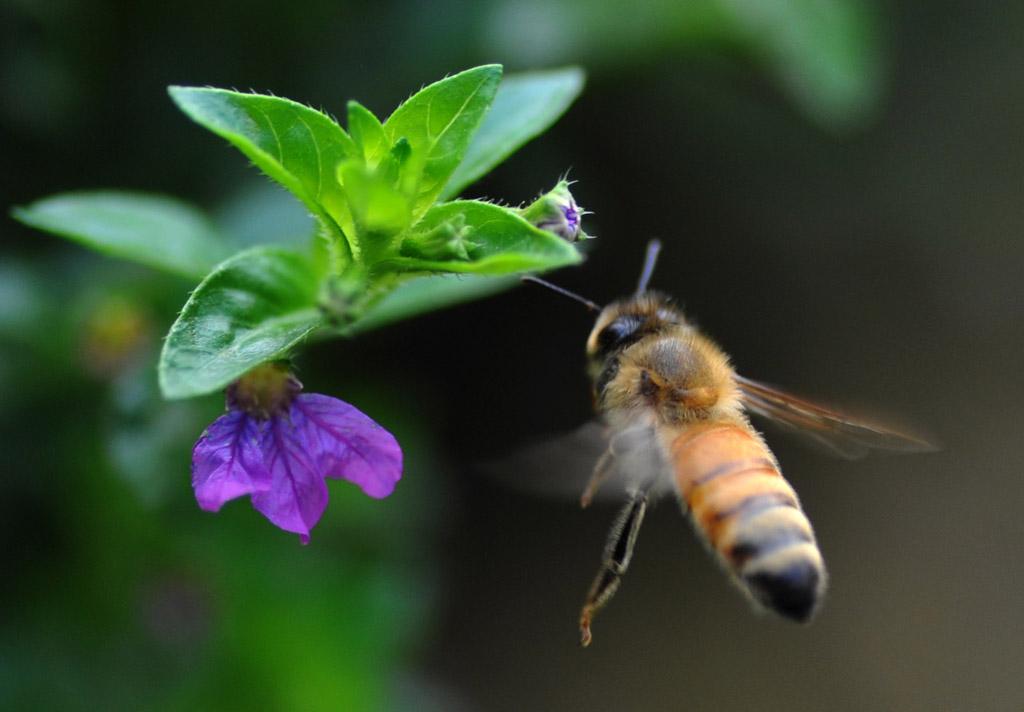
A honeybee hovers over a flower. A new study has found that a parasitic fly may be responsible for decimating bee populations.
It's widely known that dinosaurs faced mass extinction 66 million years ago, but a smaller creature also faced a mass die-off: bees.
Scientists have long suspected that species of carpenter bees faced extinction at the same time as the dinosaurs, due to a decrease in the population of the flowering plants they rely on. But fossil records of bees are scarce, forcing innovative researchers to use computer-based techniques to figure out what really happened.
More from GlobalPost: Europe bans some pesticides to help bees
In research published in the PLOS One journal, lead author Sandra Rehan of the University of New Hampshire determined that mass extinction did indeed take place in the bee group known as Xylocopinae, or carpenter bees.
“The data told us something major was happening in four different groups of bees at the same time,” said Rehan in a university press release. “And it happened to be the same time as the dinosaurs went extinct.”
Rehan's team used molecular phylogenetics to figure out what happened to bees in the distant past, analyzing DNA from four "tribes" of carpenter bees from every world continent. They were able to "timestamp" certain genetic variations and extrapolate about their history from there.
Sadly, bees may be undergoing another mass extinction in the modern era — and the human food supply could be at stake, as bees are estimated to pollinate a considerable percentage of the plants we eat.
World honeybee populations are dropping dangerously quickly due to what's called "colony collapse disorder," a poorly understood malady that has caused bee populations in the US alone to decline by one-third, according to the Natural Resources Defense Council.
Researcher Rehan hopes her findings can provide insight into the current bee crisis.
“Understanding extinctions and the effects of declines in the past can help us understand the pollinator decline and the global crisis in pollinators today,” she said, according to a UNH press release.
Every day, reporters and producers at The World are hard at work bringing you human-centered news from across the globe. But we can’t do it without you. We need your support to ensure we can continue this work for another year.
Make a gift today, and you’ll help us unlock a matching gift of $67,000!