Public radio’s longest-running daily global news program.
©2026 The World from PRX
PRX is a 501(c)(3) organization recognized by the IRS: #263347402.
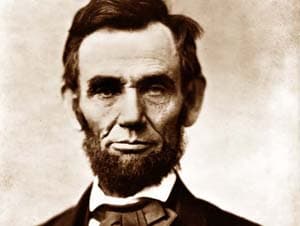
Celebrate the 200th birthday of “Honest Abe” with a fresh look at the man, the myth and what he means today.
The following is not a full transcript; for full story, listen to audio.
He was born in a log cabin, taught himself to read, became a lawyer, debated Stephen Douglass, and was elected President. He led our country through a bloody Civil War, freed the slaves, reuinted North and South and, at the height of his success, was assassinated. Abraham Lincoln is an American legend. But how much do we really know about the man behind the myth. In this hour of “To the Best of Our Knowledge,” debating Lincoln. Celebrate the 200th birthday of “Honest Abe” with a fresh look at the man, the myth and what he means today.
Historian Orville Vernon Burton tells Jim Fleming about the parallels between Abraham Lincoln and Barack Obama. He thinks the men and their times have a lot in common. Burton is the author of “The Age of Lincoln.” Hear voxpops from visitors and staff at the Abraham Lincoln Presidential Museum in Springfield, Illinois.
Doris Kearns Goodwin talks with Jim Fleming about her best-selling biography, “Team of Rivals.” And more voxpops about lessons President Obama might draw from this aspect of President Lincoln’s experience. Also, Harvard University historian John Stauffer talks with Steve Paulson about whether or not Lincoln was a racist. Stauffer is the author, most recently, of “Giants: the Parallel Lives of Frederick Douglass and Abraham Lincoln.”
Historian and president of Harvard University, Drew Gilpin Faust tells Steve Paulson that Civil War deaths consumed the entire nation with grief and transformed America in many ways. Her book is called “The Republic of Suffering.” Also, Sarah Vowell is obsessed by presidential assassinations. She tells Steve Paulson about her road trip to explore the mysterious “Dr. Mud,” the surgeon who treated Lincoln’s assassin, John Wilkes Booth. Maybe he was in on it?
“To the Best of Our Knowledge” is an audio magazine of ideas – two hours of smart, entertaining radio for people with curious minds. More “To the Best of Our Knowledge”