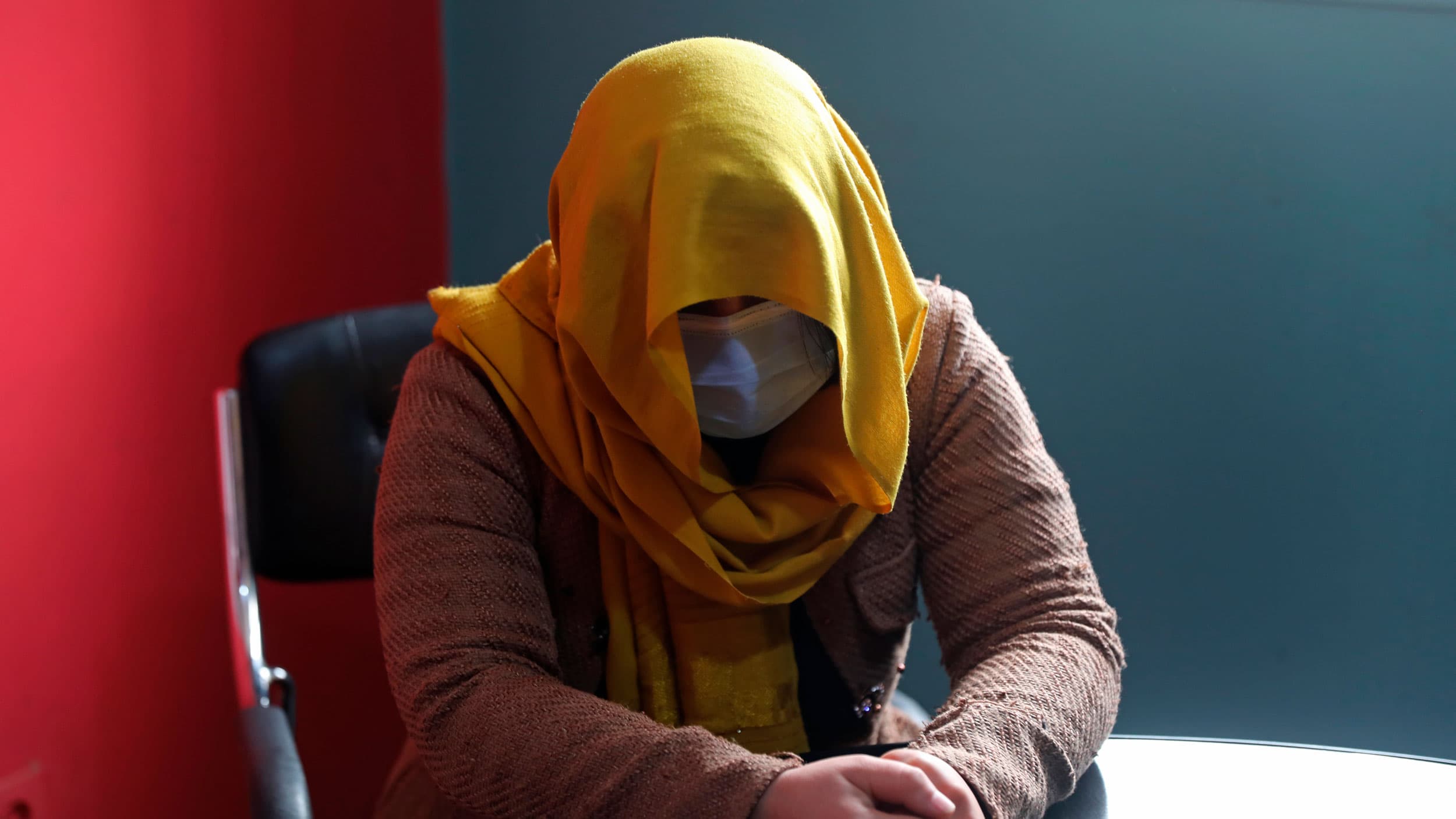
A female TV presenter from southern Afghanistan hides her identity for security concerns as she gives an interview to The Associated Press in Kabul, Afghanistan, Wednesday, Feb. 3, 2021.

Journalists walk a fine line under Taliban rule

Full Episode

A female TV presenter from southern Afghanistan hides her identity for security concerns as she gives an interview to The Associated Press in Kabul, Afghanistan, Feb. 3, 2021. 

Rahmat Gul/AP

Taliban spokesmen have said they’ll be more accommodating toward journalists than in previous years, but Ayesha Tanzeem, the Afghanistan Pakistan bureau chief for Voice of America, is wary. And, Khalida Popal says she founded the Afghan women’s football team in 2007 as an act of defiance against the Taliban. Now in exile, she is fielding calls from her former teammates who fear for their lives. Also, Olympic athletes may have left the Games, but the athletes’ village in Tokyo is back in use, currently filling up with 4,000 Paralympian athletes, ready to compete in the Tokyo 2020 Paralympic Games. 

In This Episode

In this photo provided by the US Marine Corps, two civilians during processing through an Evacuee Control Checkpoint during an evacuation at Hamid Karzai International Airport, in Kabul, Afghanistan, Wednesday, Aug. 18, 2021. 
‘If journalists leave a scene, it becomes a black hole,’ VOA journalist in Kabul says
Special Coverage
Kpinchilla, a small village in northern Ghana, reels under the impact of the climate crisis.
Glasgow climate talks: Africa negotiators mobilize for climate finance 
Special Coverage
Foosball with the pope
Paralympic Games to begin under extended state of emergency in Tokyo
Armin Laschet, chairman of the German Christian Democratic Union, CDU, addresses the media during a press conference at the party's headquarters in Berlin, Germany, Monday, May 17, 2021.
A massive security flaw exposed in Germany — then a criminal investigation
Special Coverage
First Afghan American woman elected to public office in the US speaks up for the Afghan people
A US soldier with Apache Company of Task Force 3-66 Armor, out of Grafenwoehr, Germany, stands guard at a police checkpoint at Gulruddin pass in Sar Hawza district of Paktika province, south of Kabul, Afghanistan, Dec. 1, 2011.
US biometric devices are in the hands of the Taliban. They could be used to target Afghans who helped coalition forces.
Special Coverage
Murders in western Turkey raise fear of ethnic violence against Kurds
Exiled Afghan women’s soccer captain fears for her teammates back home