PRX is a 501(c)(3) organization recognized by the IRS: #263347402.
Lula to pave highway through untouched part of Brazilian Amazon
Brazilian President Luiz Inácio Lula da Silva says the government will invest $75 million to pave and improve a highway running through a largely untouched section of the Amazon. That’s fueling concerns about landgrabs leading to deforestation. The World’s Host Carolyn Beeler speaks with Philip Fearnside, a scientist at the National Institute for Research in Amazonia, about the concerns.
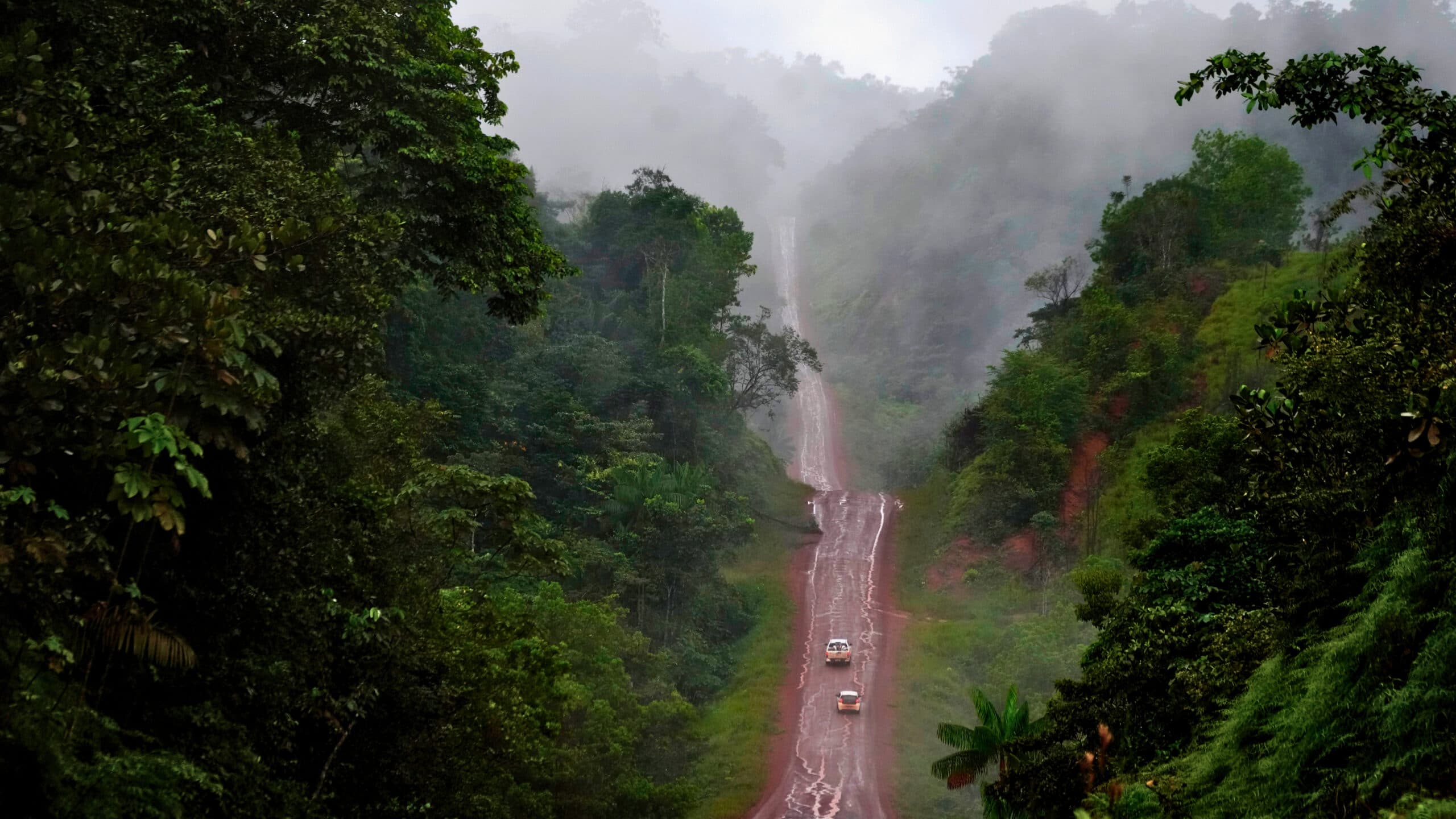
Vehicles move on an unpaved part of the BR-156 highway that connects the state capital Macapa with the city of Oiapoque, Amapa state, Brazil, March 13, 2026.
Asphalt is coming to one of the best-preserved regions of the Brazilian Amazon. At the end of May 2026, President Luiz Inácio Lula da Silva announced plans to pave and improve a highway to connect remote northern areas of Brazil with the rest of the country.
The announcement has reignited environmental concerns over deforestation in the rainforest. To understand the matter, The World’s Host spoke with Philip Fearnside, a scientist at Brazil’s National Institute for Research in Amazonia (INPA). He said completing the highway is the start of something much bigger.
According to him, “when the roads are open, people just move in. And I think for people in the US, it’s just difficult to imagine. But here in the Amazon, people go into these areas and invade the land or claim it, even if they aren’t actually there, and resell it, and it gets deforested. And that’s one of the things that’s going on right now with the BR-319 highway. You have all this area that is claimed by what are called land grabbers here.”
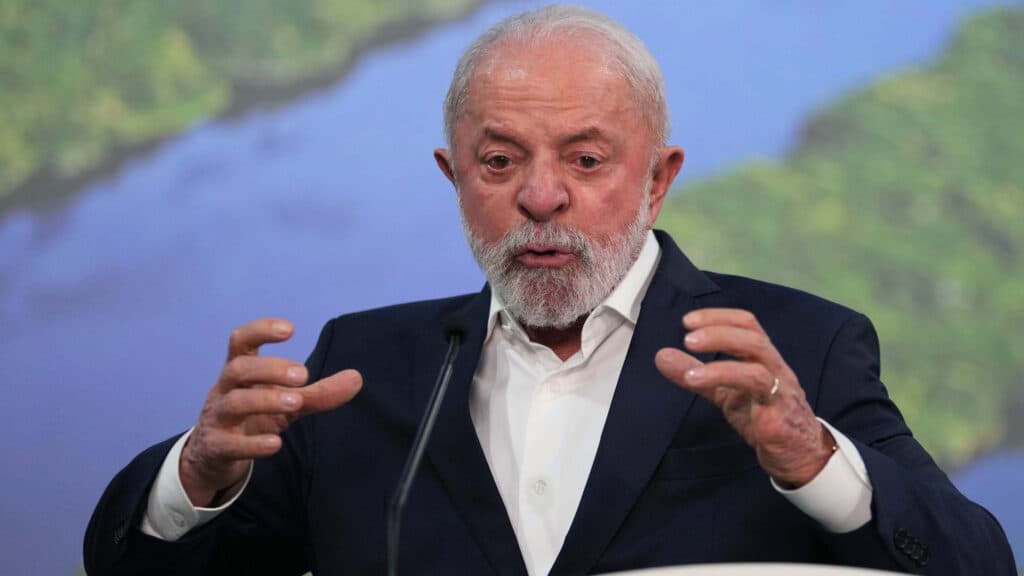
Brazil President Luiz Inacio Lula da Silva speaks during a news conference at the COP30 U.N. Climate Summit, Nov. 19, 2025, in Belem, Brazil. Andre Penner/AP Photo
Phillip explained that “these are big operators that claim big areas of government land, and then they often get titles to it. It used to be always through illegal means. Now they’re more and more using legal pathways to do this, and then they resell it to cattle ranchers, and it gets deforested. And then you also have smaller farmers invading it, and these are also being legalized. And so, that is a vicious circle because the more people get rewarded for invading these areas, the more and more people come and invade more areas, and so forth. It just keeps going.”
Carolyn Beeler: The government does say that it has a comprehensive plan for environmental protections along with this investment to complete this road. They include environmental monitoring of areas 31 miles wide on both sides of the highway for the entire length of the highway and some checkpoints. Does this allay your concern concerns about the environmental impact of this road?
Philip Fearnside: No, certainly not. Thirty-one miles is 50 kilometers on each side, and that’s just minuscule compared to the area that is being opened up by these state highways. You’re opening up a huge area of Amazon forest deforestation, and that has global impacts. It’s important to understand, too, that it affects people in the United States, as well, because you have a huge stock of carbon in the forest there, and global climate is very near a tipping point where global warming gets out of human control.
And a key part of that is exactly this area that’s being opened up for BR-319, because if that area is deforested, it would be much more than enough to push global climate past that tipping point. It also has a huge impact in Brazil because of the water cycling function of the forest. The Amazon forest recycles water. It falls as rain and then it goes back into the atmosphere through the leaves of the trees. And this water vapor is carried to São Paulo, for example. But if you cut down the forest, it’s not recycling the water.
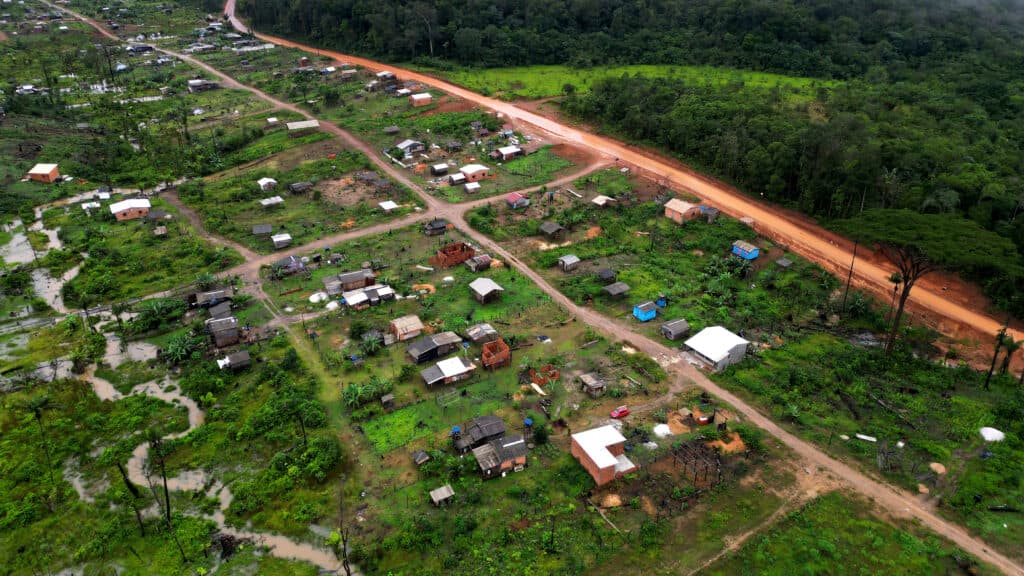
Trees line a cleared area known as Nova Conquista or New Conquest, where families are building houses near the center of Oiapoque, Amapa state, Brazil, March 11, 2026.Ernaldo Peres/ AP Photo
So, Philip, it is clear that you oppose this construction project, this road network, on environmental grounds. And it is well documented that cutting roads into the rainforest does increase deforestation in surrounding areas. However, aren’t there trade-offs here? I mean, the government wants to make the northern states more accessible, increase connections to the southern states. You know, there are economic implications to that. There are just freedom-of-travel implications to that. Aren’t there advantages that people see in building this road network out?
Well, certainly there are advantages. It’s much more convenient to be able to drive easily to other parts of Brazil. But the impacts very much outweigh that, and the benefits are much, much less than what’s being touted. It’s not necessary for the economy of Manaus. Manaus is a free trade zone where you have factories that assemble motorcycles and television sets, cellphones and things with imported parts that don’t pay duty. The products from these factories are shipped to São Paulo, but it’s cheaper to ship them even by the current system than it would be sending them all the way by road. But the real reason for this going on is political, that you now have almost 40 years of constant disinformation and Manaus, from the local media and politicians are saying that this is essential for the economy of Manaus and that it will almost have no impacts and so forth. And it means that any politician has to support the highway to get elected. So, there’s no way to escape from this trap that they built for themselves.
Is there political will among voters and people in this region to protect the Amazon?
Well, certainly there are significant number of people who are concerned about this and want to protect the Amazon, but in the state of Amazonas, you’ll find almost all of the people supporting this highway.
And this highway is in the state of Amazonas?
Right.
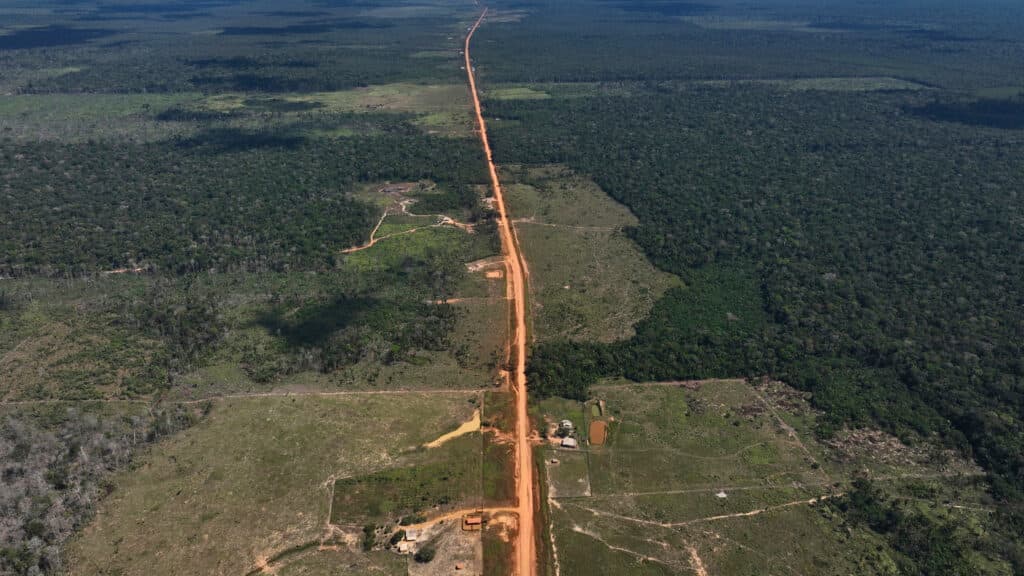
The Trans-Amazon Highway crosses a deforested area near Humaita Amazonas state, Brazil, July 10, 2023.
This highway has been at the center of legal fights for years. Is it actually going to get paved and improved this year?
Well, we’ll have to see what happens. There are four different cases waiting for the Supreme Court to decide on this. So, we’ll see what they do. If they decide quickly, it could interrupt the paving that is planned to start just in the next month or so. But it might not. We have to see what the court decides.
Parts of this interview have been lightly edited for length and clarity.