PRX is a 501(c)(3) organization recognized by the IRS: #263347402.
Remembering Margareta Magnusson, the author who introduced us to ‘Swedish death cleaning’
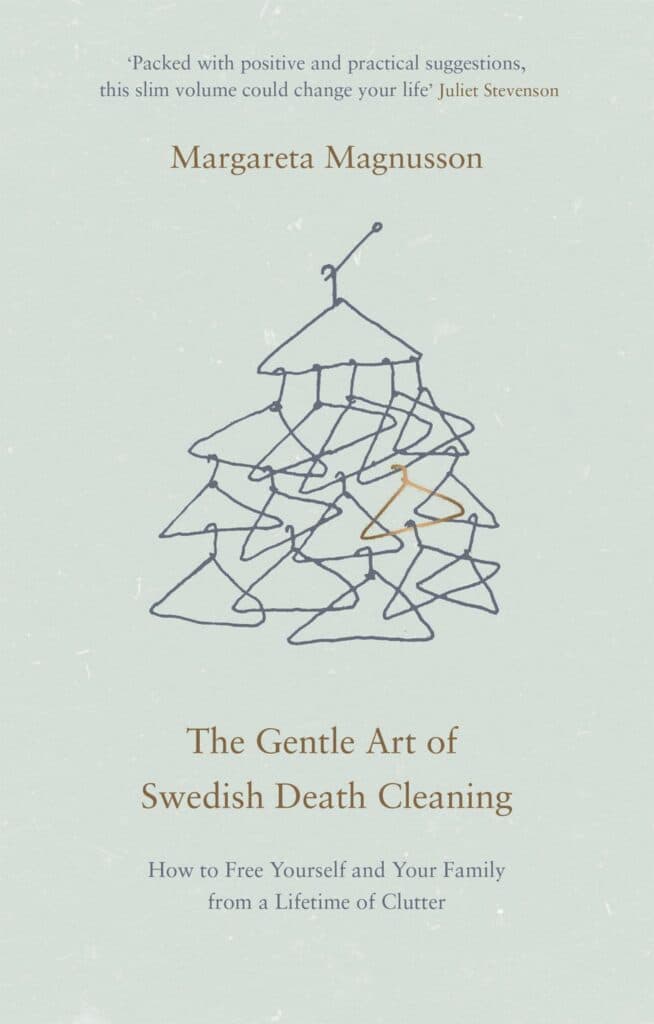
For many, death is an unsettling thing to think about, but not for the Swedish artist Margareta Magnusson, who passed away last week at the age of 91. In her 80s, she wrote, “The Gentle Art of Swedish Death Cleaning,” a book that brought international buzz around the concept of “döstädning,” or decluttering as we age. The World’s Host Carolyn Beeler spoke to Magnusson’s daughter, journalist and filmmaker Jane Magnusson, who joined from Stockholm.
For many people, death is a topic to avoid thinking about, but not for the Swedish artist Margareta Magnusson.
Her first book, “The Gentle Art of Swedish Death Cleaning,” brought the concept of döstädning, or death cleaning, to the world, providing inspiration on how to declutter as we age.
Magnusson passed away last week at the age of 91. The World spoke to her daughter, Jane, who lives in Stockholm, who explained that death cleaning is “getting rid of your stuff before you die so that other people don’t have to take care of all your crap.”
Carolyn Beeler: It’s a thing in Sweden, right? It’s not just your mom.
Jane Magnusson: No, I mean, elderly women all over Sweden usually do this. And it’s usually the men who die before them, and they start having to clean up after them. But then nobody cares what old women do. So it didn’t really become a concept in the way it is now until my mother wrote about it. But she wasn’t alone in doing this.
She just brought it to the rest of the world.
Yeah, and now it’s in the Swedish national dictionary, and I think even in dictionary.com. It took the world by storm because it’s such a good idea. I mean, why keep all this stuff and make your family and friends suffer?
It might sound depressing if we call it “death cleaning,” but your mother didn’t want it to be. She once said it should be joyful and interesting. How did she make it joyful?
She really enjoyed reading all the letters she had collected over the years. She read them one by one and then put them in the shredder and threw them out. And [the] same with photographs. She got to relive her life, and she found that very comforting. But she started with the big things, like stuff in the attic that she hadn’t used for years. Like a chair, a table or something like that. And then scaled down, and finally, you’re getting rid of photographs and letters.
Is there anything she did get rid of over the years that you wish you were able to inherit that was still in the family?
No, most of the nice stuff, the samurai sword or the Japanese lacquerware, stayed in the family. My nephew got the samurai sword. The nice stuff stayed in the family, and God knows there are so many of us, so it was easy to get rid of.
Did she get rid of or hand off some of that stuff before she died?
Oh, yeah. Her apartment was pretty much empty when she died.
You said that people haven’t been talking about death cleaning for forever because “nobody cares what old women do” in Sweden, but there was an appetite for this book. What prompted your mom to write it?
Well, one of my oldest friends from university in the US and I were having lunch in New York, and he was moaning about how much stuff his parents had collected over the years and that he was going to have to quit work for weeks just to clear it up. And I said, ‘Well, I don’t have that problem.’ And he said, ‘How come?’ And I say, ‘Well, my mother is death cleaning.’ And he says, ‘What’s that?’ And I told him, and then he said, ‘I think there’s a book in that. Can she write?’ And I said, ‘I don’t know. Let’s see.’ And I went back to Stockholm, and asked her if she could write about it. And she’s like, ‘Yes!’ And it took her three months, and she was able to sell the book in over 30 countries.
Did your mom talk about death a lot?
Yeah, she and I talked about it all the time.
Did you find that helpful?
Yeah, absolutely. Now that’s why I’m able to talk about her with so many people. Because it’s sad that she’s gone, but it came as no surprise, and she and I had talked about so much. I went to see her at her elderly home in Gothenburg a couple of days ago, before she died, and she knew it was coming.
And it sounds like maybe you were both somewhat at peace with that.
Yeah, well, we’re all gonna die …even you are. *Chuckles.* So, there’s no point in shutting your eyes to that fact.
So I understand, correct me if I’m wrong, that she was death cleaning basically your whole life, as long as you can remember. How did you see this when you were younger, and were you rolling your eyes? Why are you doing this?
No, I wasn’t rolling my eyes. We had just moved to Singapore, and not all my stuff showed up. But it was stuff I didn’t really want. So she had gotten rid of it. And when you’re a teenager in Singapore, you don’t really care what your parents do, as long as they don’t ground you all the time. In Singapore, she drove around in a little white convertible MG and had sunglasses and a scarf around her fabulous hairdo. And some cigars. And that was more what I thought about. Everyone, when she picked me up from school, would be like, ‘Who was that?’ … ‘Oh, it’s my mom.’
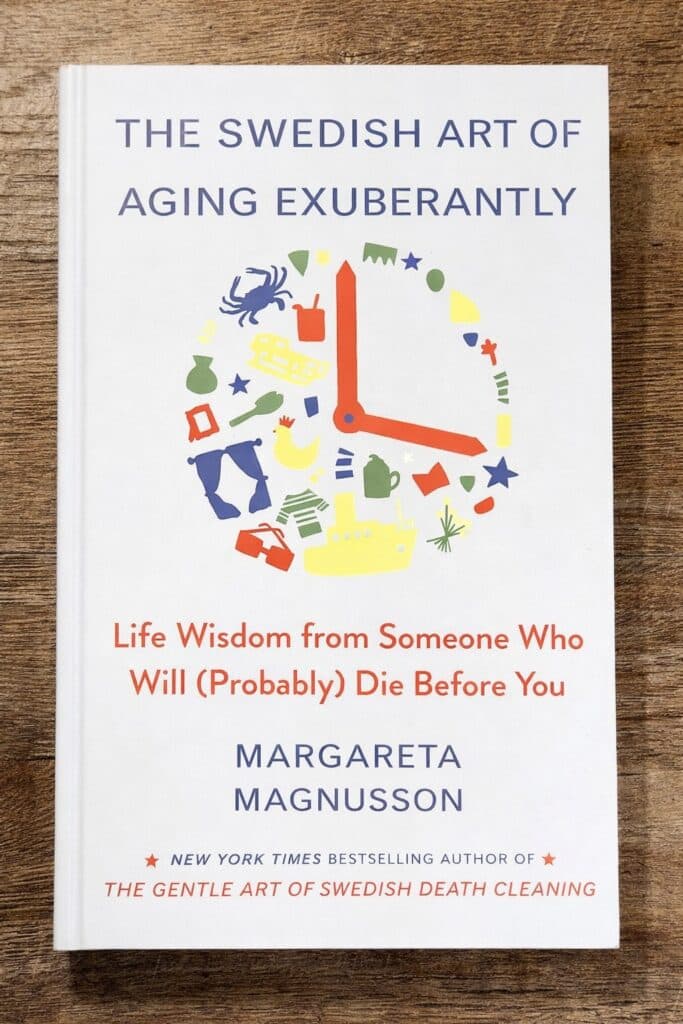
So your mother followed up her first book with her second, “The Swedish Art of Aging Exuberantly.” How would you define what that art was to her?
Well, it’s very practical advice. It’s like, eat lots of chocolate, that’s a chapter. She loves chocolate, but she was as skinny as a thread. And she’s like, ‘Oh, f***, I’m going to die soon. I am just going to eat chocolate now.’ And she did! There was chocolate in every door of her house. She also had another chapter on wearing stripes. Because when you’re an elderly woman, you don’t want to look like an elderly woman, but you don’t wanna look like a young girl either. But stripes are quite cool. They make you look active and a little bit sporty without making you look foolish. So she always wore stripes.
I have gone through the task of going through loved ones’ things who have passed away. And it can be overwhelming if there’s too much, but it can also reconnect you with the person you’ve lost and help you relive earlier versions of them. Do you miss that you are not doing that right now after your mother’s passing?
No, I don’t. She will always be with me, but I don’t. I’m quite happy that I don’t have to death clean after her. And I think my siblings are as well.
Do you death clean?
I think about it every day, but you know, I have a ton of stuff, and so does my husband. We’re really untidy, so we have to get started. He’s 64, and I’m 57, and you never know when you’re going to kick the bucket.
Parts of this interview have been lightly edited for length and clarity.