Public radio’s longest-running daily global news program.
©2026 The World from PRX
PRX is a 501(c)(3) organization recognized by the IRS: #263347402.

Many people are feeling the impact of harsher immigration policies under the Trump administration, such as price hikes for H-1B visas that are issued to skilled foreign workers. That’s now led a growing number of people, including those from India, to pursue options in other places instead.
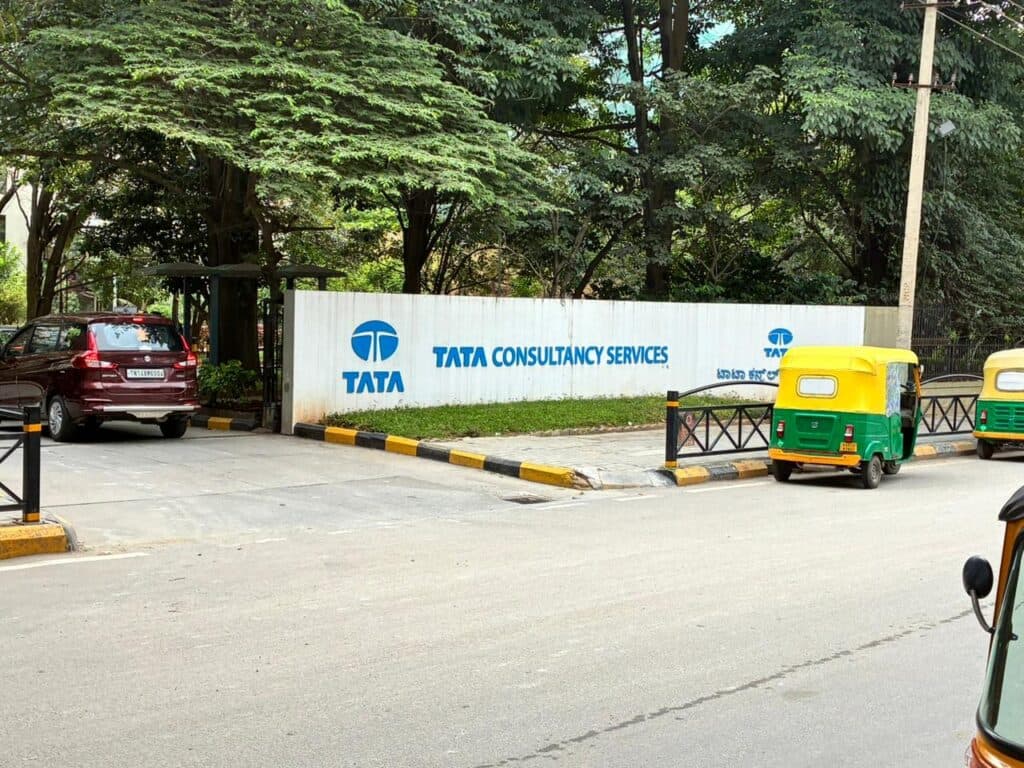
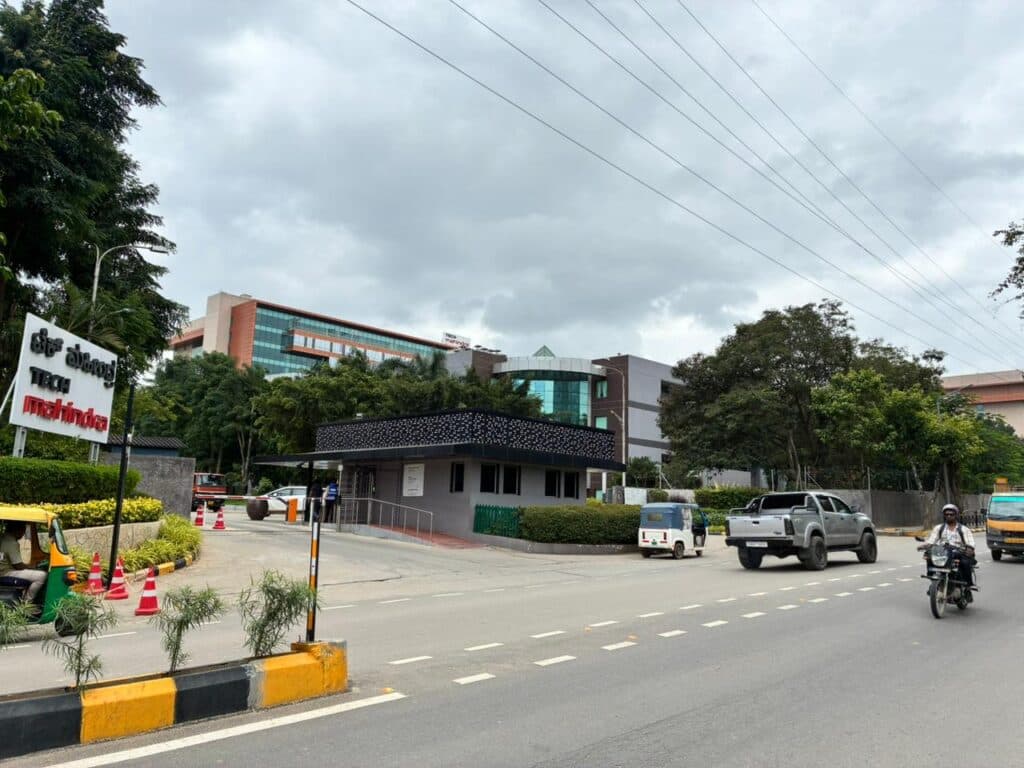
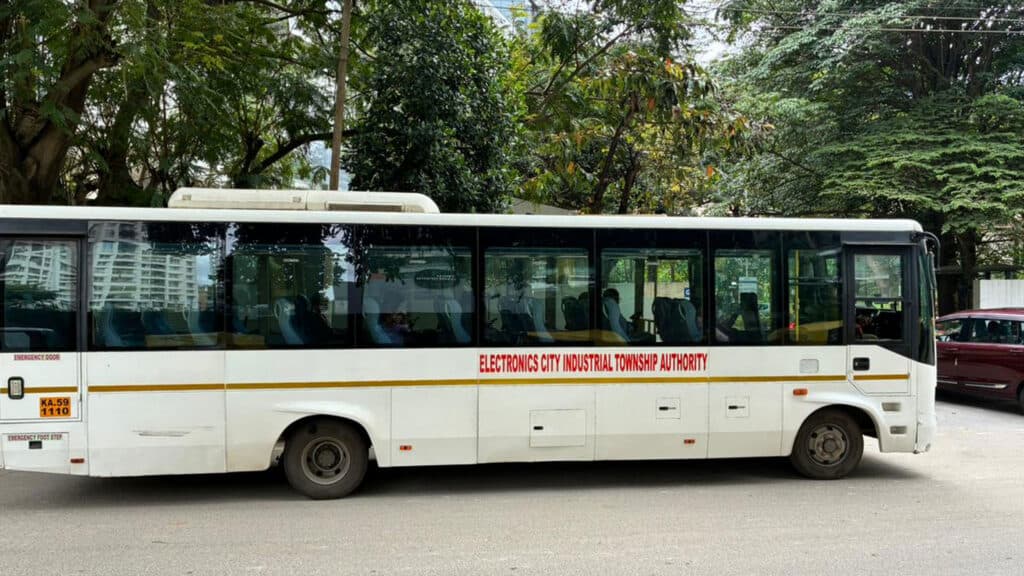
A taxi parked in front of a building in Electronic City in Bengaluru, India’s Silicon valley.
Shalika Sandeep is a working professional in India who studied in Singapore and the UK. She says that applying to work or study in the US is “not worth the effort.”
“It’s not worth an unstable future,” she explained. “The climate in the US has always been very erratic. Politically, socially, it’s been very up and down.”
She’s among a growing number of people who are feeling the impact of shifts in US immigration policies under the Trump administration and are opting for other options instead.
On Thursday, the US Chamber of Commerce sued the administration to block Trump’s new $100,000 visa fees for the H-1B program, alleging that the program, widely used by Silicon Valley, violates the Immigration and Nationality Act.
US President Donald Trump announced a price hike for the H-1B visa policy scheme on Sept. 19 as part of a crackdown on both legal and illegal immigration. The visa, which was initially introduced in 1990 by former US President George H.W. Bush, is issued to skilled workers from countries like India, China, the Philippines and Canada.
Every year, 65,000 visas are issued to foreign workers in specialized fields, and 20,000 visas are given to workers with degrees in science, technology, engineering and mathematics. Under the new policy, US companies wanting to hire people on this visa would have to pay a steep fee for each visa application — the previous fee ranged from $2,000 to $5,000.
“The fee is a one-time fee on submission of a new H-1B petition,” the White House said, adding that it is not applicable to current H-1B visa holders.
The visa is issued through an annual lottery system and the White House said that the new rules do not apply to current holders of the H-1B but would apply to the next lottery system — the registration for which is set to begin in March 2026. It also won’t apply to foreign students in the US if they are able to find a job in the country — for those who have applied for the visa after Sept. 21, 2025.
While the exact rules of the new policy are being finalized, the visa fee hike has sparked panic worldwide. In India, however, which constitutes the bulk of H-1B visa recipients, there is a sense of resistance and defiance. Last year, US government data showed that 71% of H-1B visa approvals were issued to Indians, followed by China with 11.1%.
Namratha Dharshan, a Bengaluru-based chief business leader focusing on India, at the global AI-centered technology research and advisory firm ISG, said Indian companies relying on the H-1B visa can weather the storm since they are used to constant changes in regulations, especially since Trump had temporarily banned the H-1B visa entirely during his first term.
“When the H-1B restrictions came about in the first administration, a lot of companies had actually hired a lot of people onshore,” Darshan said. “Many of the Indian companies had also restricted the number of H-1Bs they were processing, and they had altered their own structural models.”
She added that “at least in the immediate or the near term, we do not see a major impact on the company. There could be some smaller companies that are highly dependent on H-1B visas rather than onshore hiring. They might actually have to choose some cost and even readjust their operating models.”
Dharshan also noted that within India, the momentum of global capability centers (GCC) hiring more Indian IT employees is also expected to increase. GCCs support multinational tech and financial companies like Amazon, Google and Goldman Sachs in tech, research and development operations. India has around 1,700 of them.
With options to pursue offshore work, or work in GCCs, some young Indians think the “American dream” is currently dead in India.
Gulshan Kumar, a student at the Indian Institute of Science in Bengaluru [IISC], said that even if salaries in the US might be higher, the Trump administration’s current policies have deterred him and many of his classmates from wanting to work or study in the US.
“The US is a place that values talent. Let’s say that you get selected for some job and they also pay you the amount for the H-1B visa,” Kumar said. “But after two years, they suddenly decide we are going to hike the visa fees. If that kind of insecurity pops in, no one would be willing to take the risk.”
Just days after Trump’s new H-1B visa rules, the UK, Canada, Germany and other countries announced their own plans to create visas to hire more highly-skilled foreign workers. China also launched its new K visa on Oct. 1, aimed at attracting skilled workers in science and technology.
These moves are clearly aimed at recruiting people from India.
“I feel there are a lot of Asian countries like Singapore or countries like Japan that do provide a really good education, and companies that are based there are providing equal, if not better, opportunities compared to the US,” Devansh Sharma said.” He is a final year undergraduate student in computer science at the PES University in Bengaluru. “The opportunity and the level of tech in China is tremendous. It’s actually incredible what China does with all the talent it has. So, I feel China might be an option. But again, it depends on the work culture there.”
With the Indian subcontinent also currently among the top four largest economies in the world, TV Mohandas Pai, the chairman of the venture fund Aarin Capital, said this whole idea that “India is so dependent on America, India is a weak country, is a fake narrative.”
He said that Trump’s massive visa fee increase will only hurt the United States — as Indian companies send their workers to places like Canada, Mexico and other countries in Latin America.
“You are trying to isolate and drive away the force multiplier for American technology at a time when there is an AI wave and AI needs to be implemented,” Pai added. “It shows, in my view, a poor assessment of what America needs. A lot of innovation is happening here. So, the Indian model of technology dissemination is a solution for much of the world.”