Four dead as Typhoon Roke hits Japan
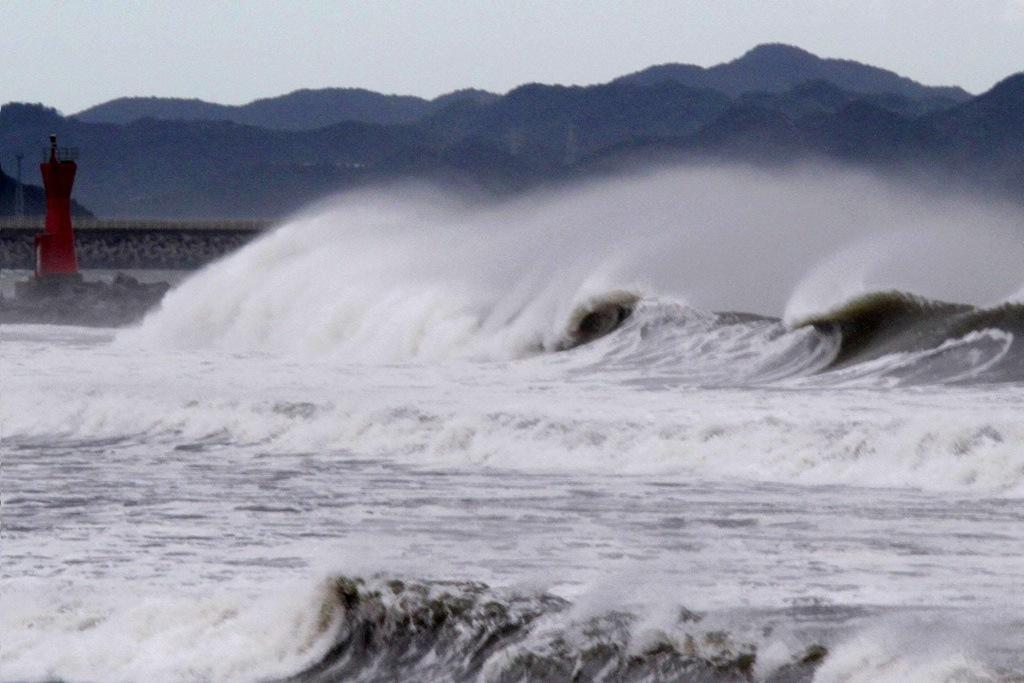
High waves batter a breakwater at Komatsu beach in the city of Tokushima, Tokushima prefecture, in western Japan on September 21, 2011.
Typhoon Roke made landfall in central Japan Wednesday, generating heavy rains and flooding that killed four people ahead of its arrival.
Reports say two more people are missing in the central prefecture of Gifu, including a nine-year-old boy.
The category 1 storm is on course to hit the stricken Fukushima prefecture, where engineers have been working since March to bring the crippled nuclear plant under control.
There are concerns that rain from the typhoon could force radioactive water into the sea, the BBC reported.
The firm that operates the plant, Tepco, said all precautions were being taken. Spokesman Naoki Tsunoda said:
We have tied down cables and hoses while fixing equipment so that radioactive materials will not spread [in violent winds].
Across the country more than a million people have been warned to evacuate their homes. Bloomberg reported that flights and trains have been canceled, while power supplies were cut to almost 36,000 homes.
Japan Meteorological Agency said Roke hit the central city of Hamamatsu, in Shizuoka prefecture, about 130 miles south-west of Tokyo at about 2pm local time.
It issued warnings of landslides and flooding throughout the main island of Honshu, according to Bloomberg.
After Typhoon Roke hits Fukushima, the storm is expected to travel along the north-east coast – the area hit by the earthquake and tsunami in March.
The story you just read is accessible and free to all because thousands of listeners and readers contribute to our nonprofit newsroom. We go deep to bring you the human-centered international reporting that you know you can trust. To do this work and to do it well, we rely on the support of our listeners. If you appreciated our coverage this year, if there was a story that made you pause or a song that moved you, would you consider making a gift to sustain our work through 2024 and beyond?