South Africa opens inquiry into Marikana mine tragedy
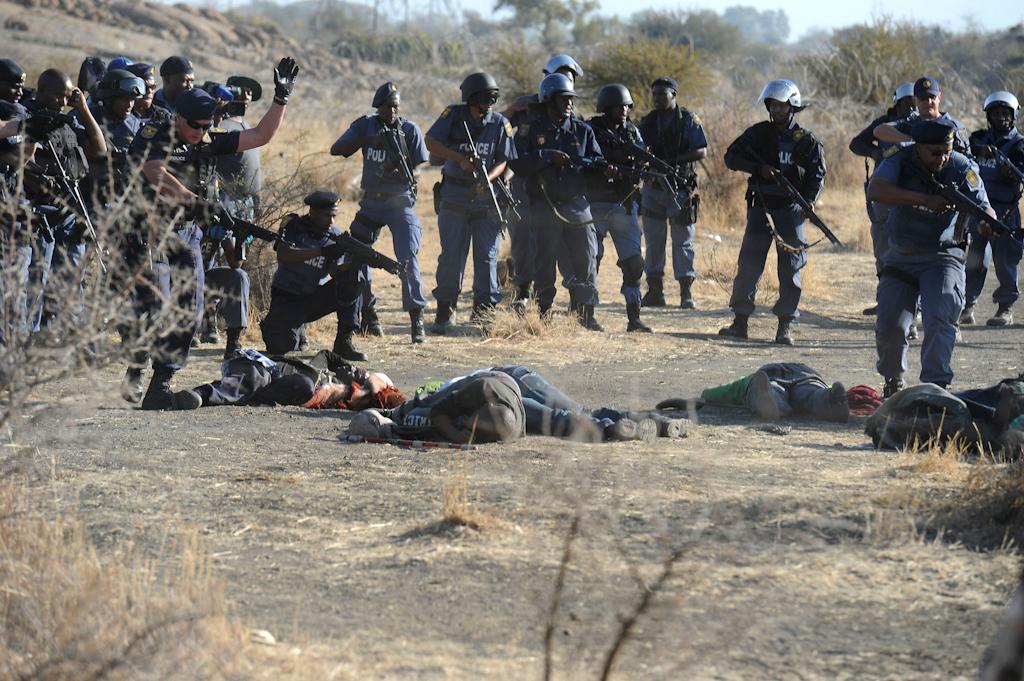
Police surround fallen miners after they opened fire during clashes at the Lonmin Marikana platinum mine near Rustenburg, South Africa, on August 16, 2012. Hundreds of workers armed with machetes, sticks and metal rods had gathered on a hillside near the mine, defying police orders to disperse. Several people were lying on the ground, some bleeding from wounds, after the crowd fled, according to an AFP reporter. Police say at least 30 people were killed.
JOHANNESBURG, South Africa — A judicial commission of inquiry into the killings at the Marikana platinum mine opened Monday.
The inquiry was established by President Jacob Zuma after the August 16 shootings of 34 people by police, an incident that caused widespread public anger in South Africa.
The Marikana inquiry has been tasked with determining the roles played by police, unions, the mine's management and government ministries in the tragedy.
A total of 46 people were killed in weeks of violent protests at the Lonmin-owned mine, including 10 deaths in the week leading up to the police mass shooting, and two later deaths that fall outside the scope of the inquiry.
The commission, consisting of a three-member panel led by retired judge Ian Farlam, is expected to complete its investigation within four months, and then must submit a final report within a month.
More from GlobalPost: Marikana: South Africa's perfect storm
The police shootings at Marikana were the most deadly police action in the 18 years since apartheid ended.
The inquiry, which is being held at the Rustenburg Civic Center near the mine site northwest of Johannesburg, began with the names of the dead being read aloud, followed by a moment of silence.
Judge Farlam said the Marikana inquiry would be conducted with speed, but must also be thorough.
"It is very important that the truth, in so far as what happened over that period, should become clear as soon as possible," he said.
The commission of inquiry started with an inspection of the Marikana mine site, where the protests and shootings took place. Hearings will formally begin on Wednesday.
The nearly six-week wildcat strike at Marikana was finally called off after workers and management agreed to a wage deal that includes a 22-percent pay rise.
More from GlobalPost: South Africa sends in soldiers, police to quell Marikana mine strike
The story you just read is accessible and free to all because thousands of listeners and readers contribute to our nonprofit newsroom. We go deep to bring you the human-centered international reporting that you know you can trust. To do this work and to do it well, we rely on the support of our listeners. If you appreciated our coverage this year, if there was a story that made you pause or a song that moved you, would you consider making a gift to sustain our work through 2024 and beyond?