Israel’s Netanyahu says Iran is capable of enriching uranium to 90 percent in weeks
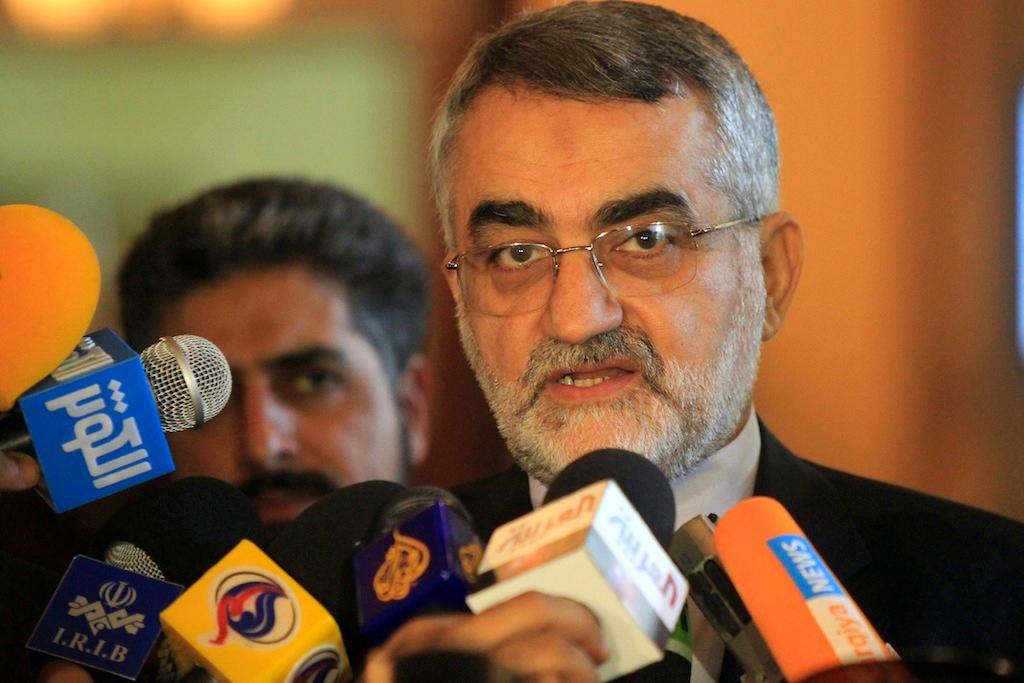
Alaeddin Boroujerdi, Chairman of Iran’s Parliament Committee of National Security and Foreign Policy, talks to journalists on Aug. 9, 2011.
Israeli Prime Minister Benjamin Netanyahu warned on Sunday that Iran was capable of producing weapons-grade uranium within weeks.
"Iran is prepared to give up enriching uranium to 20 percent and therefore debate on this subject is unimportant," Netanyahu's office quoted him as saying at a cabinet meeting.
"The important part stems from technological improvements which allow Iran to enrich uranium from 3.5 percent to 90 percent in a number of weeks," he added.
"Pressure on Iran, which continues enrichment while negotiating, must be intensified," Netanyahu said.
On Saturday, Iranian state news agency IRNA quoted a senior official who claimed Tehran was still enriching uranium to 20 percent, contradicting earlier claims by an Iranian lawmaker.
"Enrichment to 20 percent is continuing," IRNA quoted Alaeddin Boroujerdi, chairman of parliament's national security and foreign policy committee, as saying.
Earlier in the week, Hossein Naqavi Hosseini, a member of Iran's parliamentary national security commission, explicitly stated that his country had stopped enriching uranium to 20 percent.
He said Tuesday that Tehran had all the highly enriched nuclear material it needed for a medical research reactor.
"The issue of suspension or halt of enrichment activities is meaningless because no production is taking place at the moment," the parliament's website quoted Hosseini as saying on Tuesday.
The United Nations nuclear watchdog agency, the IAEA, said on Friday that it had no evidence to back up the claim that Iran had stopped enriching uranium at 20 percent.
Some Western officials believe Iran is developing nuclear weapons technology. Tehran denies the claim, saying its nuclear program is for energy and medical purposes only.
After years of stalemate, Iran engaged with six world powers, called the P5+1, in negotiations over its controversial nuclear program. The meeting in Geneva in October concluded with a guarded sense of optimism, with another round of talks scheduled for November.