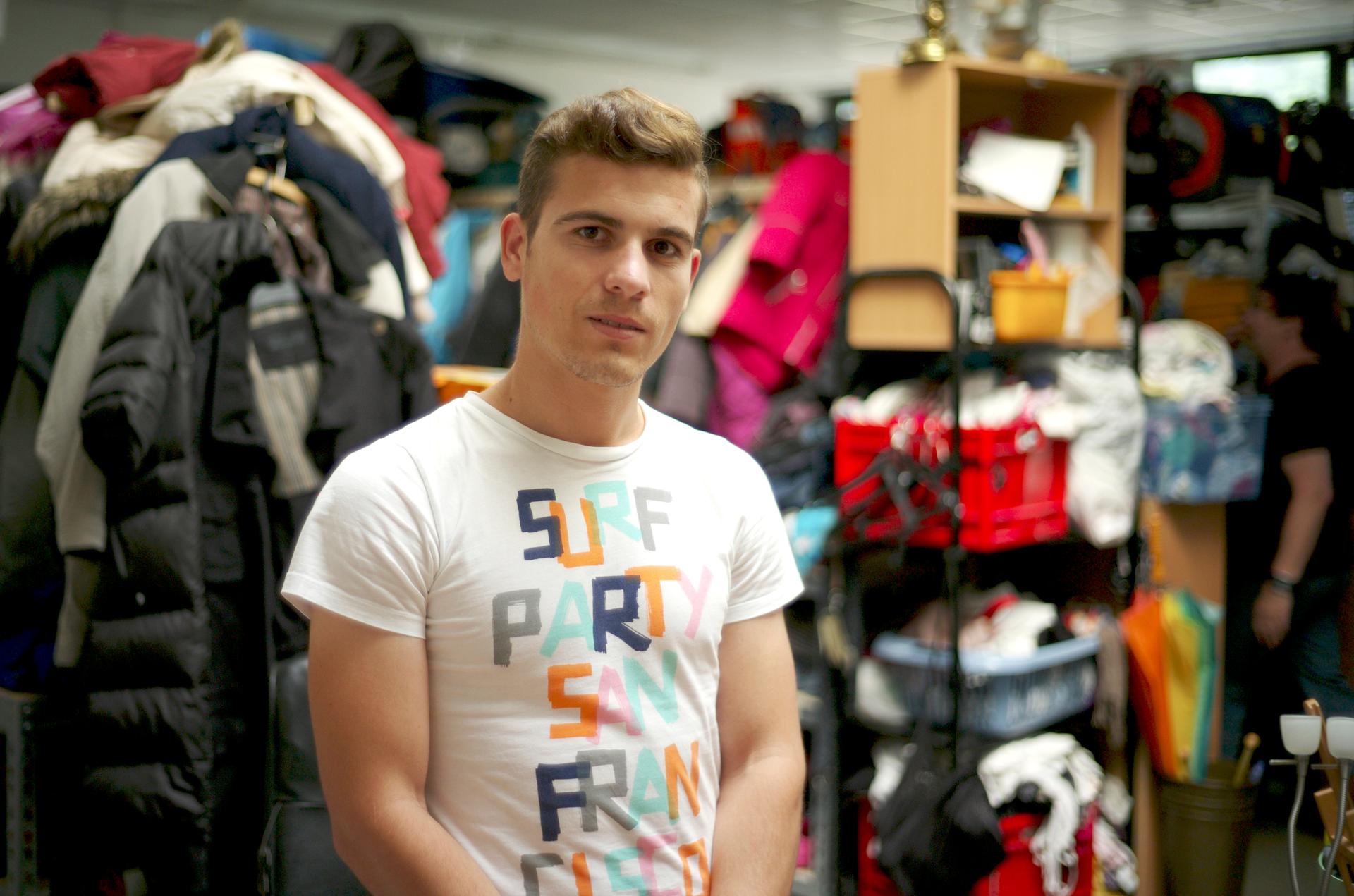
Volunteer and refugee Eni Braho of Albania poses for a photo at a distribution centre in Muelheim an der Ruhr, Germany August 20, 2015.
Germany has a lot of appeal to migrants seeking a better life.
Thousands of Syrians, Iraqis and Afghans have risked their lives in the past few months in order to get to Germany. A strong economy and supportive social system has made Germany one of the most-preferred destination for migrants.
But with a rise in the number of people from the Balkans, Germany is making a distinction between who it will take in and who it will not.
According to reporter Sumi Somaskanda, who's based in Berlin, Germany's message is clear: It will take in anyone who is fleeing war or persecution, but not people who are fleeing poverty.
Somaskanda says the Balkan migrants come from countries such as Serbia, Bosnia, Macedonia, Montenegro, Kosovo and Albania. Many of them already have family in Germany who ended up there after the Balkan wars.
Somaskanda reports that Germany processed nearly 63,000 applications from Kosovo and Albania alone from January through July. That’s compared to a little over 7,500 during the same period last year.
"More than 99 percent of them are sent back," says Somaskanda. "There are buses that are chartered, there are flights that are chartered and they [Germany] have tried to speed up the process."
Somaskanda spoke to a member of the World Roma Organization and was told that sometimes the migrants who are sent back face discrimination.
"He said … [for some of them] their houses have been taken away, or anything that they've had have been taken away," she says
Meanwhile Germans have different views on the issue of migrants.
Over the weekend, soccer fans held banners that read 'refugees welcome.' On the other hand, there have been right-wing protests and arson attacks against immigrant groups.
Still, the large number of asylum seekers have left Germany divided on whether it should open its doors to all those who need help.
The article you just read is free because dedicated readers and listeners like you chose to support our nonprofit newsroom. Our team works tirelessly to ensure you hear the latest in international, human-centered reporting every weekday. But our work would not be possible without you. We need your help.
Make a gift today to help us reach our $25,000 goal and keep The World going strong. Every gift will get us one step closer.