PRX is a 501(c)(3) organization recognized by the IRS: #263347402.
How an interview project ‘shows the continuity of the human family’
National Geographic Explorer Paul Salopek has been walking across the globe for his project, Out of Eden Walk. And he marks every 100 mile checkpoint by interviewing the first person he sees. He joins Marco Werman to explain how these interviews, which he calls Milestones, are central to his global storytelling project.
For over a decade, National Geographic Explorer Paul Salopek has been on an assignment to walk the world — continent to continent, by foot. It’s all being documented in a project known as Out of Eden Walk.
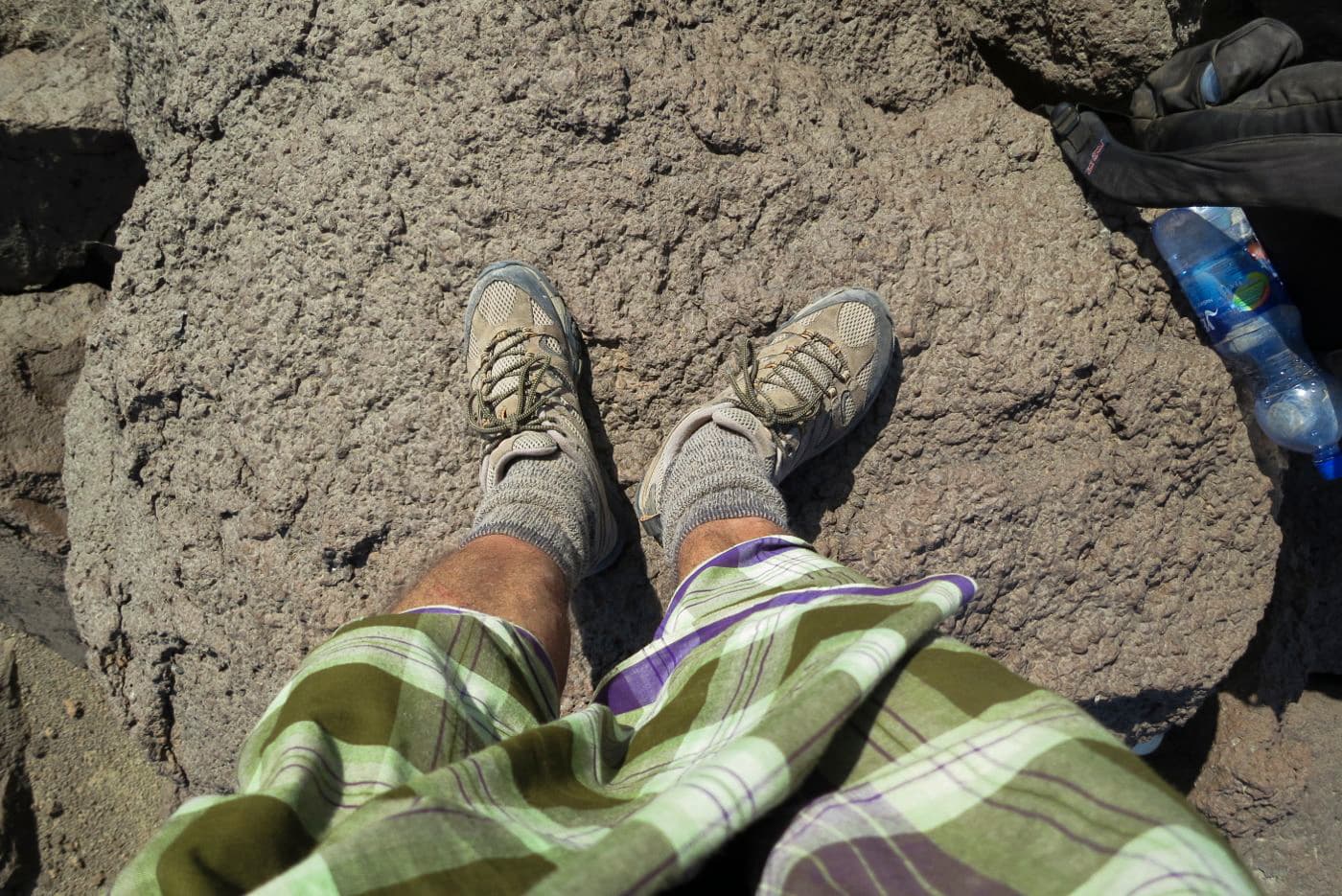
Photos of the ground under Paul’s feet at his 15th Milestone.
Paul Salopek/National Geographic, Out of Eden Walk
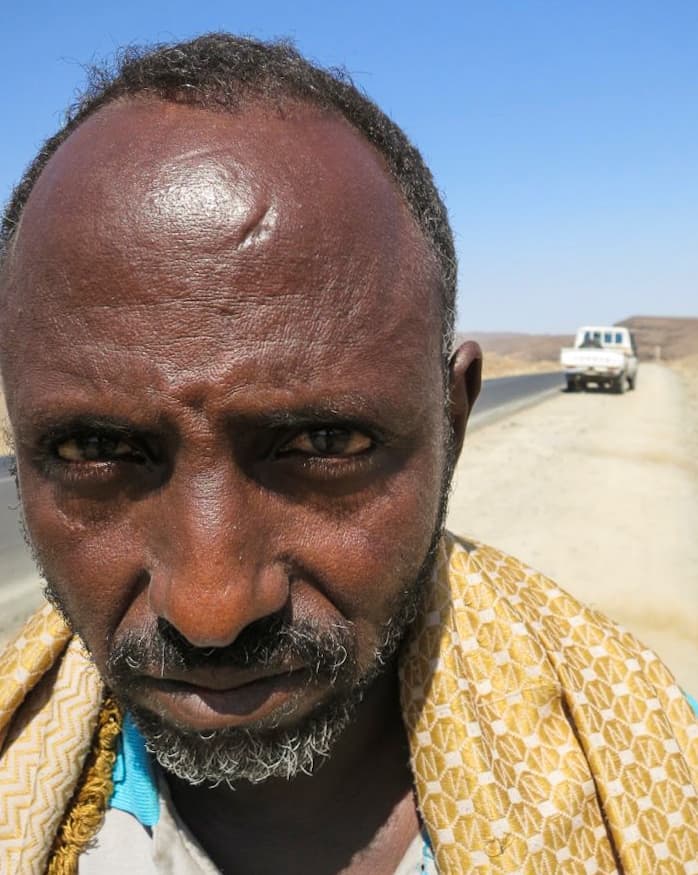
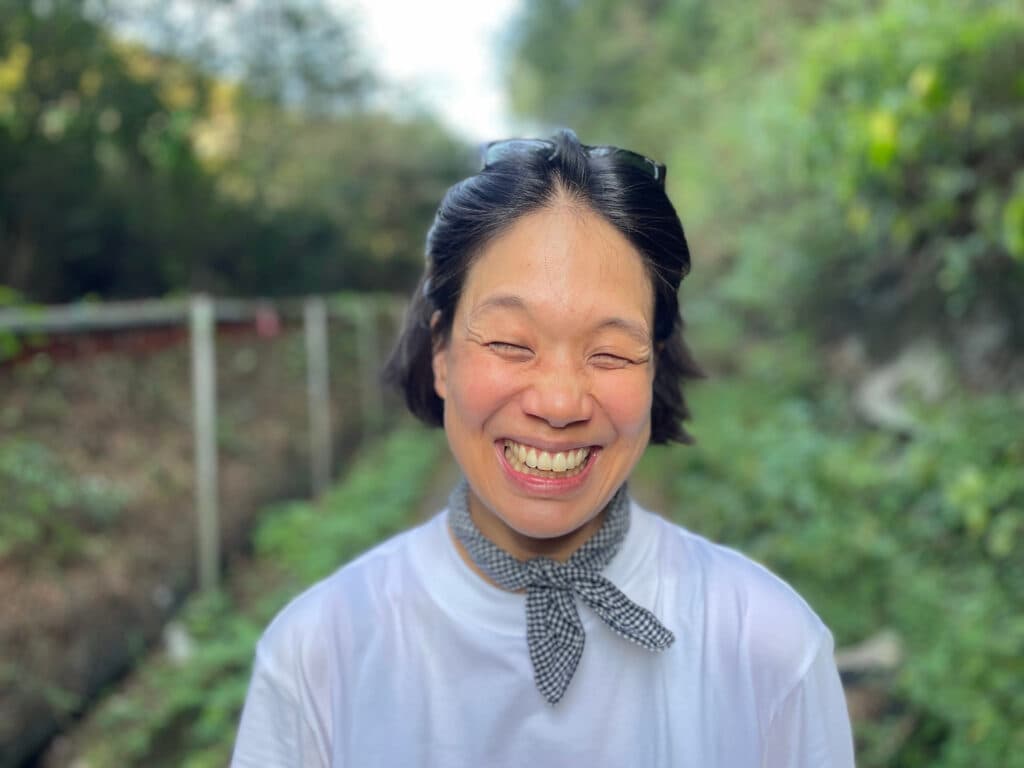
Every time he clocks 100 miles, he stops — wherever he is — and interviews the first person he sees. He calls these “milestones.”
Salopek spoke to Host Marco Werman about these moments.
Marco Werman: So, Paul, how do these milestones fit the overall fabric of the Out of Eden Walk project?
Paul Salopek:The thing that I wanted to standardize at the very, very beginning was, let’s do a series of stories that appear systematically, geographically across the world. The way I looked at it, because my education is as a biologist, is that when biologists go out to survey an ecosystem, they lay a string across the land, right? X number of meters long, and then every meter or two, they take a systematic sample of plants or soil or whatever it’s called, a transect. And that’s how you measure biodiversity. I thought, let’s apply this kind of biological methodology to storytelling, and every 100 miles in straight lines — we’re not talking the squiggles of a trail, but like as the crow flies — stop and do the same kind of recordings all the way across the planet, and that was the methodology I came up with. You mentioned talking to the first human being I meet; I do, and I have a systematic number of questions. There are three questions. And the idea is that by the end of this massive journey we have kind of a gallery, a portrait of humanity and landscapes, as seen on foot, at the turn of the millennium across the world. That’s kind of the philosophy, idea, and vision behind this milestone thing.
So what are the three questions, and what’s the range of responses you’ve gotten?
Yeah, the three questions are the same ones I get asked every single day by the strangers I walk by: “Who are you?” Where do you come from? Where are you going? So it’s my chance to kind of turn those questions around. And so the answers are all over the place. These questions are intentionally open-ended. People can answer philosophically, saying, ‘I don’t know where I come from,’ or they could say, ‘I might come from God.’ Or, they can say, ‘I’ve come from that blue house you see over there.’ And the same with where are you going … ‘I wish I knew where I was going,’ ‘I hope I’m going to a better place in my life,’ or ‘I’m going down there to the store to buy some bread.’ It’s all over the place. It’s wonderful.
I mean, coming from the biologist’s point of view, you’re looking for fairly objective answers to questions like, who are you, where do you come from, and where are you going? Are the interactions always friendly?
This has been, actually, the hardest part as a reporter of my entire project. These milestones seem kind of simple … because I’m kind of, I’m coming up to somebody completely cold. I’m carrying a backpack. I’m a stranger. They’re a little bit freaked out or maybe a little curious. It’s awkward. It’s strange. And people do say no. And who says no depends on the culture. It depends on gender — something that I didn’t pick up at first. Walking through the Muslim part of the world — and also conservative countryside — women would walk away from me. And so if you go at the beginning, it’s mostly guys because I was like, if I was striking out with women who were kind of afraid of me or they were gender barriers, I needed somebody, and the people who would speak to me, because I’m a man, were other men. But after a while, I thought that’s fake. That’s not really true. That isn’t scientific, if you will. So I began putting in, if the first person, human being I met at these milestones was a woman and she walked away or didn’t wanna talk, I just put that; I encountered a woman, and she declined an interview. And then I think that was more representative. So you’ll see those sprinkled throughout the journey.
And you wouldn’t talk to anybody else at that point; you just move on to the next 100 miles?
Just move [on], because I thought it was kind of, again, skewing the whole process. So even seeing where people don’t talk to me is information and why, right?
So these quick hits, I mean, you spoke with us not long ago about some of the partners you’ve had along your trek, people who accompany you for a few miles or even sometimes a few days. I wonder if any of these milestone interviewees ever became walking partners, and what you and they gained along the route from having these conversations first.
That sometimes happens, and it does … and it’s wonderful. Here’s a kind of awkwardness: My walking partner and I have to explain to this kind of startled stranger, by two kind of scruffy people carrying backpacks, saying, ‘We want to talk to you.’ If there’s a cell signal, I show them my phone saying, ‘Here’s my project. See there I am walking with a camel,’ and if you know they’re often very skeptical and don’t believe me. But on several occasions, people do kind of warm up and end up walking with me for a little while. Now, I won’t say these random milestone encounters led to people walking with me for weeks or months, but often, like that day, somebody would be so intrigued. They kind of lay aside whatever work they had and come walk to us. That has happened.
Have milestones ever changed the trajectory of your walk in unexpected ways?
Not really. I mean, because I’m not walking towards them, you know, it’s like, I don’t know where they’re going to be. That’s part of the problem: I’m walking with a GPS device, it goes ping, and I look at it, oh, it is 100 miles from the last milestone in a direct line. And so it comes as a surprise to me. In fact, the opposite has happened, Marco. I sometimes walk through milestones, because I don’t hear the ping, especially along highways. And I go to you know I pull into a guest house that night, and I look at my GPS and I … slap my head and say, ‘We walked past the milestone,’ so I have to go back. And I actually do. If it’s within a few miles, I shrug off my pack, as I did in South Korea, and jog back. I told my Korean walking partner, ‘We’re at a gas station. You just chill here, have an ice cream.’ It was a hot day. And I jogged back, I think, five kilometers to kind of do the milestone. And it was an empty one. It was on an abandoned railway line. Other times, like, I remember in Uzbekistan, we walked a long way, like almost 40 kilometers past the milestone, and I had to get in the car. I flagged a car and went back and recorded it. And the guy who gave me a lift became the encounter right because he happened to be there, he dropped me. So anyway, you’ll see a few of those kind of crazy milestones in there, too.
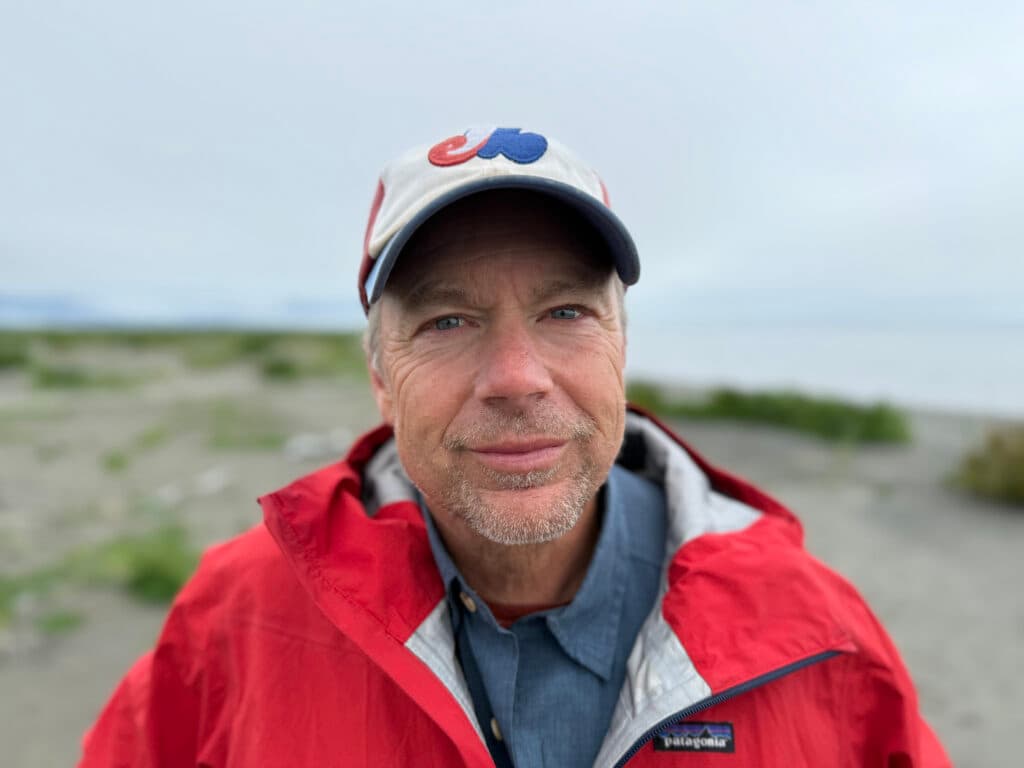
At his 168th milestone, Salopek spoke to Ned Rozell, 62, writer. Rozell lives in Fairbanks and has written a science column for the Geophysical Institute at the University of Alaska for 31 years.Paul Salopek/National Geographic, Out of Eden Walk
So, when the Out of Eden Walk wraps up at the south end of South America, you’ll have completed about 22,000 miles. Roughly that will amount to 220 interviews. You call this part of the Out of Eden Walk a map of faces. So what do these portraits tell us, do you think, about the world in 2026, and what will you do with this map of oral history?
The beautiful thing about the simplicity of this idea is that it relies to some degree on serendipity. And so I can talk to a migrant by accident, and that’s recorded sometimes, right? In Jordan, at one milestone, it was Syrian refugees that I met. And that tells part of the story of the civil war in Syria at that time. So, the idea at the end is to use this kind of rainbow of humanity, because … the majority of people that I do bump into, migrants aside, are generally from that place. So, you can see the face of humankind change, right, through all the different rainbows of ethnicities, languages, cultures. It’s really lovely, it’s beautiful. And it shows the continuity of the human family. And along the way, you can see the faces and read the voices of the stories of the people encountered at each place. So it’s kind of a gallery of humanity.
Parts of this interview have been lightly edited for length and clarity.
Writer and National Geographic Explorer Paul Salopek has embarked on a 24,000-mile storytelling trek across the world called the “Out of Eden Walk.” The National Geographic Society, committed to illuminating and protecting the wonders of our world, has funded Salopek’s project since 2013. Explore the project here. Follow the journey on X at @PaulSalopek, @outofedenwalk.