Public radio’s longest-running daily global news program.
©2026 The World from PRX
PRX is a 501(c)(3) organization recognized by the IRS: #263347402.

In the first 10 months of 2025, international tourism in the state of Amazonas, Brazil, grew by 40%. Most of those tourists are Americans and Europeans traveling to see the world’s largest tropical rainforest. But as reporter Gisele Regatão explains, increased tourism is a double-edged sword for residents of the region.
Many indigenous communities live in the state of Amazonas.
Divina Viana is checking her boat as it’s about to take foreign tourists along the Rio Negro, or Black River, in the Brazilian Amazon. This is her home.
“I was born and raised in the Amazon, in the jungle,” she said.
Viana opened her tourism company, Arquipélagos das Anavilhanas Turismo, 26 years ago. “I’m one of the pioneers,” she said.
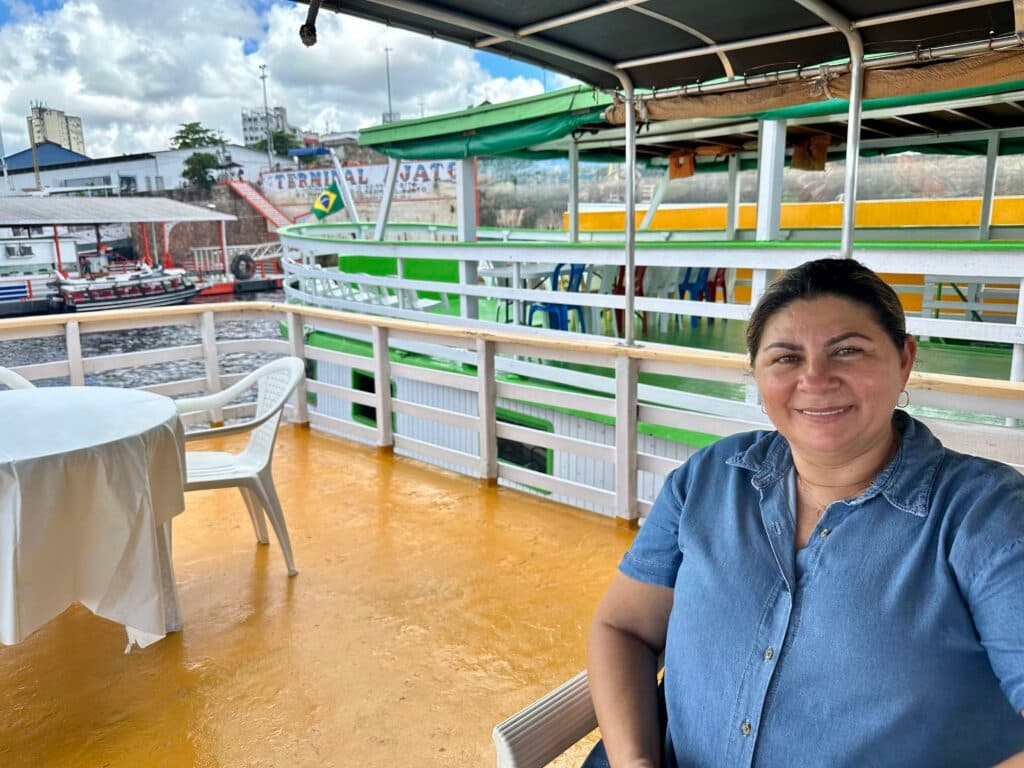
They do about 60 to 80 boat tours a year. Most trips last from 3 to 5 days. She said she used to cater to Brazilians and Americans, but a few years ago she formed partnerships with agencies serving Europeans, particularly French tourists.
Today, about 80% of her customers are French.
Foreign visitors are boosting eco-tourism in the world’s largest tropical rainforest. Data from Amazonastur, the state agency in charge of tourism, shows that international tourism grew by 40% in Amazonas in the first 10 months of last year.
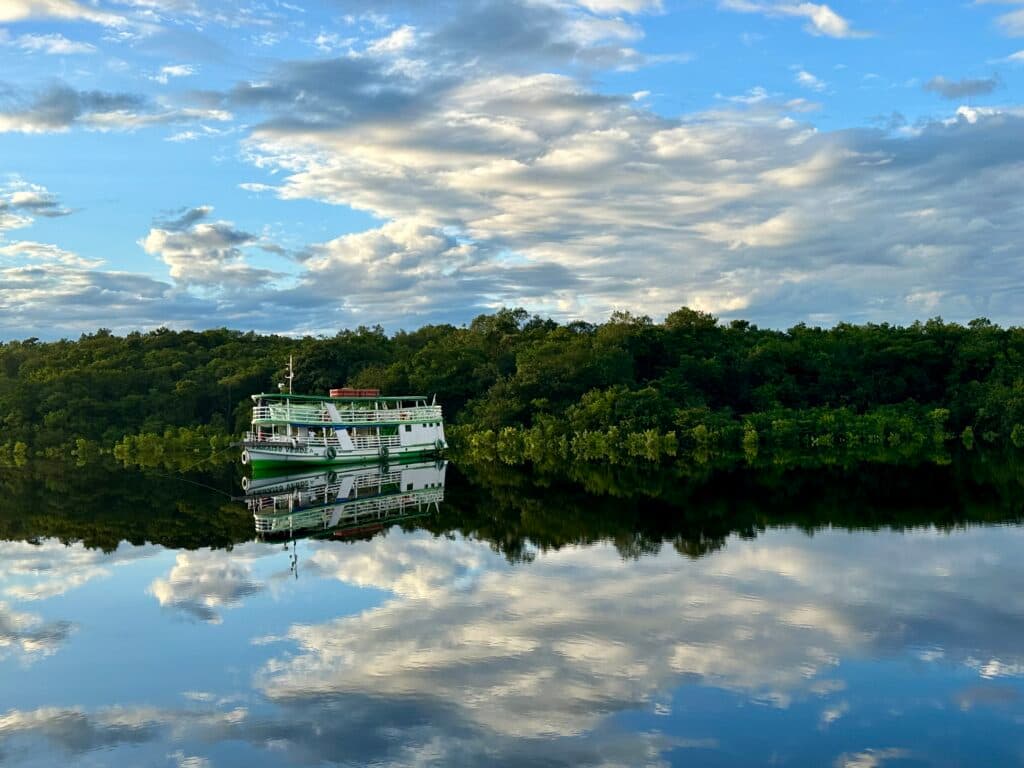
Amazonastur says that foreign tourists who visit the state of Amazonas come mostly from the US, Colombia, Germany, France and England. Domestic tourism still dominates — three out of four tourists here come from Brazil — but international tourism is growing faster.
That happened because of a marketing campaign and the addition of flights to Manaus, the capital of Amazonas. In the past few years, Amazonastur has attended several international fairs and has invited foreign journalists and tour companies from Europe, the US and Latin America to come to the state.
The campaign paid off. In the twelve months that ended last November, the state of Amazonas had the largest growth in tourism in the country, according to the Brazilian Institute of Geography and Statistics (IBGE), the agency responsible for official collection of statistical information.
Pink Dolphin
Tourists in the Amazon enjoy activities like taking hikes in the forest, swimming with the local pink dolphin and fishing.
The family of Paul Clement, an exchange student from France studying in Rio de Janeiro, was bathing in a small local river. He’s here with his mother, stepfather, his grandmother and her friend.
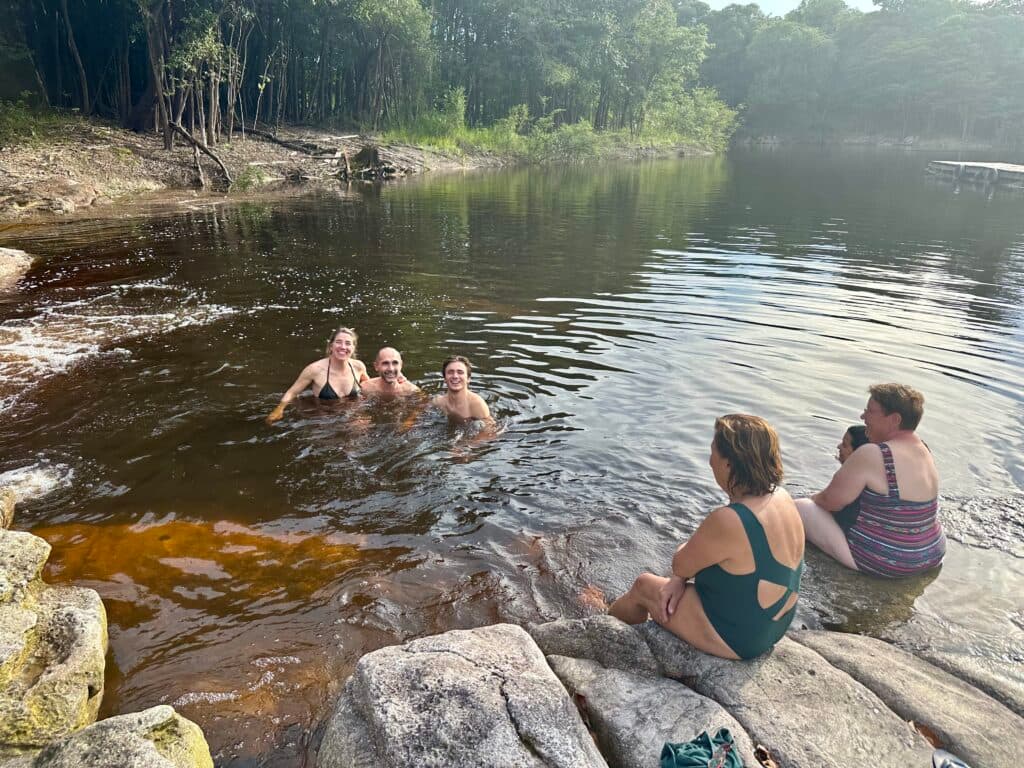
He said when his family came to visit him in Brazil, they all wanted to come here.
“The Amazon seemed like the obvious place when you visit Brazil,” he said. “And it’s amazing.”
Amazonas is the largest state in Brazil in size, it covers an area of about 600,000 square miles. That’s larger than the states of Texas, New Mexico, Arizona and Oklahoma combined. And it’s sparsely populated, only about 4 million people live in the state.
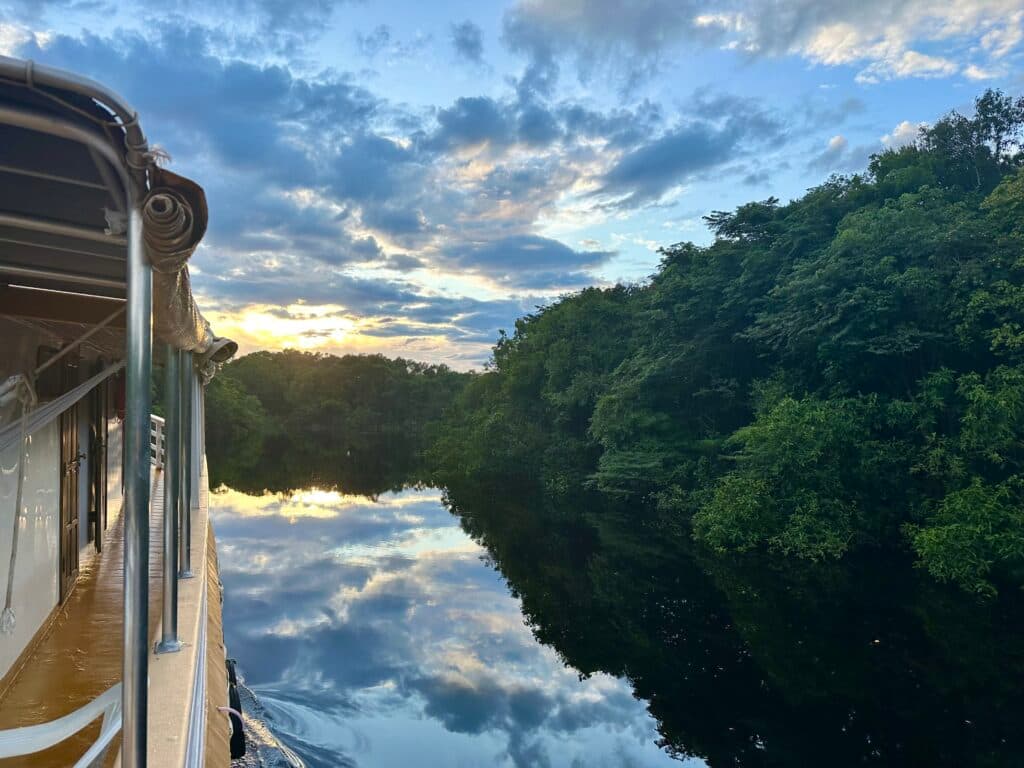
Clement’s family is on a four-day boat trip along Rio Negro.
“There’s nobody around us, we’re so alone, and it’s so calm,” he said. “We saw a big spider this morning, it was so scary. We also saw monkeys, birds, and a crocodile.”
Europe’s love affair with the Amazon
Europeans have a long history with the state of Amazonas. The boom of rubber production here in the late 1800s attracted many investors from England and France.
It was an industry that caused deforestation and killed many Indigenous people.
Today most of the foreigners who come here are tourists who see the Amazon as a place that should be protected, like Clement’s mom, Myriam Sabatier.
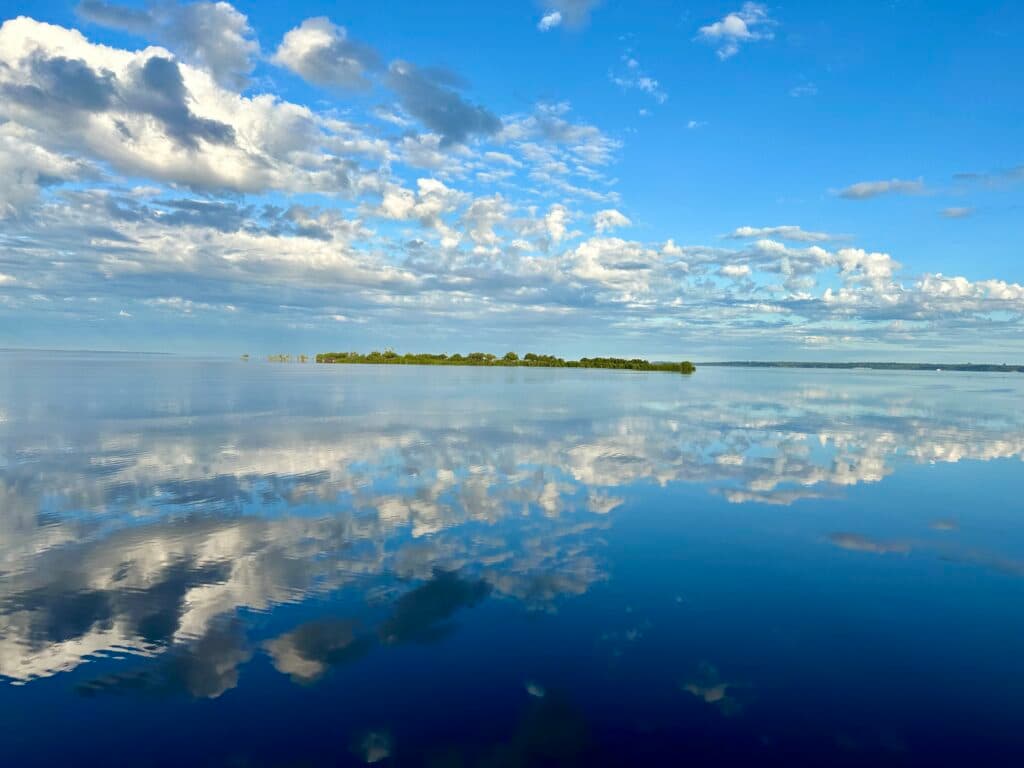
“It’s the lung of humanity, so I think people estimate the Amazon for that,” she said.
Some worry that the growth in tourism can have a negative impact, as it can increase pollution and harm wildlife and natural ecosystems.
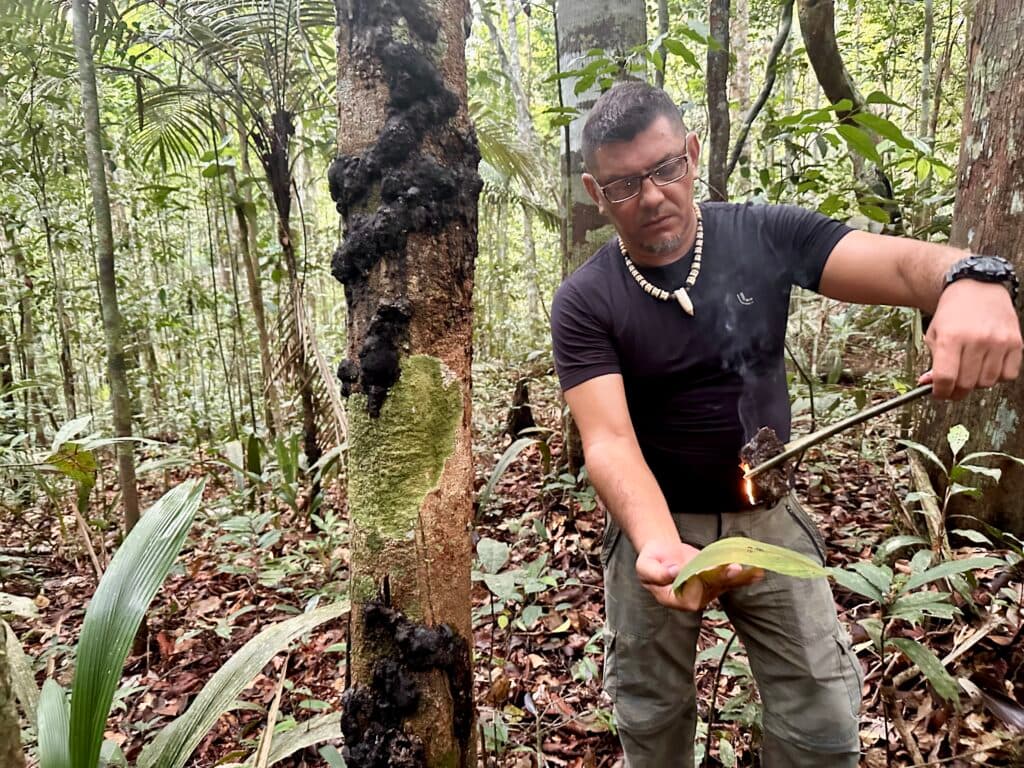
Marcel Oliver, an independent local tour guide, believes tourism has mostly a positive effect in the region.
“It motivates people to produce craftwork, to clean up their communities. They also get more income, and can invest in their areas,” he said.
Despite the growth in international tourism, the numbers are still small. About 75,000 foreigners visited the state of Amazonas in 2025, compared to more than 2 million for the state of São Paulo, for example.
Oliver said tourism also gives local communities some power. “People say, ‘We are growing, we have more children, so we need more schools, we want churches, and access to services,’” he said.
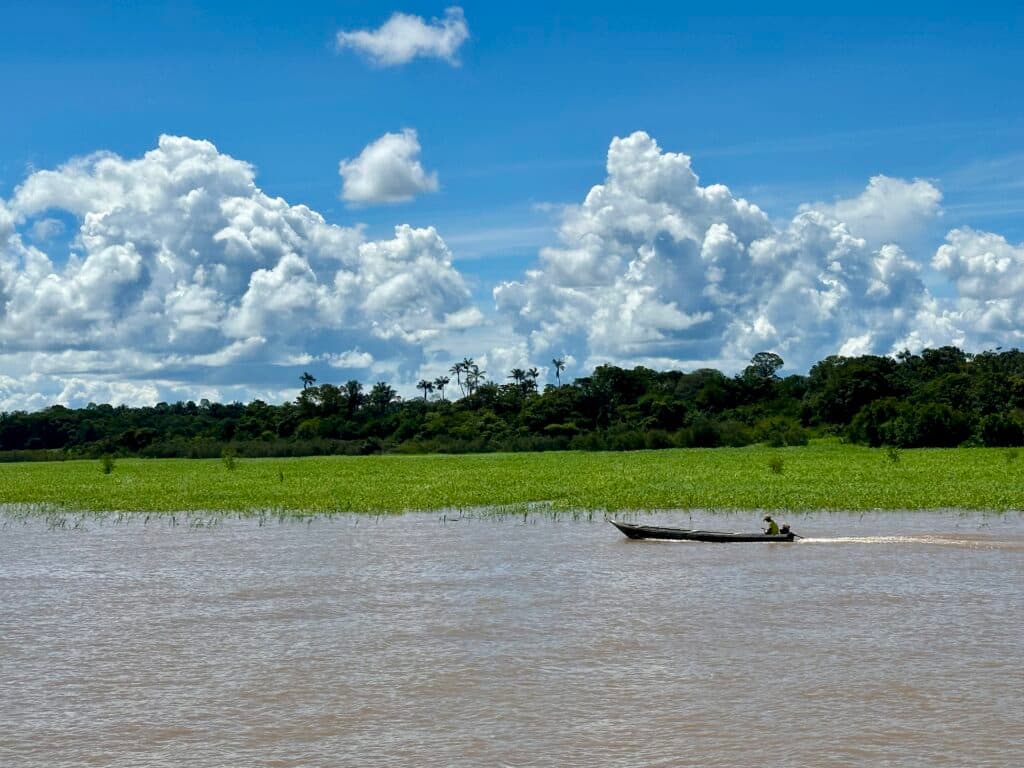
One of these communities, as we move up the river, is Nova Esperança, home to 148 Indigenous people. They are located about seven hours by boat from the state’s capital.
The leader of the tribe José Baré says they started receiving tourists about 20 years ago and today it’s their main source of income.
“Our schedule is packed, yesterday a group left and today another one arrived. We don’t stop,” he said.
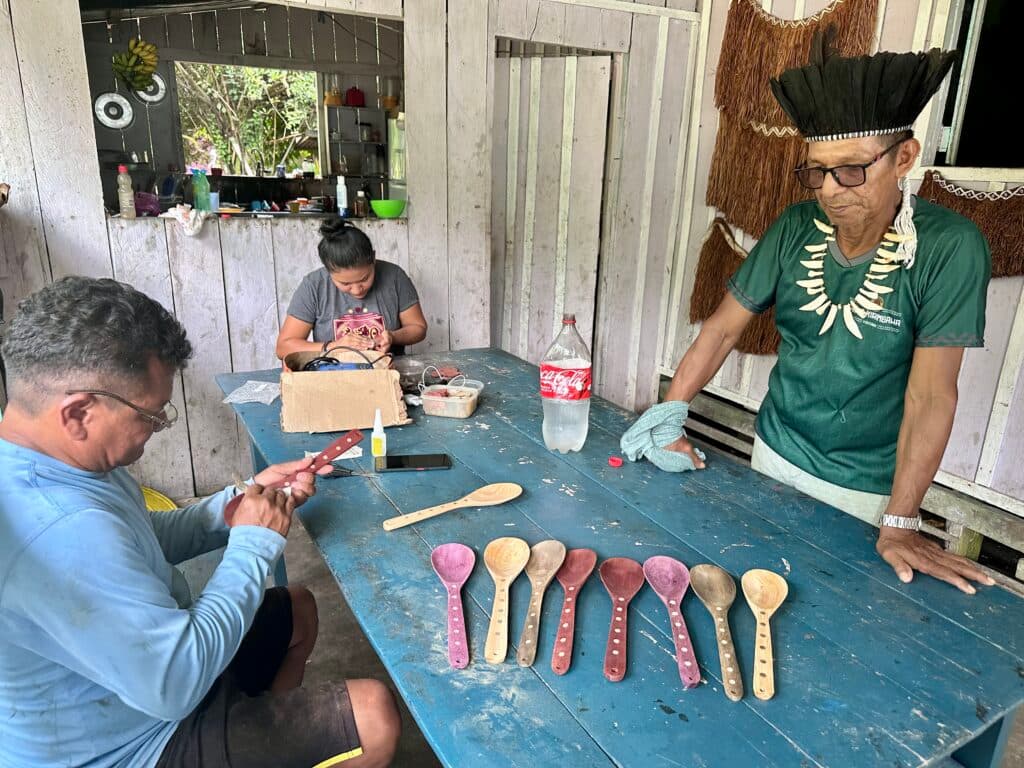
Tourists who stay with them can learn about Indigenous traditions, and how to make yuca flower, and to produce crafts with seeds and wood. Baré says tourism has brought them several things.
“Today here in Nova Esperanca we have schools, we have a clinic, indigenous teachers, and we get subsidies from the government,” he said.
They also have solar power, internet and two churches.
But the integration has arrived with a cost. Baré says only four of the older people in the tribe speak their native language.
—
Support for this project was provided by a PSC-CUNY Award, jointly funded by The Professional Staff Congress and The City University of New York.