Public radio’s longest-running daily global news program.
©2026 The World from PRX
PRX is a 501(c)(3) organization recognized by the IRS: #263347402.

Yousef Sweid tried to avoid talking about war. Now, in a sold-out one-man show, he confronts politics, identity and fatherhood — with humor and unease.
Growing up, Yousef Sweid, a Palestinian-Israeli says he was “forced to choose a side.” He confronts it all in his one-man show “Between the River and the Sea.”
For nearly two years, Yousef Sweid avoided talking about the Oct. 7, 2023, Hamas attacks and the latest war in Gaza.
But now, the Palestinian-Israeli actor is confronting the conflict in his production, “Between the River and the Sea,” a one-man show facing a sold-out run at Berlin’s Maxim Gorki Theater through September.
The title is a play on the controversial slogan “from the river to the sea” that originated in the 1960s and that’s been used in different contexts by various people, referring to the land between the Jordan River and the Mediterranean Sea.
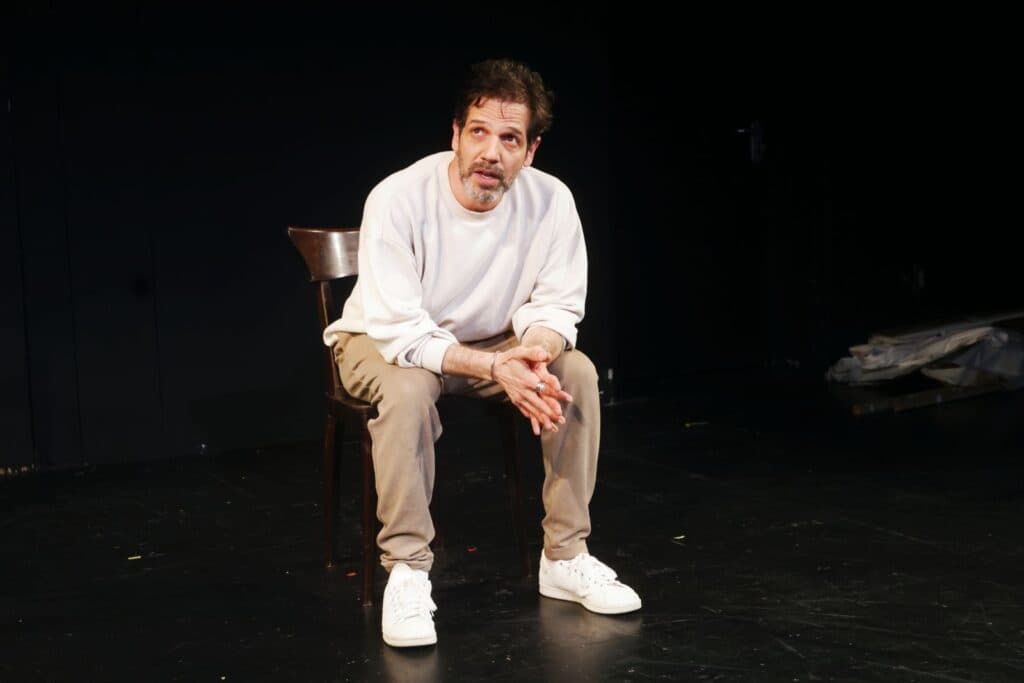
But Sweid, who spoke with The World from a café in Edinburgh during the show’s limited run at the Fringe Festival, uses his experience as a Palestinian-Israeli Christian to add an entirely unique perspective. He begins every performance with a promise: that he won’t talk about the war, he won’t talk about politics.
“I am going to talk about my divorce,” he says onstage.
The line earns a laugh — and maybe a sigh of relief. But what follows is not just comedy. It is a reckoning, where humor, grief and tension sit side by side, keeping audiences laughing, thinking and sometimes shifting uncomfortably in their seats.
Born in Haifa to Palestinian Christian parents, Sweid speaks Hebrew and Arabic with ease. In the show, he slips between voices and identities from different moments in his life. He mimics his father, Sliman, who warned him as a boy: “You are not an Israeli-Palestinian. You are a Palestinian with an Israeli passport. This is very important.”
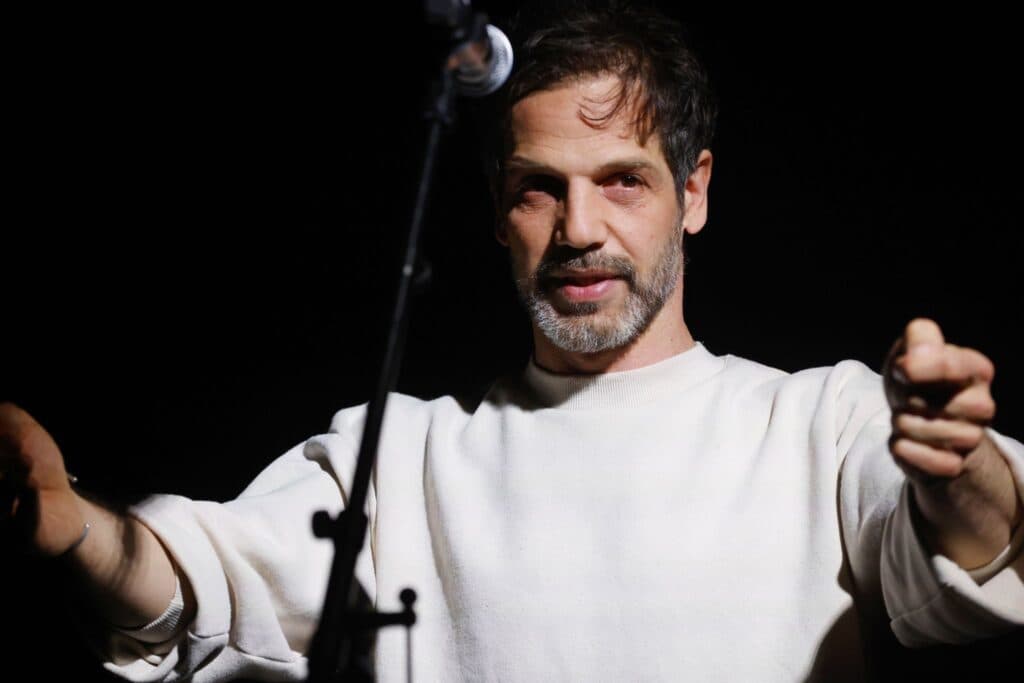
Friends he impersonates “on the phone,” Jewish and Palestinian, begin to sound uncannily alike, underlining what it feels like to live “in-between.”
Sweid has been married twice, both times to Ashkenazi Jewish women, and has a child with each. When his second wife returned to Israel after their divorce, he stayed in Berlin, raising two Jewish Arab children in a city that allows some distance from the conflict, where safety means something quieter, though no less fraught.
“Who’s going to get the children? How do we keep them safe?” he asks in his set.
The show was developed with Isabella Sedlak, Sweid’s longtime collaborator, who co-wrote and directed the production. Sedlak recorded hours of conversations with Sweid, shaping intimate stories of family, identity and personal conflict into a one-hour performance.
“He always talked about Oct. 7,” she said. “But then I asked, ‘What do you want to talk about?’ That’s how we found the divorce, the kids, the everyday life.”
Those everyday details give the piece its weight. A custody battle mirrors larger political struggles. A childhood school bully named Avi becomes, not a symbol of religious zealotry or nationalism, but a portrait of pain passed down from a father.
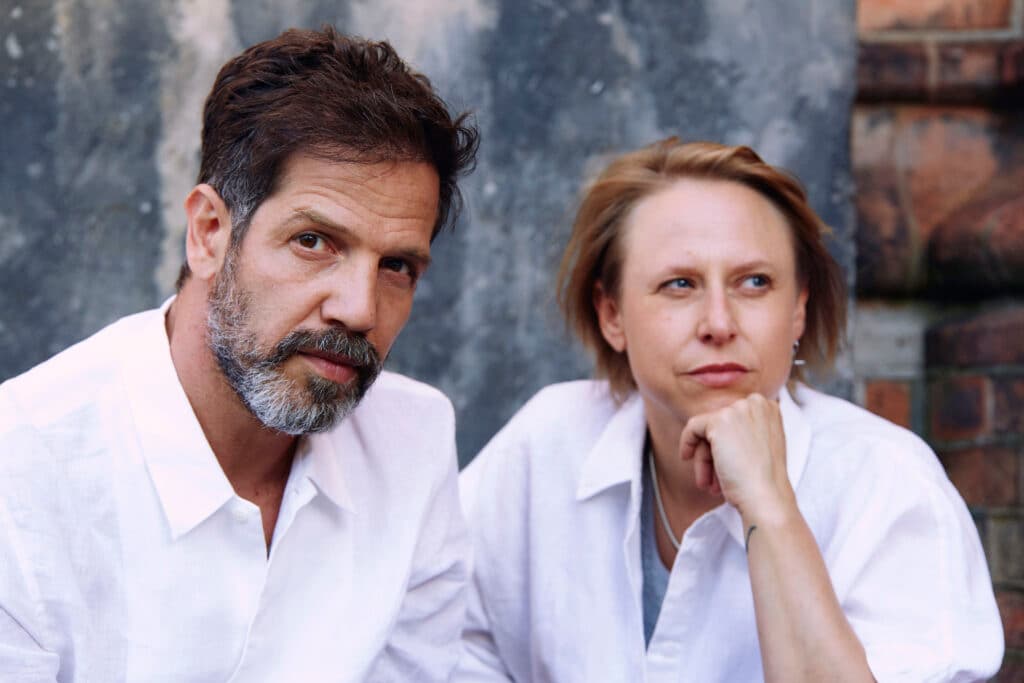
Sweid explained that he never cared much about identity.
“I was forced to choose a side,” he said. “And for me, I don’t understand why it’s so important.” But the question still comes up, even from his adopted home of Berlin.
Sweid’s son, who recently turned 15 years old, has started asking questions about the war back home.
“And then I have to answer,” he said.
But Sweid knows answers are rarely simple. They do not divide neatly into good or evil. The reasons behind our choices are messy, shaped by upbringing, circumstance and a desire for peace.
With his son, and in the show, he does not resolve these contradictions. He leaves them hanging in the air. The discomfort is intentional, a reflection of life itself. And it seems audiences find that honesty bracing.
It is a deeply personal and unavoidably universal story. It’s also a reminder that the lines between “us” and “them” are often blurrier than we think.
And that for those living “in-between,” it is not a weakness but perhaps the greatest strength of all.
Watch this related video about artists embracing comedy in Syria: