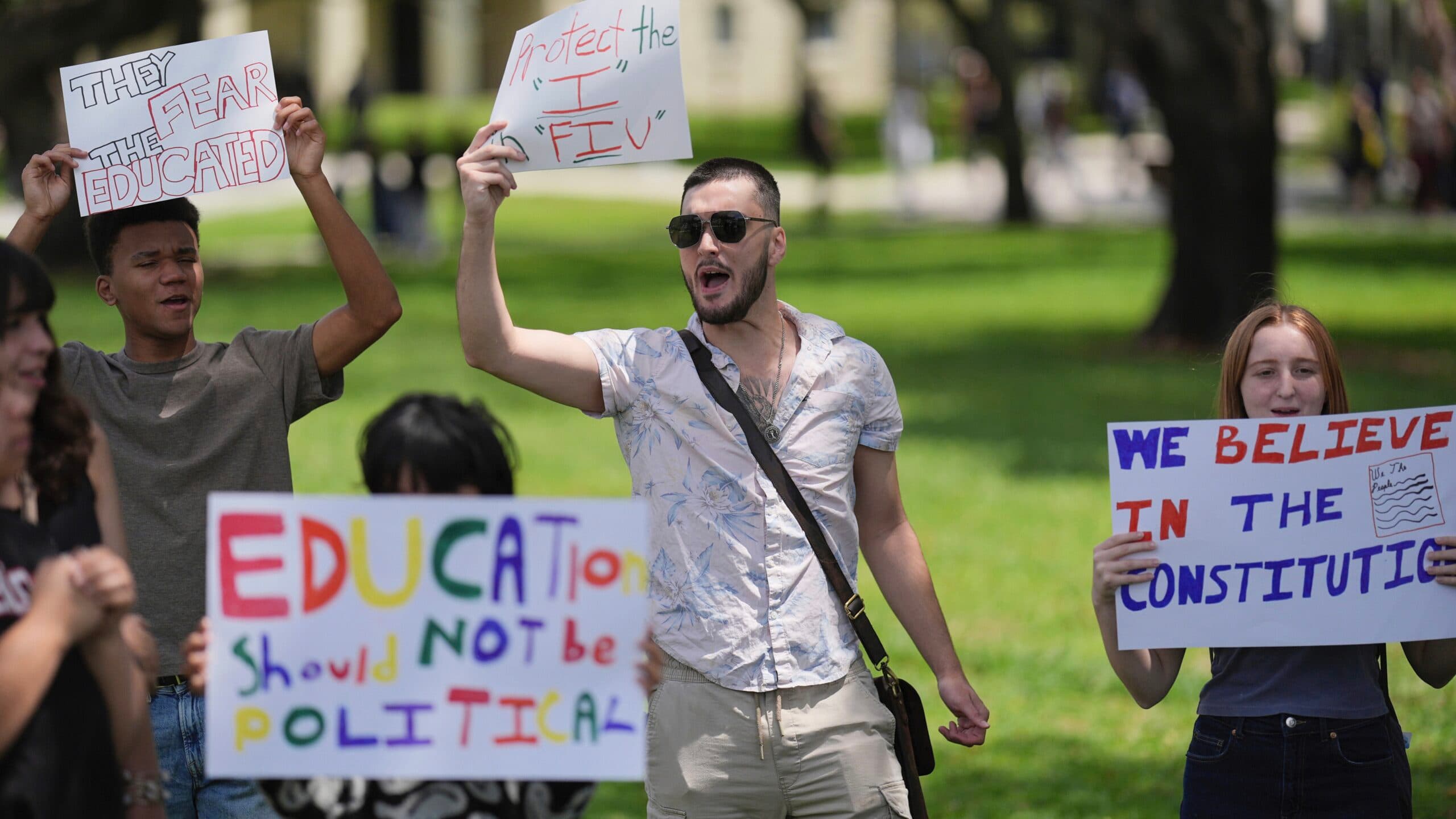
Over the last several months, international students at campuses across the United States have found themselves caught up in political havoc. The Trump administration has announced enhanced scrutiny of student visa applications. And at Harvard University, specifically, the administration has moved to block admission for all international students.
Now, some colleges abroad are stepping in to help.
The World’s Host Carolyn Beeler spoke to Kirk Carrapezza, who covers higher education for GBH Boston, to learn more about this.
Carolyn Beeler: So, how are colleges outside of the US now trying to step in here?
Kirk Carapezza: Yeah, so the University of Toronto and the Harvard Kennedy School of Government announced a backup plan this week. If visa restrictions block students from returning to the US this fall, some of their graduate students could continue their studies north of the border in Canada, and students could take government courses in Toronto that are co-taught by faculty from both schools.
And the University of Toronto is not the only school to be stepping in to help here, right?
No, other schools have also opened their doors, offering spots to US-bound students this fall. American University of Nigeria and Al Akhawayn University in Morocco. At Franklin University in Switzerland, there are 40 seats this fall for students from colleges in the US, and the school is even offering scholarships. Marjorie Haas is president of the Council of Independent Colleges here in the US, and she says more schools are looking abroad for help, to survive what she calls Trump’s “chaos tax,” and Haas tells me, just knowing that some schools have international partners ready to jump in, even on a student-by-student basis at the last minute, it’s a huge relief.
So, Kirk, can you give me an update on the enhanced scrutiny of student visa applications and threats against Harvard specifically … where do those both stand?
Sure. So, just to review, the Department of Homeland Security says Harvard, specifically, shouldn’t be allowed to enroll any international students because some of them participated in Gaza-related protests that some on the right have characterized as either anti-American or antisemitic. The government has said that enrolling international students is a privilege, not a right. Harvard has sued the government and, for now, a federal judge in Boston has blocked the move. But the fallout is already here. I mean, if you look at Harvard Kennedy School, they’re already laying off staff. Last year, more than half of the students there came from abroad. And in a message to faculty [last] week, the dean blamed, “unprecedented headwinds,” including threats to international students and deep federal research cuts. Colleges are drawing up many different budget plans, ranging from “it’s going to be ‘business as usual'” to “what if zero students come back in the fall?”
International students.
International students, right.
So, those schools that aren’t Harvard are probably preparing for whatever happens with student visa applications. Interviews were put on hold for a little while. Now there’s enhanced scrutiny for those applications. What’s the latest on that?
Yeah, so the interviews are back on, but they’re increasing scrutiny of students’ social media accounts. It’s easy to get sucked into Harvard because it grabs so many headlines, but if you just look at Worcester here in Massachusetts, there’s a school, Clark University, where two-thirds of their graduate students are from abroad, and they’re planning to cut a third of their faculty over the next few years because they’re so afraid of enrollment dropping.
What do supporters of this plan make of the Trump administration’s actions?
They say that the schools are overreacting and that this scrutiny is long overdue. They point to similar changes and updates that went into effect after 9/11, and they say this all might slow things down for a while but, in the end, there will be some rejections for students who in the past might have gotten in. I spoke with Simon Hankinson. He’s a senior researcher at the Heritage Foundation, and he says these changes shouldn’t make a huge difference unless a school is overwhelmingly reliant on foreign students, and Hankinson says schools are cherry-picking sad visa stories to win back public support.
All right, so what else are American colleges doing to help students, maybe behind the scenes, as there’s all this uncertainty?
Yeah, they’re quietly hosting international students who chose not to leave this summer, just to avoid any visa issues. One small college in the Midwest is putting up more than a hundred students who otherwise would have gone home for the summer. About half of their incoming international class has their visas but others are still in limbo. Some are getting interviews some are not.
Parts of this interview have been edited for length and clarity.