Public radio’s longest-running daily global news program.
©2026 The World from PRX
PRX is a 501(c)(3) organization recognized by the IRS: #263347402.

Peace talks between the US, Russia and Ukraine appear to have stalled. But far away from the negotiation table, Russian aerial attacks continue — and Ukrainians still fear for their lives, including soldiers and military chaplains, who visit front-line areas for their work.
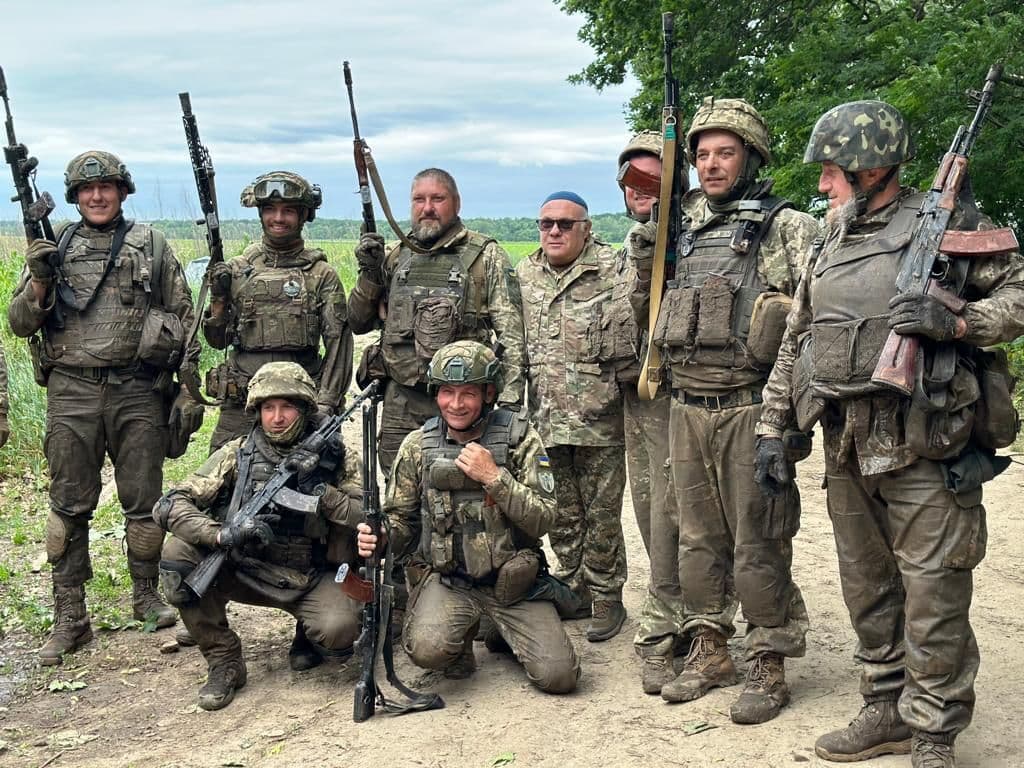
Rabbi David Milman stands with Ukrainian soldiers in the field.
On the outskirts of Kyiv, a group of clergymen meet for a training session run by the Taras Shevchenko National University Military Institute. The atmosphere is light and jovial, but the subject matter is serious. The men are training to become military chaplains.
Maksym Kravchuk, a chaplain instructor and a priest with the Orthodox Church of Ukraine, says that when you become a chaplain, you serve everyone — including those who aren’t religious.
Hundreds of priests and religious leaders from other faiths have joined the country’s armed forces to provide services for soldiers and their families in a system launched in October 2022. They offer support and try to boost morale amid the fighting.
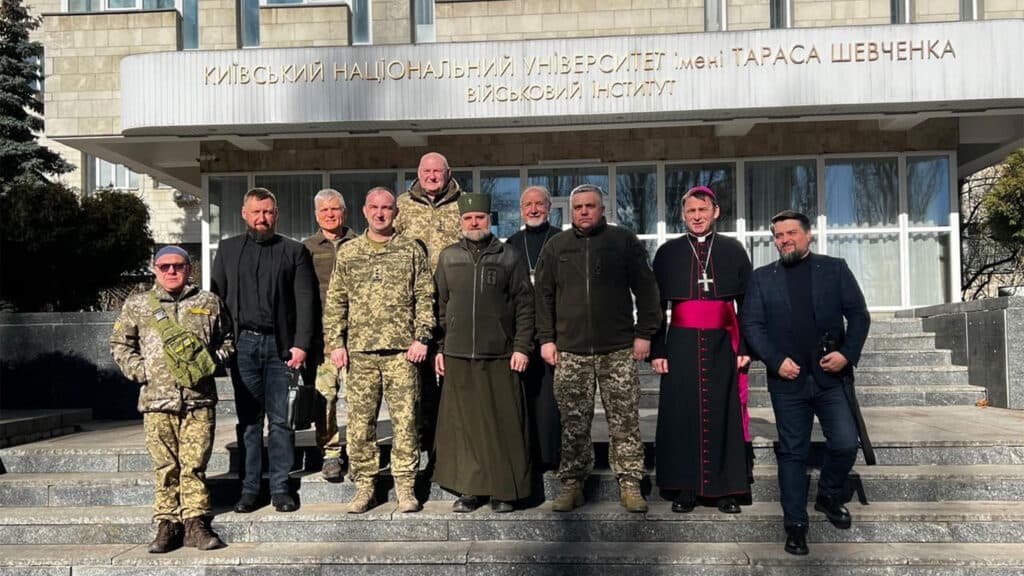
Kravchuk explained that you must already be a clergy member to become a chaplain. Then, when you complete the six-week course, you become an officer in Ukraine’s military chaplaincy service.
In Kravchuk’s case, he said he decided to join the military soon after Russia’s full-scale invasion three years ago. For him, the military chaplaincy service was the best of both worlds — he could continue his service as a priest, but within the military.
One student who attended the training session was Konstantin Pantelei, a priest in Ukraine’s Greek Catholic Church.
“War, of course, is a time of losses,” Pantele said. “To continue [to] protect your country and your freedom, you need motivation, not just [anger toward the] enemy, but the vision of your future.”
Part of his role has been talking with soldiers about their future and helping them understand what they’re fighting for.
“It’s very important how [Ukrainian soldiers] feel, themselves, about [their] enemies,” Pantele said. “We don’t like to kill them, but it is daily work, and we still must remain ourselves, to remain Christians, to remain people, to remain human.”
Pantelei said he prays for the enemy — for them to turn away and go home.
Bishop Stepan Sus at Ukraine’s Greek Catholic church said that religious leaders in Ukraine are even more important today as an antidote to some of Moscow’s messages. The head of the Russian Orthodox Church there has endorsed the invasion.
“They are thinking that they have a special task, through Ukrainians, to save the world from the sins, from the evil, what is very dangerous,” Sus said. “All of them, all our enemies, they are using Christian values to justify their crimes.”
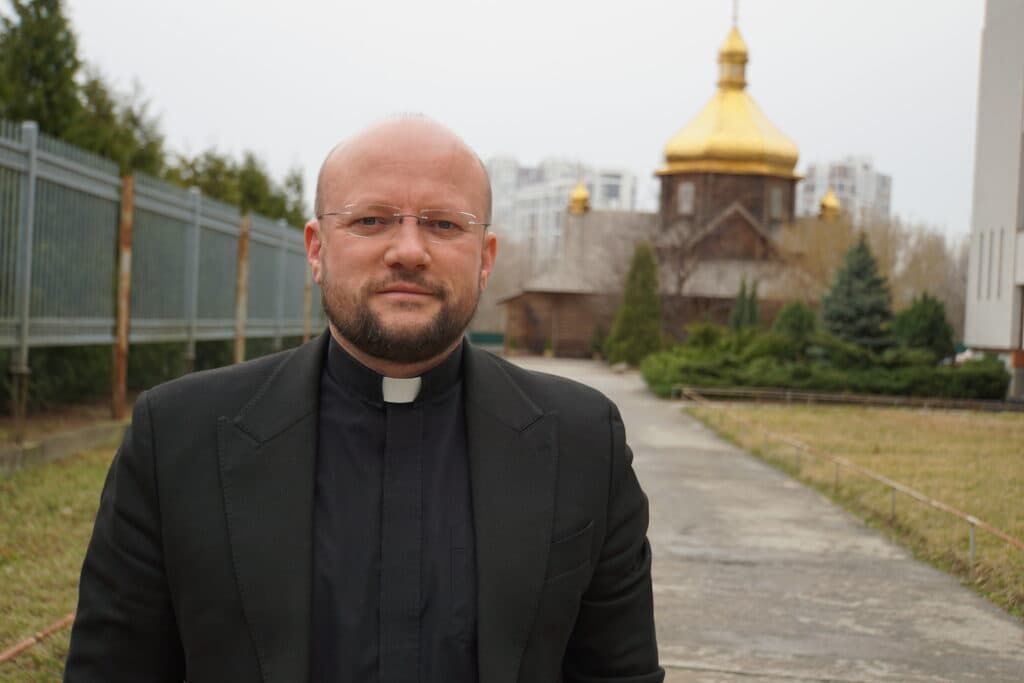
Sus was a military chaplain for five years before Russia’s invasion and studied the discipline in academic settings. According to Sus, the most important task for a chaplain is “to be present when the soldiers are facing difficulties in their lives — some crisis, or family troubles — they are looking for some person to whom they can talk about these difficulties, and this person is for them, first of all, the chaplain.”
Sus said a chaplain is someone to talk to and consult — a calming presence in a very stressful environment. Just like everyone else in Ukraine, chaplains also suffer from the war and suffer from losses on the battlefield.
“Sometimes we have to [not be] afraid to say to ourselves that it’s very painful for me, the difficult day, just to allow ourselves to be weak, because we are human beings, we cannot be strong every time,”Sus explained.
Rabbi David Milman joined the chaplaincy after Russia’s full-scale invasion, and with that role came a wide array of responsibilities, starting with religious services, providing Jewish soldiers with kosher food, being with them on holidays and making sure that officers accommodate religious needs when possible. Communicating with military families, he said, is also a big part of the job.
“The war has led to a huge separation of families,” Milman said, explaining that there are many cases where men are serving in the military, and their families are abroad.
“Not everyone is capable of maintaining long-distance relationships,” so chaplains do what they can to help families navigate this crisis.

Milman also said that there are men who have been drafted against their will. “For those who are in the army against their will, we try to help them get non-combat roles, to keep them away from the front line.”
The job of a military chaplain for Milman represents his patriotism and his faith. “What’s the point of learning the Bible and not putting it into action?” Milman said. “There’s a saying that a person who saves a life, saves an entire world.”
Andriy Zelinskyy is a priest with Ukraine’s Greek Catholic Church. He’s also a chief deputy in Ukraine’s military chaplaincy service. Zelinskyy describes war as a place where people are on the edge of humanity — a place where order turns into chaos.
“Your presence must be not only yours, but you have to carry God into the hell of war,” Zelinskyy said. In this space, the chaplain reminds soldiers of the best human values — like truth, justice and beauty.
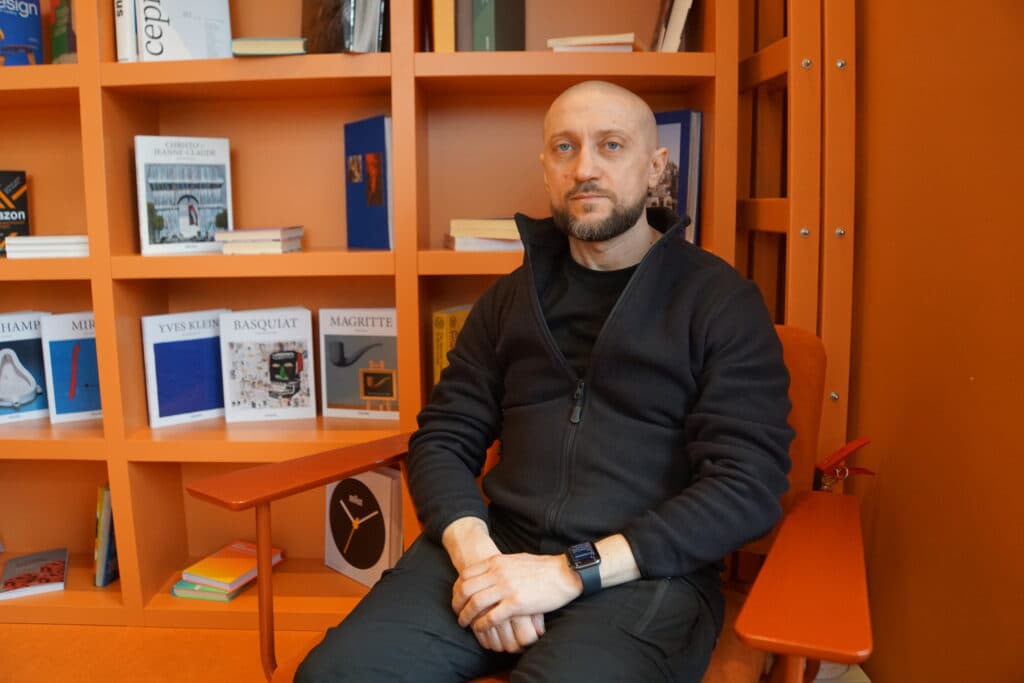
“This is a very unique capacity of a human being, to be able to see the beauty, in the hell of a war, makes you stronger than this hell,” Zelinskyy said. “Beauty is everywhere, I remember well the things you’re capable [of noticing], even a flower blooming in the field destroyed by artillery. To notice this makes you human.”
In the face of war, Zelinskyy said, this task is especially challenging. Soldiers see the worst of humanity and often dehumanize their enemy. “We can understand and we have to heal. Because dehumanizing is, of course, the practice that hurts not only the dignity of a human being who is being dehumanized, but the dignity of the human being who is dehumanizing.”
For Zelinskyy that’s what Ukrainian victory could look like — a future where Ukrainian soldiers heal from this war, knowing that they’ve preserved their human values with dignity.