Public radio’s longest-running daily global news program.
©2026 The World from PRX
PRX is a 501(c)(3) organization recognized by the IRS: #263347402.

The city of Kyoto is known as Japan’s cultural and spiritual capital. It’s for good reason: Kyoto has hundreds of Buddhist temples and Shinto shrines, some of which are associated with the country’s imperial history. They’re popular with tourists, but some of the locals in Kyoto say they’re overwhelmed.
Kyoto, Japan, has shops all over town where tourists can rent traditional Japanese clothing, for women and men, and then go visit holy sites and take selfies.
The city of Kyoto is famous for being the former seat of imperial Japan.
It’s also the country’s cultural and spiritual capital, with hundreds of Buddhist shrines and Shinto temples. They’re a big reason why so many tourists flock here.
“It’s a must. You know, just because of its culture, its history, its magic around every corner. It’s just fantastic,” said Selma Slim, who was visiting from Mexico with her teenage daughter Lourdes.
And today, they’re taking part in a very popular tourist tradition.
“We’re wearing kimonos. We rented them, and we chose our colors that we like most, or fit us most. And we’re just walking around taking pictures, because it’s pretty. It’s a very pretty traditional wear,” Lourdes said.
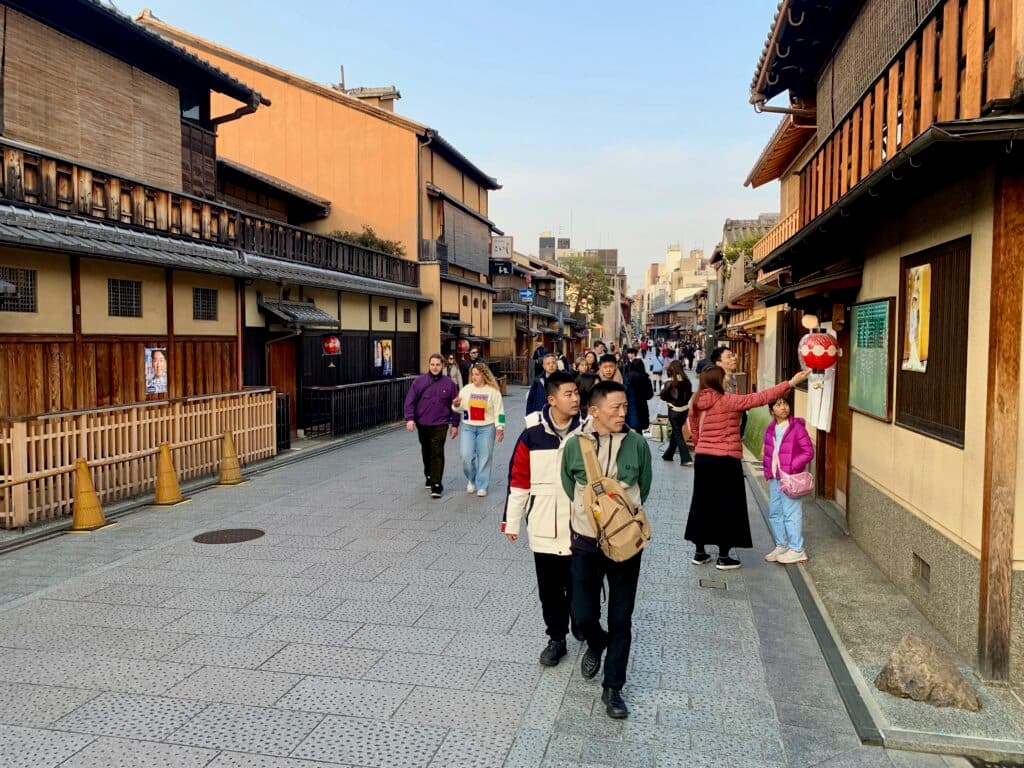
Kyoto has shops all over town where tourists can rent traditional Japanese clothing, for women and men, and then go visit holy sites and take selfies. At times, locals say, they’re overwhelmed by the sheer number of visitors — and occasionally, their lack of good judgment.
Kaitlyn Ugoretz is an anthropologist and expert on the Shinto religion with the Nanzan Institute of Religion and Culture, based in Nagoya, Japan.
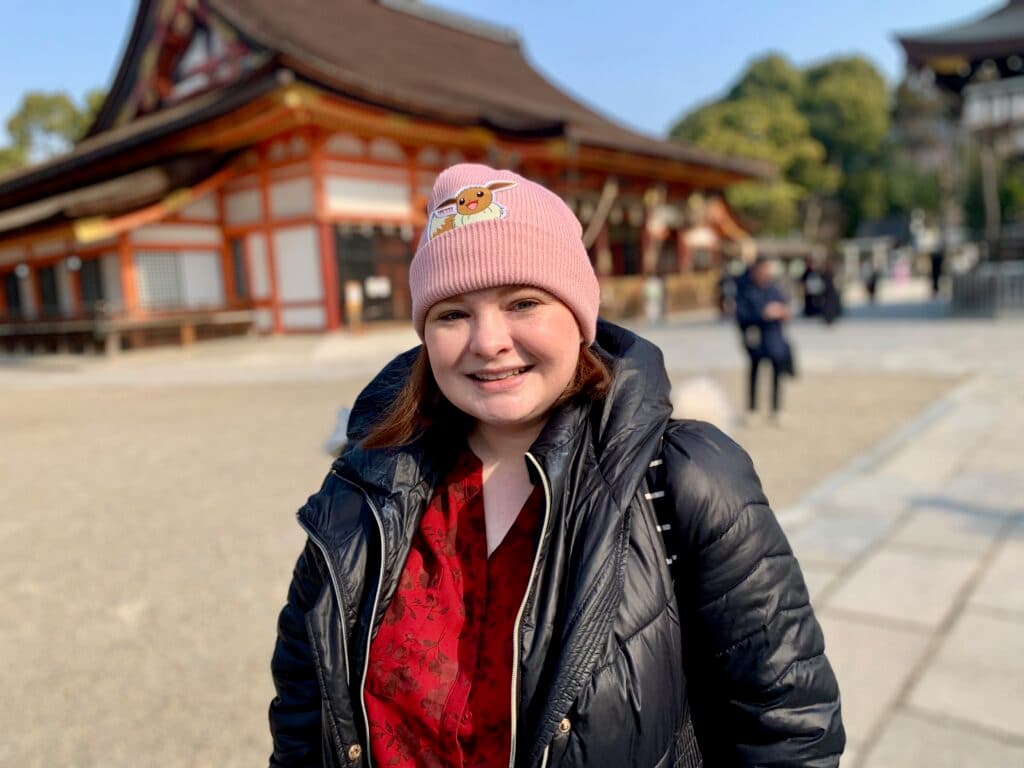
“Recently, in the Japanese media, they’ve been talking about meiwaku gaikokujin, or ‘nuisance foreigners,’ you know, people who only come and make problems for domestic nationals or the people who live in Kyoto,” she explained.
For example, a recent Japanese TV report from Kyoto showed crowds of tourists ignoring safety barriers and a warning buzzer as they pushed their way across train tracks near the Fushimi Inari-taisha shrine. Luckily, someone pressed an emergency button in time, and the driver of an oncoming train was able to stop.
It’s a dramatic example of what some people in Kyoto have complained about for years: tourists behaving badly.
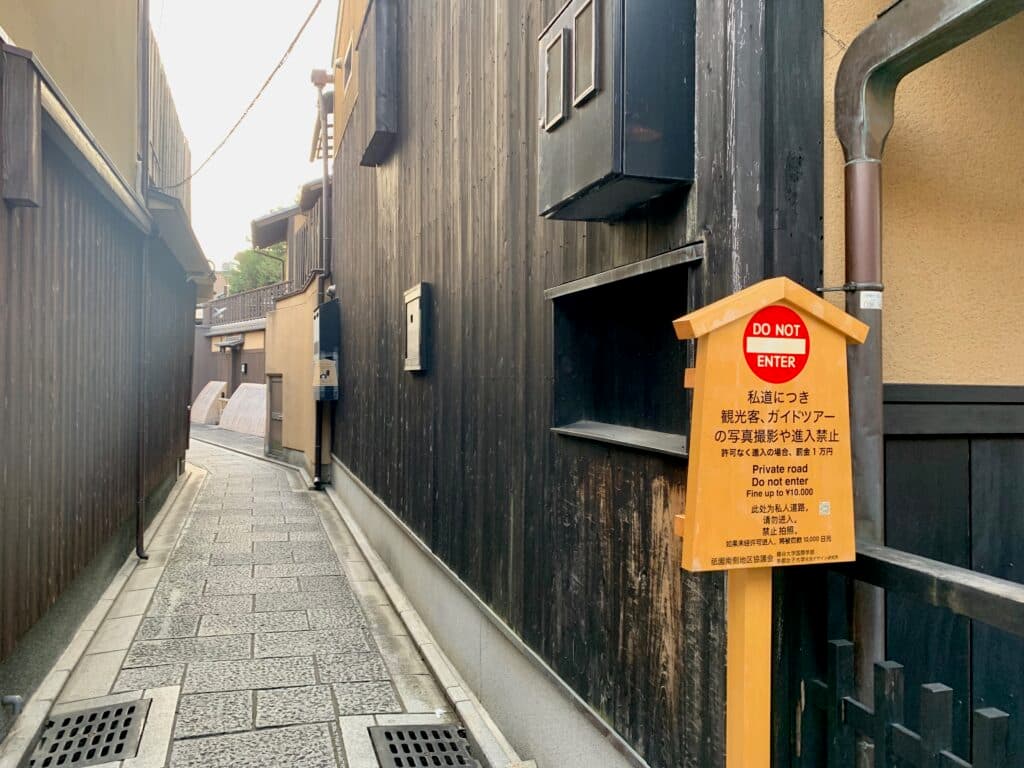
The authorities are taking steps to address the problem. Certain residential streets in Kyoto’s historic district are now off-limits to tourists. They’ve got signs in English, Chinese and Japanese that say, “Do not enter — fine up to 10,000 yen,” which is about 65 US dollars.
Ugoretz, who also leads tours at Japanese shrines, said that incidents of vandalism and obnoxiousness by foreign tourists have created real tension with people who live in Kyoto.
“Recently, there have been some issues like here at Yasaka last year; a group of tourists got in trouble for ringing the bell too loudly. And now, there’s actually a decision by the shrine that the bells are put away in the evening so that people cannot ring them loudly and disturb the people who live in the area,” she said.
Ugoretz is trying to do her part. When she brings foreign tourists through Shinto shrines or temples, she informs them how to be respectful and how to behave at places like the ritual water fountain just inside the entrance to Yasaka shrine.
“So, you take a scoop with this big ladle. First, you rinse your left hand, you rinse your right hand. Leave a little bit in the ladle to tip over the handle, which cleans it — theoretically, ritually — for the next person. Then, you put the ladle back and you’re ready to go pray,” she explained.
A “Photography is prohibited” sign, which she said is new, may help keep people moving.
Most of the people walking up to the big prayer hall here appear to be Japanese, though a few tourists join in, too.
First, they toss a coin or two into a receptacle, then, they clap, bow and begin to pray.
“At Shinto shrines, you pray silently. So, we don’t know exactly what they’re asking for. It’s a very private matter, but you can imagine that they’re asking for a good result on their exams or maybe a medical test,” Ugoretz said.
Rev. Takafumi Kawakami is the head priest at the Shunkoin Temple in Kyoto. He’s the fifth generation from his own family to serve as a Zen Buddhist priest here, in a lineage that goes back 24 generations in all.
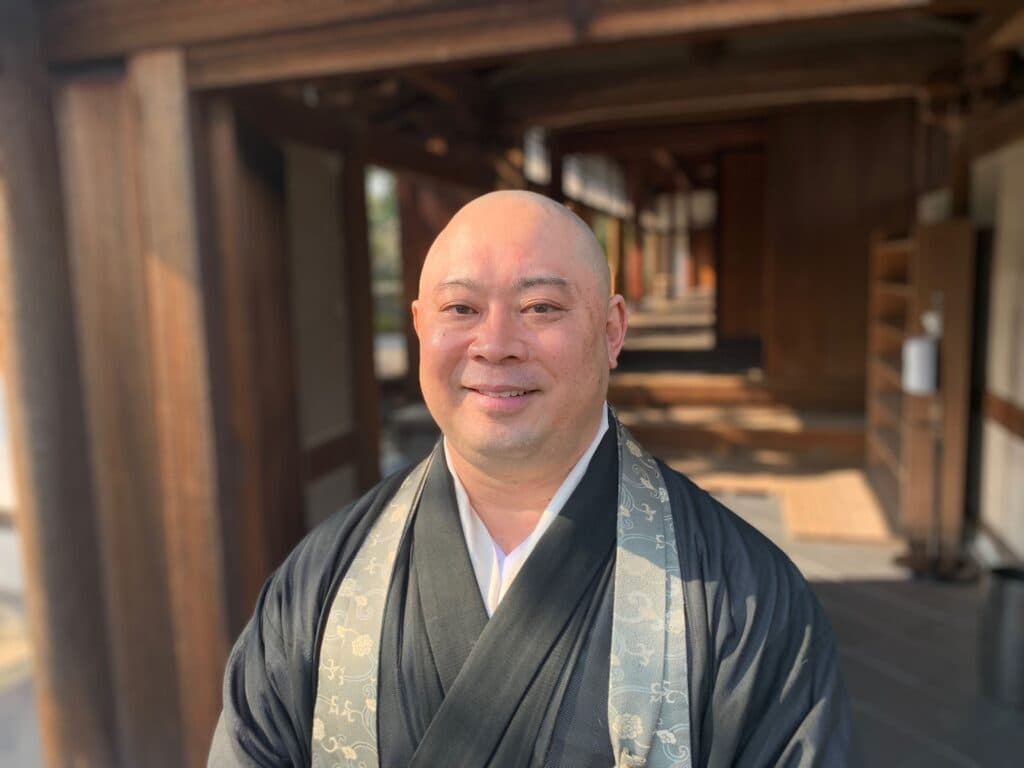
Kawakami said that his temple doesn’t attract the kind of visitors who are mostly interested in posting selfies on Instagram.
It’s not that he’s judgmental, and he’s well aware of how important the tourist industry is to the economy here. But he said that mass tourism poses a risk to something that has long made Kyoto unique.
“Kyoto’s kind of a ‘secret club or society’ type of idea. If you don’t know this rule, you’re not welcome here. If you don’t know how you play this game, how you behave here, or whatever, you’re not welcome. That was kind of Kyoto,” he said, reminiscing on the old days.
Kawakami offers visitors classes on Zen meditation. He hosts academics from abroad looking to dig deeper into Buddhist teachings and organizes study-abroad programs here.
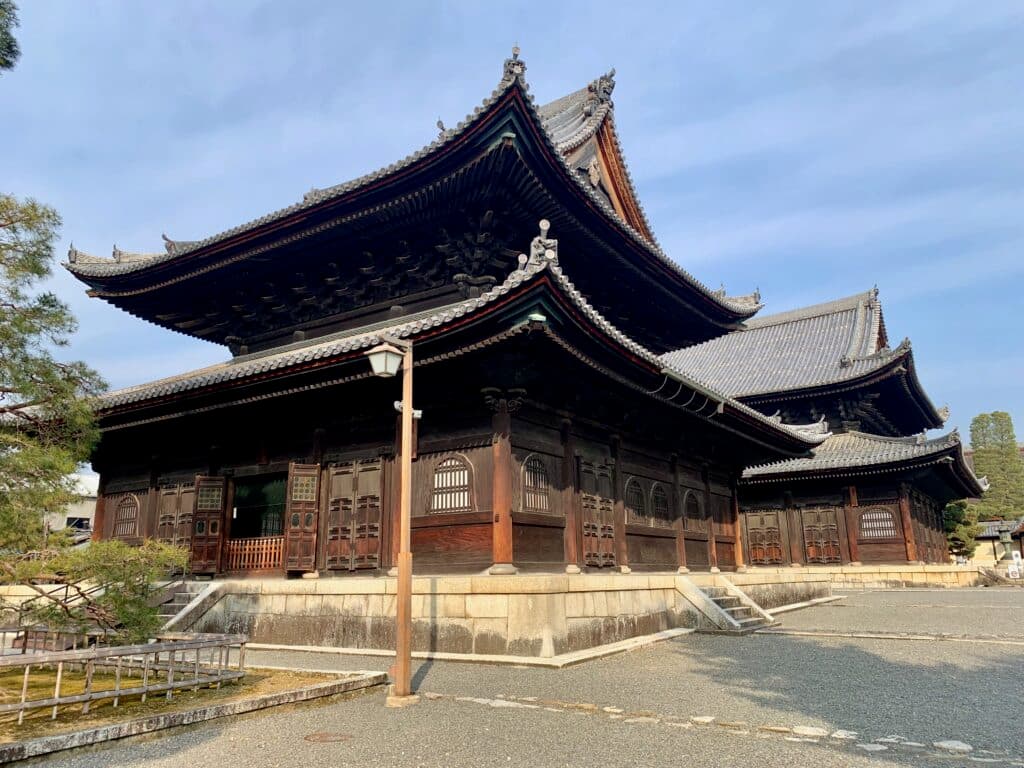
He said that better-informed guests — with deeper understanding — will get much more out of the Kyoto experience.
As an example, he explained that a traditional Japanese tea ceremony is not supposed to be a one-way experience.
“There is an idea about hospitality [involving] 70% [of the] host, and then, 30% the guest. So, it’s not really all about [the idea that the] host is all responsible about, you know, comfort and enjoyment of guests,” he explained. “If you want to have a successful tea ceremony, guests need to know some rules.”
Kyoto natives like Kawakami are hoping that their hometown can find a balance when it comes to tourism, between quantity and quality — for the sake of the city’s residents and foreign visitors as well.
