Poverty rises in Nigeria
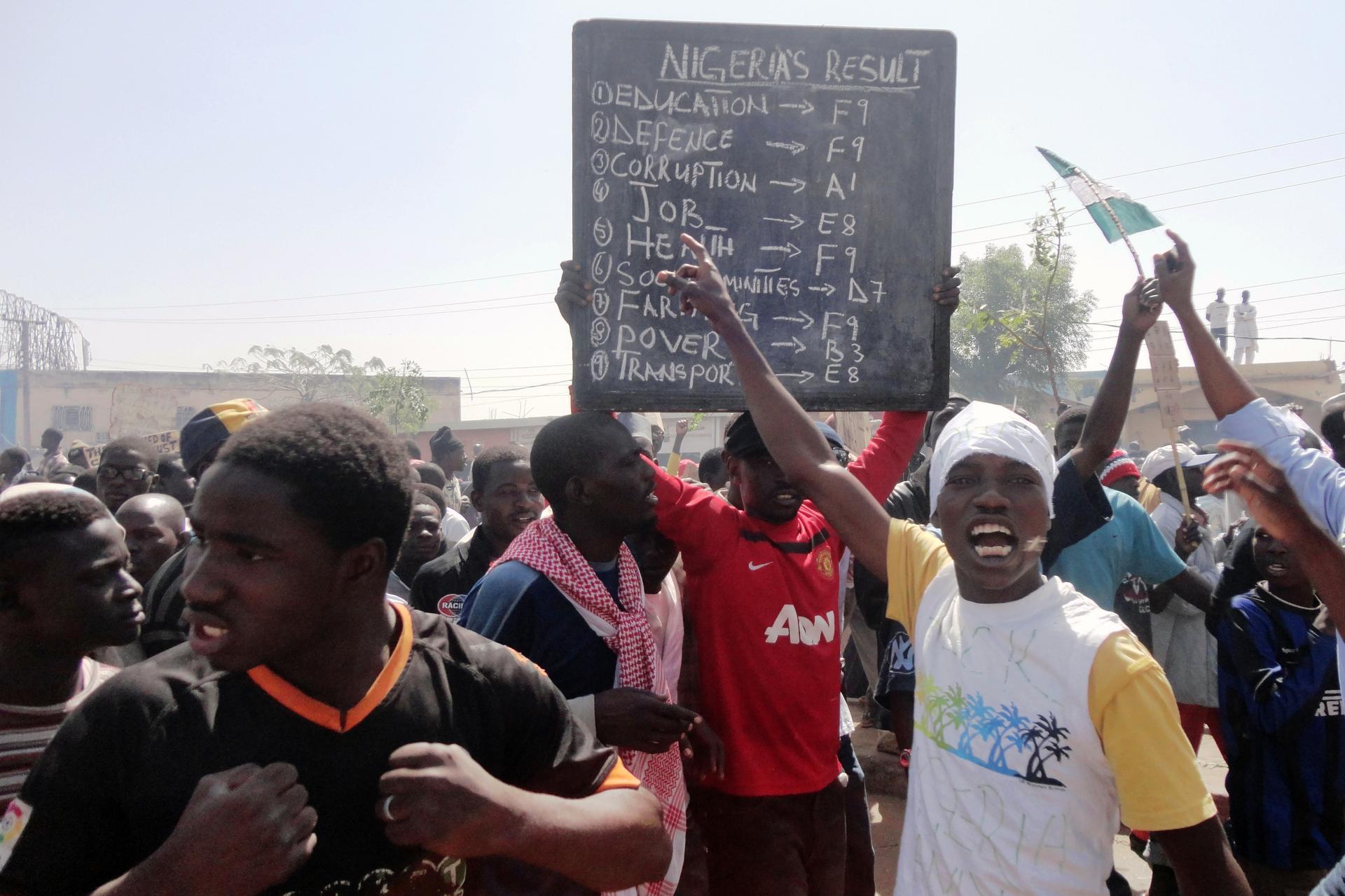
A protester carries a placard against poor social services in the northern Nigerian city of Kano, on January 11, 2012. Hundreds of thousands of protesters took to the streets for a week, demonstrating against the ending of subsidy that doubled and tripled the price of fuel.
Despite economic growth, poverty is increasing in Nigeria, according to a report released by the oil-rich nation’s National Bureau of Statistics.
The report says the number of people living in "absolute poverty" rose from 54.7 in 2004 percent to nearly 61 percent in 2010.
Absolute poverty is defined as “a condition characterized by severe deprivation of basic human needs,” according to a paper published for the United Nations in 2005. In Nigeria, roughly a million people lived on less than a dollar a day in 2010, and the 2011 statistics may be worse.
“It remains a paradox, however, that despite the fact that the Nigerian economy is growing, the proportion of Nigerians living in poverty is increasing every year,” reads the report.
The Nigerian economy has grown an average of 7.3 percent a year between 2004 and 2010, according to Bloomberg News. It is Africa’s largest oil exporter, and the U.S.’s fifth-biggest supplier. Oil and gas companies — the fastest growing businesses in Nigeria — are “not significant employers of labor,” said Yemi Kale, the agency’s statistician-general, according to Bloomberg.
More from GlobalPost: Fuel protests and Islamic violence challenge President Goodluck Jonathan
The oil industry in Nigeria is also known for corruption, according to Reuters. Early this year, when President Goodluck Jonathan canceled fuel subsidies that are a part of an established system of corruption, the price of fuel doubled and tripled overnight. Protests broke out across the country, forcing Jonathan to back down and restore the subsidy in part.
Reuters reports: “For decades politicians have focused on milking cash from crude oil exports, which average more than 2 million barrels per day, rather than developing infrastructure and creating jobs for locals.”
Analysts say Nigeria's rising poverty has contributed to the increase of violence, especially in the mostly-Muslim North, the poorest part of the country. In recent months, the Islamist militant group Boko Haram has intensified attacks, killing hundreds of people already this year.
More from GlobalPost: Boko Haram claims north Nigeria suicide attack
Activist Damian Ugwu told Voice of America that the terrorist organization can appeal to disaffected youth, lacking jobs or educational propects.
“It is a society where the wealth of the country is being cornered by the elite who do not care what happens to the rest of the country,” he said. “You are bound to see a lot of people who are angry with the system.”
The article you just read is free because dedicated readers and listeners like you chose to support our nonprofit newsroom. Our team works tirelessly to ensure you hear the latest in international, human-centered reporting every weekday. But our work would not be possible without you. We need your help.
Make a gift today to help us reach our $25,000 goal and keep The World going strong. Every gift will get us one step closer.