Congress reaches deal on extending payroll tax cut and unemployment benefits
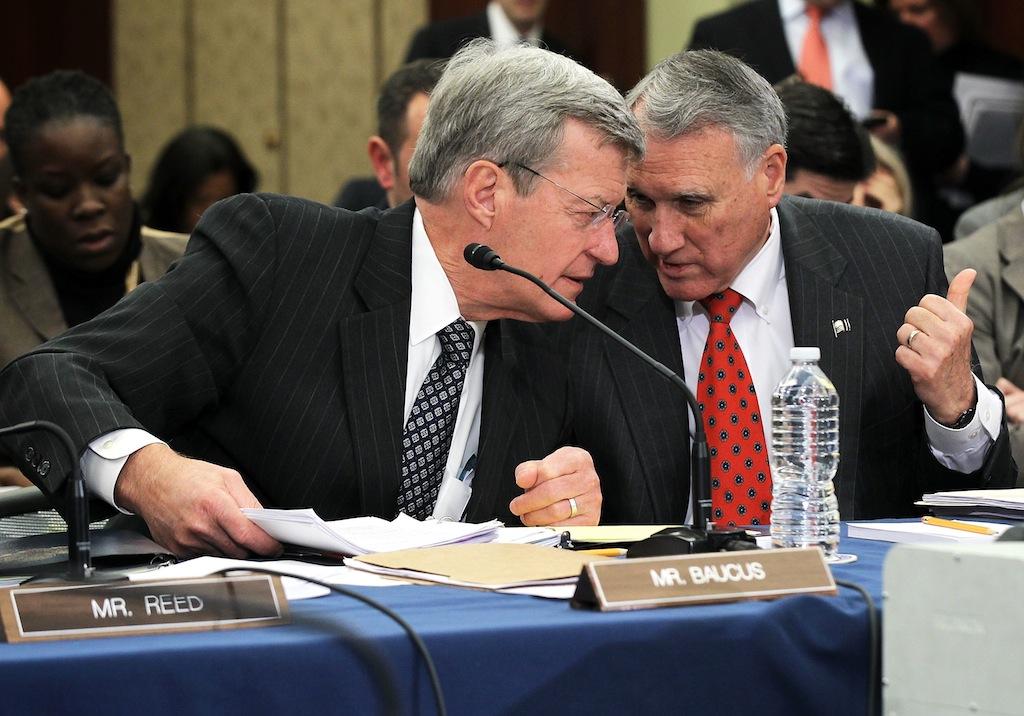
WASHINGTON, DC – FEBRUARY 07: U.S. Sen. Max Baucus (D-MT) (L) and Sen. Jon Kyl (R-AZ), members of the House-Senate Conference Committee on how to extend the payroll tax cut, talk with each other during a meeting February 7, 2012 on Capitol Hill in Washington, DC. Members of the committee met to discuss whether they could reach a deal to extend the payroll tax cut before it expires by the end of this month. (Photo by Alex Wong/Getty Images)
Democratic lawmakers signaled late Wednesday that they had reached a deal on extending the payroll tax credit and unemployment insurance, the Washington Post reported.
The group barely agreed by the deadline. Maryland legislators held their "yea" votes until a proposed increase in federal worker contributions to their pensions was axed; the final plan called for only new federal workers to contribute more.
More from GlobalPost: House Republicans reject two month payroll tax cut
According to the Washington Post, some in the Obama administration predict this will be the last major legislative achievement of the election year. If passed, the agreement would extend the payroll tax holiday for 10 months, meaning that the average American worker will keep $1,000 per year. Unemployment benefits would also extended through the year, though the number of weeks a worker can draw from from unemployment would be reduced on a state-by-state basis.
Politico reported that revenue will be raised by wireless "spectrum auctions, cuts to an Obama health care program and requirements that federal workers pay more into retirement benefits — all issues that provoked controversy Wednesday."
More from GlobalPost: Obama signs payroll tax cut extension
The bill will enjoy no support from Senate Republicans, according to The New York Times. Rep. Jeff Fortenberry, Republican of Nebraska, told the Times, "The payroll tax keeps Americans attentive to the fact that they put a little bit aside each check for Social Security. That connection is now gone.”
The story you just read is available for free because thousands of listeners and readers like you generously support our nonprofit newsroom. Every day, reporters and producers at The World are hard at work bringing you human-centered news from across the globe. But we can’t do it without you: We need your support to ensure we can continue this work for another year.
Make a gift today, and you’ll get us one step closer to our goal of raising $25,000 by June 14. We need your help now more than ever!