Eman Al-Obeidy, alleged rape victim, sent back to Libya
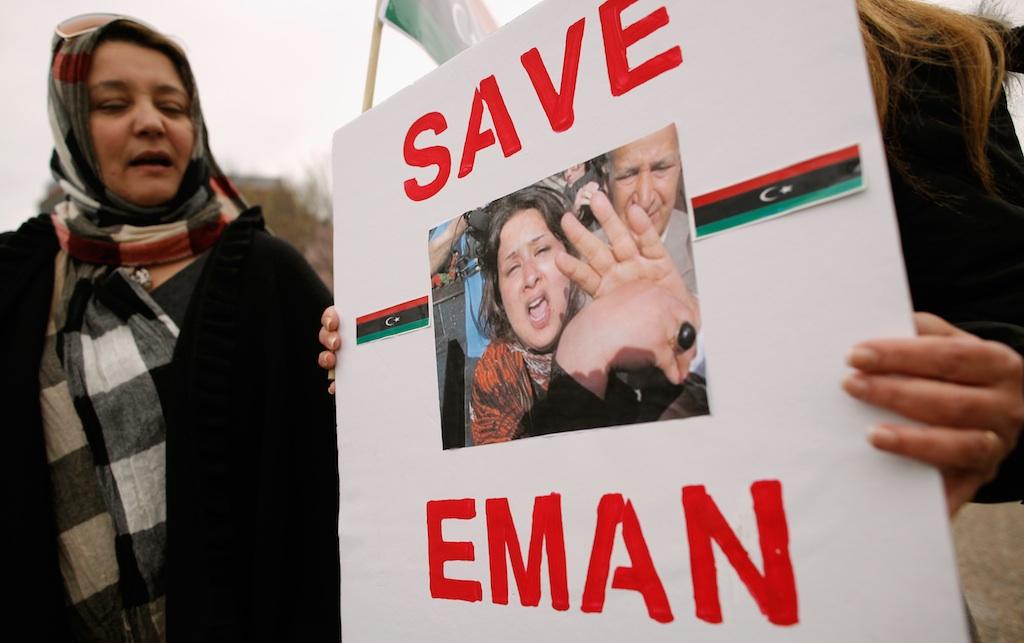
Libyan-American women from around the DC metropolitan area demonstrate to show solidarity with Eman al-Obaidi in Laffayette Park in front of the White House March 30, 2011, in Washington, DC.
A Libyan woman, Eman Al-Obeidy, who accused troops loyal to Muammar Gaddafi of gang-raping her was sent back to Libya reportedly against her will Thursday night.
A U.N. official told the Associated Press she was deported from Qatar where she had sought refuge and sent to Benghazi, the eastern city under rebel control.
Al-Obeidy attracted global attention after bursting into the Rixos Hotel in Tripoli on March 26 and telling international journalists that she had been raped and beaten for two days by 15 of Gaddafi's men. Journalists pounded her with questions as she was literally dragged from the hotel by Gaddafi's forces.
The young woman's public outrage at her perpetrators challenged both Gaddafi's rule and social stigmas in Libya against discussing sexual violence.
Al-Obeidy then fled Libya in early May, crossing first in Tunisia, with the help of a military officer and a friend. She then ended up in Qatar until being flown to Benghazi Thursday.
"She's welcome to stay, this is her country," Rebel spokesman Jalal el-Gallal told The Associated Press.
The woman's deportation from Qatar should not have happened and runs against international law, according to U.N. Refugee Agency's Sybella Wilkes.
A witness who met with al-Obeidy told CNN the alleged rape victim appeared bruised and battered after arriving in Benghazi.
Nasha Dawaji, a U.S.-based Libyan activist, said al-Obeidy had a blackeye like she had been punched as well as leg bruises and arm scratches.
The National Transitional Council, the rebels' government, vowed to investigate the case.
"Forcibly returning a refugee who survived gang rape not only violates international law, but is cruel and could trigger further trauma," Bill Frelick, refugee program director at Human Rights Watch, told CNN. "All eyes are now on the authorities in eastern Libya, who should allow al-Obeidy to leave the country."