US drought: Half of the country’s counties now considered disaster areas
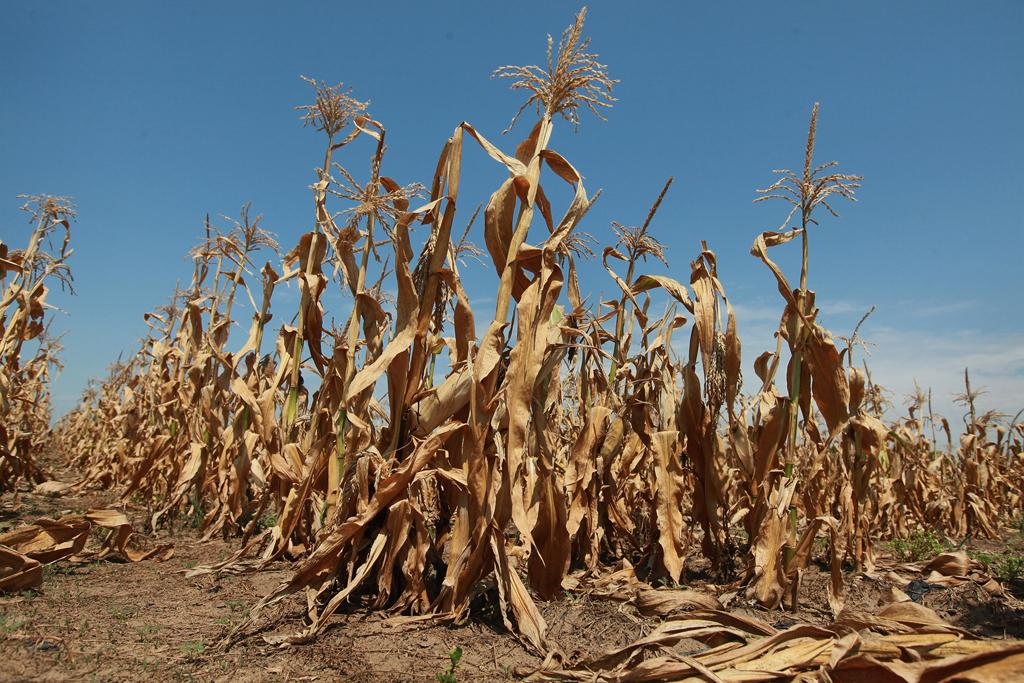
Corn plants struggle to survive in a drought-stricken farm field on July 19, 2012 near Oakton, Indiana. The corn and soybean belt in the middle of the nation is experiencing one of the worst droughts in more than five decades. Indiana was the nation’s fourth largest corn producer in 2011.
More than half the counties in the United States have been designated disaster areas, mostly due to drought conditions ravaging the country's midwest, the Los Angeles Times reported.
Officials announced on Wednesday that 218 more counties in 12 states have been given the designation, which brings the total this year to 1,584 counties, or 50.3 percent of all US counties.
According to the Drought Monitor, currently 66 percent of the nation's hay acreage is in an area experiencing drought, and approximately 73 percent of the nation's cattle acreage is in an area experiencing drought.
Food could climb between 2.5 and 3.5 per cent in 2012 and between 3 and 4 per cent in 2013, according to the United States Department of Agriculture. The Globe and Mail reported that the price of corn (key to producing livestock in North America) has jumped 50 per cent since June.
Though food prices are sure to jump, the affects are months away, and the US government's immediate goal is to help the farmers — the federal government is opening roughly 3.8 million acres of conservation land for grazing and haying. Agriculture Secretary Tom Vilsack announced that “President Obama and I will continue to take swift action to get help to America’s farmers and ranchers through this difficult time.”
The ongoing drought, along with the global economic turmoil, is hurting business in nine midwestern states, boosting worries about another recession, Wednesday's Mid-America Business Conditions Index reported.
However, South American farmers may be able to temper the surging food inflation.
According to Bloomberg, Argentine farmers are set to reap as much as 31 million tons of corn (smashing their previous record 22 million metric tons) and Brazil is expected to harvest its biggest-ever soybean crop in 2012-2013, surpassing the US as the world’s biggest grower.
The story you just read is accessible and free to all because thousands of listeners and readers contribute to our nonprofit newsroom. We go deep to bring you the human-centered international reporting that you know you can trust. To do this work and to do it well, we rely on the support of our listeners. If you appreciated our coverage this year, if there was a story that made you pause or a song that moved you, would you consider making a gift to sustain our work through 2024 and beyond?