Army gets key posts in new Mali government
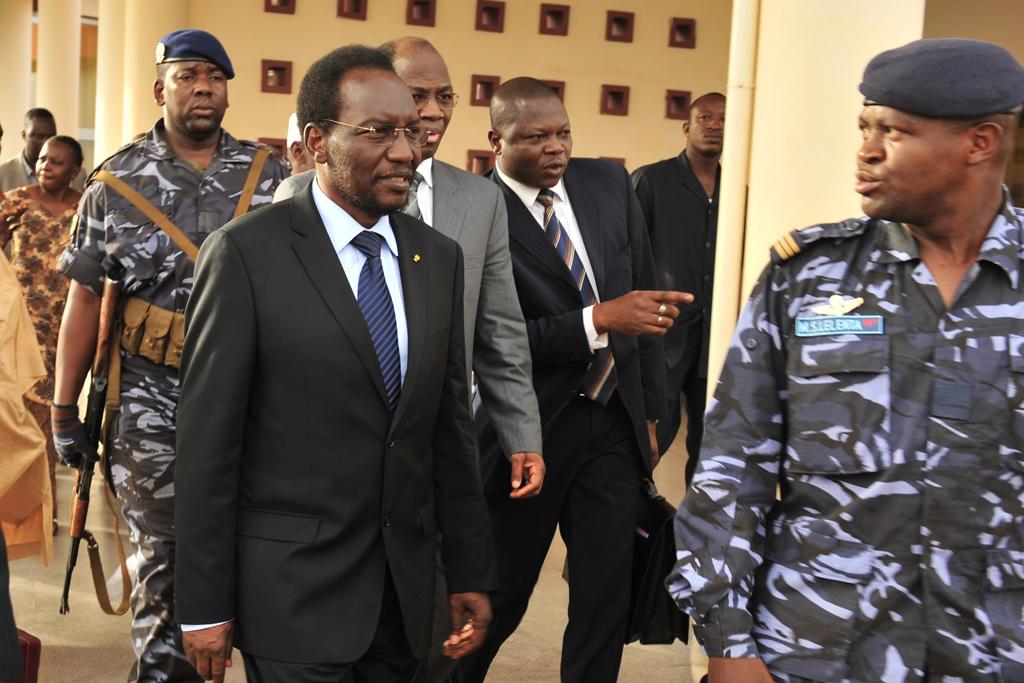
Malian Parliament Speaker Dioncounda Traore, followed by Burkina Faso Foreign Minister Djibril Bassole on April 7, 2012 upon his arrival at the Bamako airport from Burkina Faso. Malian President Amadou Toumani Toure officially resigned on April 8, 2012.
Mali’s interim president has announced a new government and assigned three key posts to military personnel, just over a month after soldiers ousted the West African country’s democratically elected leader.
Dioncounda Traore, who has been tasked with overseeing a timetable for elections, named 24 ministers Wednesday, none of whom were members of the government toppled in a March military coup.
Military representatives viewed as close to the military junta – which justified its rule on the grounds that an ethnic Tuareg and Islamist militant rebellion needed to be effectively combated – have been appointed ministers for defence, internal security and the interior, the Associated Press reports.
The rest of the cabinet is composed of civilians – mainly technocrats and figures who worked outside Mali during the rule of ousted President Amadou Toumani Toure, currently in neighboring Senegal with his family, according to Reuters.
More from GlobalPost: International Criminal Court may probe Mali atrocities
It is not clear how long the ministers will serve or when fresh elections will be held in the country. The junta agreed to hand over power to an interim administration as part of a deal struck with the West African regional organization ECOWAS earlier this month.
But the junta’s leader, Captain Amadou Sanogo, has insisted his military committee “will continue to play a supervisory role until new elections are held,” the BBC reports.
The interim government’s primary task will be to resolve the crisis in the northern desert region of Mali, where Tuareg and Islamist rebels have taken control of and declared independence for an area they call Azawad, according to the Agence France Presse.
More from GlobalPost: Mali's Tuareg rebels declare independent state of Azawad