Why Super Tuesday is the most important day of the US nomination calendar
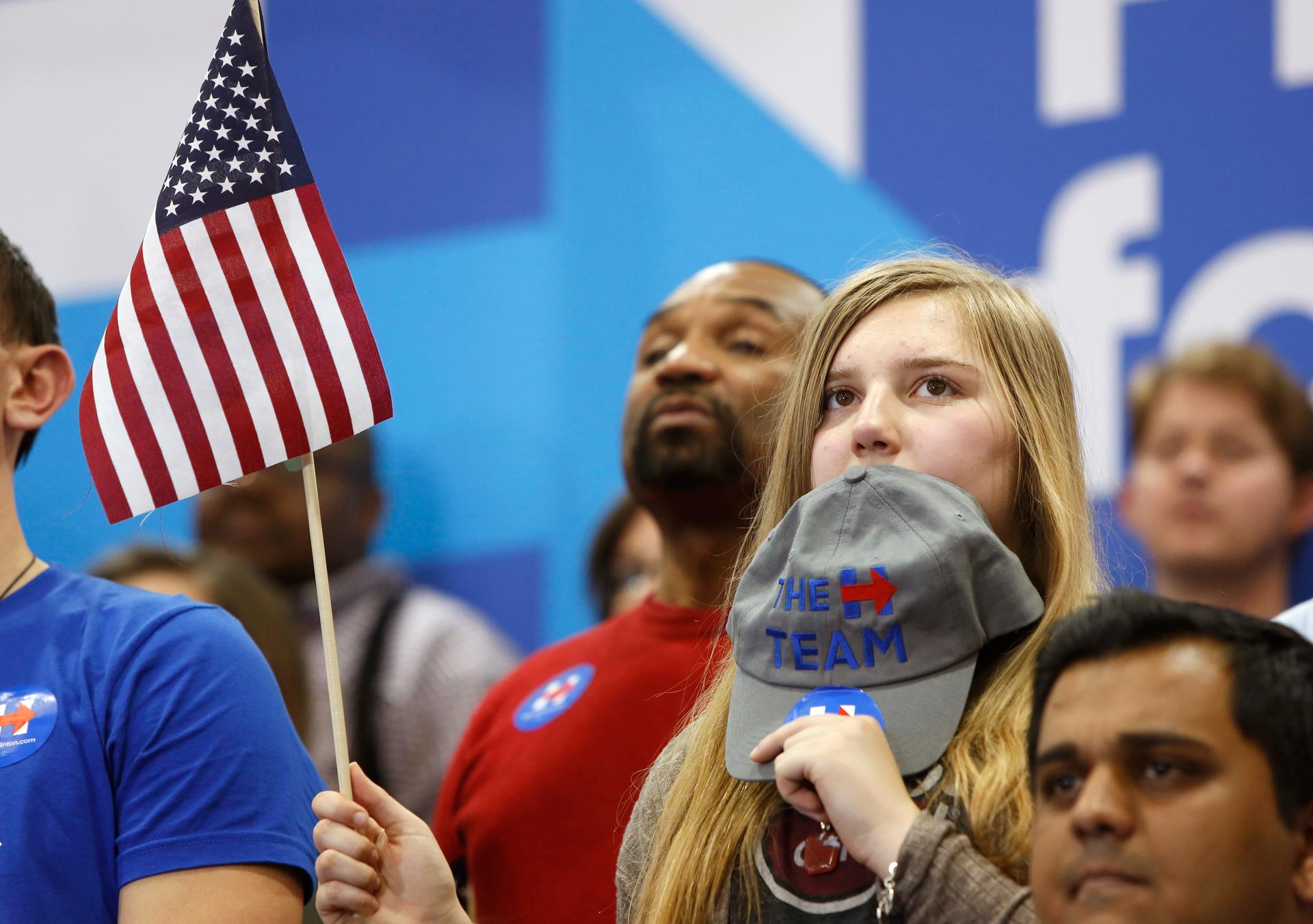
Supporters listen as Democratic presidential candidate Hillary Clinton speaks about the results of the South Carolina primary on Feb. 27, 2016.
Americans in a dozen states head to the polls for a slew of primaries and caucuses Tuesday on what is considered the most important day of the presidential nominations calendar.
Here is what is at stake on "Super Tuesday," which could have a big impact on Democratic and Republican contenders still in the race for the White House:
Twelve states vote
A dozen states are holding contests, including several in the South. For the most part, they are both Republican and Democratic in nature. Two exceptions are Alaska, where only Republican caucuses are being held, and Colorado, where only Democratic caucuses will take place.
In contrast to primary elections, caucuses are meetings which voters attend and where they indicate their preference.
Here is the list of "Super Tuesday" states in alphabetical order:
- Alabama (south)
- Alaska (northeast, Republican caucus)
- Arkansas (south)
- Colorado (west, Democratic caucus)
- Georgia (south)
- Massachusetts (northeast)
- Minnesota (north)
- Oklahoma (south)
- Tennessee (south)
- Texas (south)
- Vermont (northeast)
- Virginia (east)
Democrats are also voting in American Samoa in the Pacific.
Times and delegates in play
Most of the polling places open between 7 am and 8 am local time across US eastern and central time zones and close between 7 pm and 9 pm. In Alaska, caucuses finish around 0500 GMT Wednesday.
About a quarter of all delegates doled out during the primary process will be up for grabs.
Texas has the largest number of delegates in play (222 on the Democratic side and 155 on the Republican side.) Alaska and Vermont have the fewest.
Primaries and caucuses serve to elect delegates to national Democratic and Republican conventions where a party's presidential candidate is chosen ahead of the November elections.
The Republican National Convention will be held July 18-21 in Cleveland, Ohio. The Democratic National Convention takes place in Philadelphia, Pennsylvania, July 25-28.
For Republicans, the first candidate to reach 1,237 delegates out of 2,472 will get the party's nomination.
On the Democratic side, the support of at least 2,382 delegates out of 4,763 is needed.
Who's leading?
Four states have voted up until now — Iowa, New Hampshire, South Carolina and Nevada.
Billionaire real estate magnate Donald Trump leads the Republican field, having pocketed New Hampshire, South Carolina and Nevada. Iowa went to rival Ted Cruz, a senator from Texas.
Former first lady and secretary of state Hillary Clinton leads rival Bernie Sanders after victories in Iowa, Nevada and South Carolina. Sanders, a senator from Vermont, won in New Hampshire.
bur-lb/vlk/jm
The article you just read is free because dedicated readers and listeners like you chose to support our nonprofit newsroom. Our team works tirelessly to ensure you hear the latest in international, human-centered reporting every weekday. But our work would not be possible without you. We need your help.
Make a gift today to help us reach our $25,000 goal and keep The World going strong. Every gift will get us one step closer.