Reporter’s notebook: death in Cairo’s Ramses Square
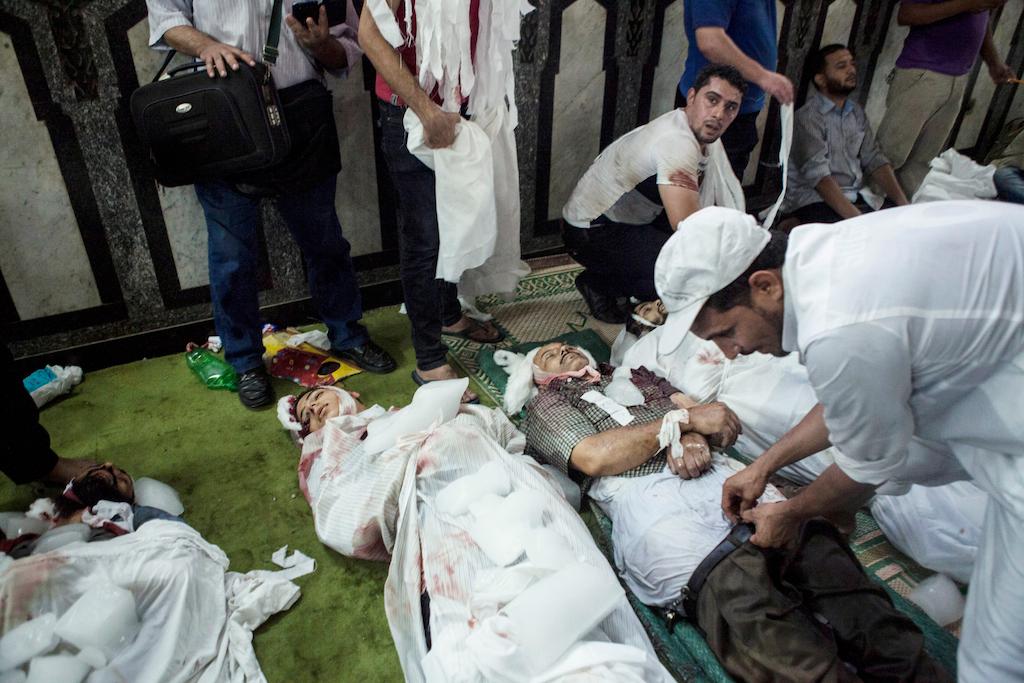
The bodies of supporters of Egyptian President Mohammed Morsi lie on the floor at the Fateh Mosque in Ramses Square on August 16, 2013 in Cairo, Egypt.
CAIRO, Egypt — Thousands gathered after midday prayers in response to the Muslim Brotherhood's call for a "Day of Rage."
Morsi supporters were joined by a healthy contingent of people who said they were not there for the ousted president, but instead because they were disgusted at the security services' brutal repression of supporters of former President Mohamed Morsi two days earlier.
Protesters at Ramses Square in central Cairo chanted vociferously against the military and the interior ministry. Hoisted upon the shoulders of a friend, one young man directed the crowd through a Mexican wave to accompany their jeers.
After one of Egypt's bloodiest weeks in its modern history, the protesters' defiance was underpinned by real anger.
"The army shot us in the streets on Wednesday," Mohamed Ali said. "How can we stand for that? I was a military man; I served three years in the army. These men who now run the country are not patriotic, you cannot call them Egyptians."
Egypt is as divided as ever. Many have welcomed the joint military and police operation to clear tens of thousands of pro-Morsi supporters from their encampments, arguing they were a threat to national security.
But when the first pops of gunfire sounded out from atop the October 6th Bridge, a flyover that crosses the square, the protesters' mood changed in a moment.
Crowds below stood frozen as they watched the dozens marching on the bridge flatten to the ground.
Then the square sprang into life: young men lit fires to combat police tear gas, ripped iron fences from the ground and broke up the pavement to hurl back at security forces.
The casualties came fast and were ferried into the nearby al-Fateh mosque. Inside, families crowded around their loved ones, fashioning makeshift tourniquets in desperate attempts to stem the blood from their wounds.
For many, the interventions came too late. By nightfall, dozens of dead bodies lay at the back of the mosque. And according to reports, police and army troops had it surrounded.
Every day, reporters and producers at The World are hard at work bringing you human-centered news from across the globe. But we can’t do it without you. We need your support to ensure we can continue this work for another year.
Make a gift today, and you’ll help us unlock a matching gift of $67,000!