Powerful derecho storm could hit Midwest
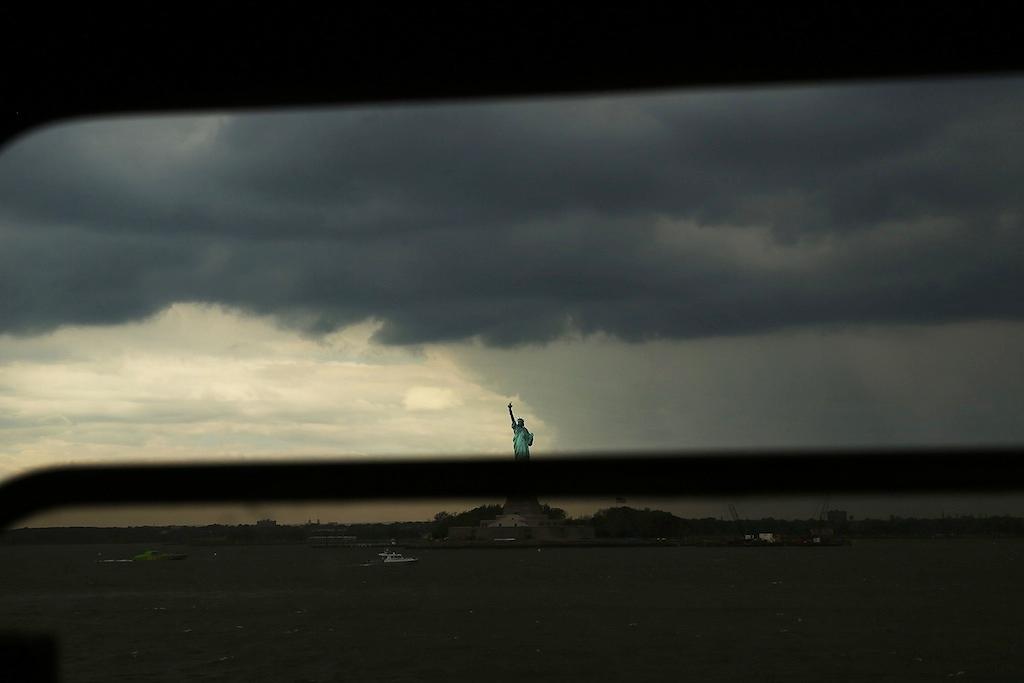
The Statue of Liberty is seen from the Staten Island Ferry on June 11, 2013 in New York City as much of the United States braces for serious storms.
The midwestern United States could be in for a damaging derecho storm Wednesday, as the weather pattern moves swiftly from Montana all the way to the East Coast.
Iowa is in the storm's line of fire, as well as Milwaukee, Chicago, Detroit, Cleveland and Pittsburgh, National Weather Service meteorologist Bill Bunting told the Associated Press.
"We tend to be careful using the D word, but yes, a derecho is possible," Bunting said.
Read more from GlobalPost: Possible derecho heading towards New York City
What is a derecho? According to the NOAA, a derecho is a "widespread, long-lived wind storm that is associated with a band of rapidly moving showers or thunderstorms."
Winds can measure between 57 to a whopping 100mph, with higher speeds reported occasionally.
The National Weather service predicts a 45 percent likelihood that Chicago, Indianapolis, Cincinnati and Columbus, Ohio could be affected by the severe weather pattern, while Detroit, Baltimore, Washington, Milwaukee, Pittsburgh and Louisville are looking at risks fifteen times higher than the norm.
Accuweather predicts that the storms will begin near Davenport, Iowa and northern Illinois, with possible tornados in and around these areas.
The weather website predicts storms will be most powerful from western Iowa into northern Illinois and Indiana, and heavy rains are expected from Chicago to Pittsburgh.
Summer and late spring are prime derecho season: over 75 percent of the storms take place between April and August.
Last year, the US saw a powerful derecho in June, which slammed into the East Coast with wind gusts from 60 to 80 miles per hour and caused damage throughout the region. Over a million residents of the Washington DC area were left without power.
The 2012 derecho was likely prompted by a record-breaking June heat wave, which can help to create this damaging weather pattern, noted the Washington Post.
Every day, reporters and producers at The World are hard at work bringing you human-centered news from across the globe. But we can’t do it without you. We need your support to ensure we can continue this work for another year.
Make a gift today, and you’ll help us unlock a matching gift of $67,000!